Urooj Niazi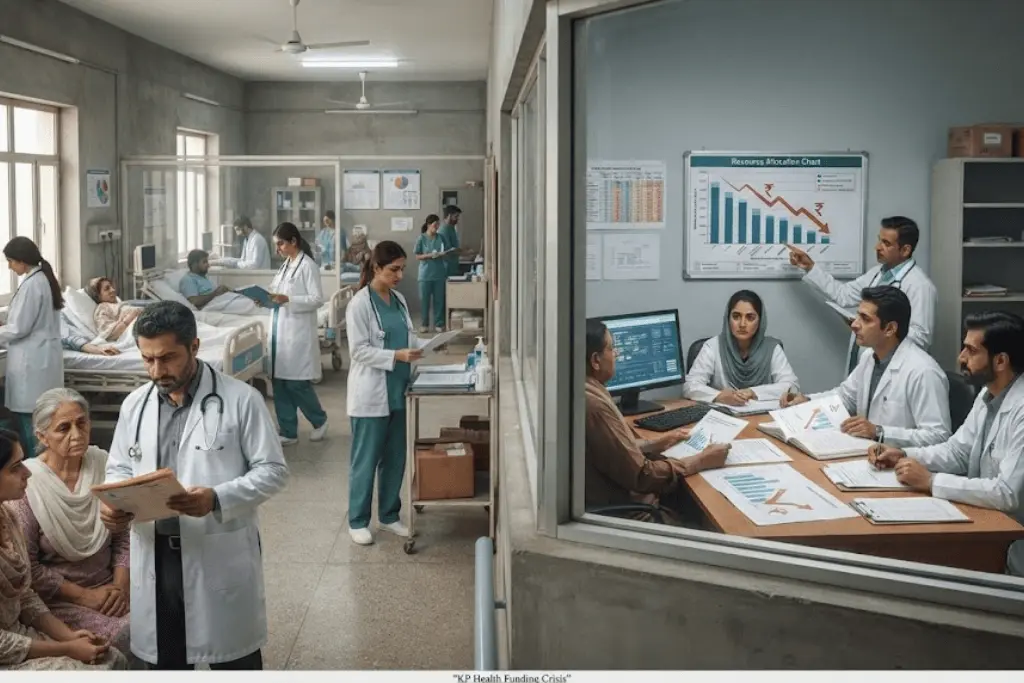
The KP health funding crisis has affected many key areas, including medicine availability, hospital operations, healthcare infrastructure development, and workforce management. At the same time, provincial authorities continue to explore reforms, partnerships and financial solutions to sustain health care services and strengthen the system for the future. Understanding the current challenges provides a lot of perspective on how public healthcare may evolve in Khyber Pakhtunkhwa.
Public Hospitals Under Pressure From Funding Shortages
Public hospitals in Khyber Pakhtunkhwa are facing increasing financial pressure as their running costs go up and funds are released late.
But hospitals need a constant stream of money to buy medicines, keep equipment going, pay staff and develop medical services. Workloads are especially busy in large teaching hospitals that get patients from all over the province. These facilities often provide specialised treatment for complex illnesses, and uninterrupted financial support is critical to maintaining quality health care services.
While hospitals are still providing medical care during the current challenges, they are working with provincial officials to improve their financial stability and get back to normal operations. Long-term planning continues to be critical to ensure the health care institutions in the province will be able to continue to meet the growing medical needs of the province.
Medicine Shortages Hit Treatment For Serious Illnesses
The funding problems have had as one of their most visible results the shortage of some essential medicines. Some medicines have become temporarily unavailable, which has disrupted programs supporting patients with life-threatening illnesses, including cancer treatment initiatives.
Some major healthcare facilities like Hayatabad Medical Complex and Khyber Teaching Hospital have reported a shortage of a number of important medicines, which are normally provided free of cost.
Unavailability of medicines can lead to patients being forced to buy medicines privately, adding to the cost of treatment for many families. Enhancing procurement processes and guaranteeing a continuous supply of medicines are crucial priorities in delivering effective health care across the province.
The uninterrupted access to essential medicines will continue to play an important role in strengthening public confidence in the government health care services.
Financial Problems Of The Sehat Sahulat Programme
The Sehat Sahulat Programme has made a huge difference in improving access to healthcare in Khyber Pakhtunkhwa by enabling eligible families to receive treatment at any of the participating hospitals.
But the current funding situation has put pressure on the programme’s financial sustainability. Hospitals have accrued large outstanding payments, impacting the ability to continue to provide some services under the scheme.
Hospitals are suffering operational problems due to outstanding dues that they rely on timely reimbursements to maintain medical supplies and daily operations. Continued collaboration between healthcare providers and government institutions will be needed to maintain the programme’s benefits.
Infrastructure Development Projects Have Been Slowed Down
The healthcare system requires ongoing investment to serve the needs of a growing population. Several development projects, including expansion of hospitals and construction of new medical facilities in Khyber Pakhtunkhwa, have been affected due to funding delays.
Projects of additional wards, specialised treatment units and modern medical blocks require continuous financial support from the provincial and federal development budgets. And as development funding cools, construction timelines could be pushed back even further than originally planned.
Improving infrastructure continues to be a key priority for expanding hospital capacity, reducing patient crowding and expanding access to specialised health care services. Modern medical facilities not only enhance the working environment for healthcare professionals but also encourage better patient outcomes.
While some projects have taken longer than expected to complete, development continues to be a key part of the province’s overall health-care strategy to improve long-term service delivery.
Health Care Workers Keep Sounding The Alarm On Workplace Issues
Healthcare professionals are the heart of the functioning of the public medical services, especially in times of increased demand for patients. Doctors, nurses and other medical staff are concerned about salaries, staffing levels and the rising cost of living. These problems have led to protests and industrial action at various times, putting further pressure on already busy hospitals.
Maintaining high-quality medical services still requires the proper support of healthcare workers through appropriate workforce planning, competitive compensation and improved working conditions. Health systems are most effective when experienced professionals are provided with the resources they need and work in supportive environments.
Public-Private Partnerships Could Help Lead To Future Health Breakthroughs
The province is also looking into different ways of managing, including working more with the private sector, to combat operational issues. Public-private partnerships are an increasingly common strategy in healthcare systems around the world.
Under these arrangements, private organisations could help manage hospitals, provide administrative services or improve operations, while healthcare continues to be publicly available.
Supporters say the partnerships could lead to greater efficiency, better management of resources and less strain on the operations of troubled facilities. Partnerships could support wider financial reforms and efforts to modernise healthcare services across Khyber Pakhtunkhwa.
The long-term goal remains the same: to ensure patients continue to have access to quality, affordable and accessible health care across the province.
Future Reforms Can Bolster Healthcare Delivery In KP
Current funding pressures have created major challenges but also highlight opportunities for long-term reforms to improve the sustainability of healthcare. Investment in digital health management, transparent finance monitoring and efficient resource allocation may reinforce further public healthcare services.
Healthcare workers will continue to need support and infrastructure, and medicine availability will need to be expanded.
The province has built upon a history of developing a number of important healthcare initiatives in recent years, which will help to build a foundation for further improvements.
Effective policy measures and collaborative planning to overcome current financial challenges can go a long way towards further enhancing healthcare access for millions of residents of Khyber Pakhtunkhwa.
Khyber Pakhtunkhwa’s healthcare sector is facing funding challenges that have impacted medicine supplies, hospital budgets, infrastructure development and human resource management. Visit The Pakistan for more updates.