Adnan Farooq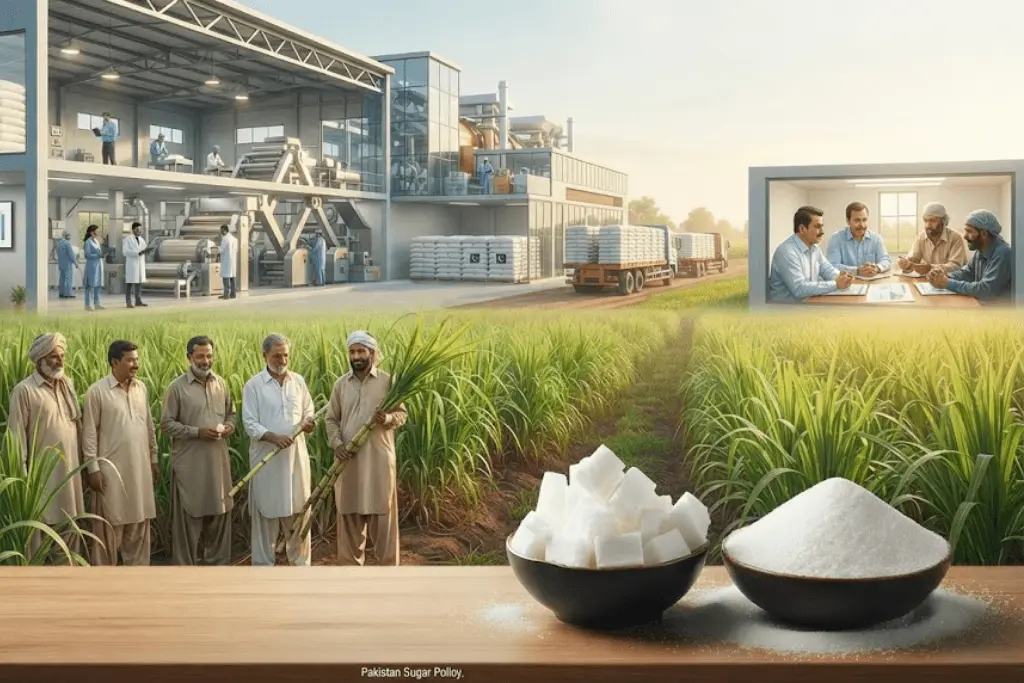
Pakistan’s sugar industry is entering a new phase with the introduction of the Pakistan sugar policy to modernise one of the country’s most important agricultural sectors. For decades, sugar production and trade have been tightly regulated with fixed pricing, zoning restrictions and limits on imports, exports and new sugar mills. The latest reforms are intended to replace many of these controls with a more market-oriented system.
Pakistan Is Heading Towards A Market-Based Sugar Industry
The new sugar policy is one of the most significant structural reforms in Pakistan’s sugar industry in recent times. The new framework puts less emphasis on government intervention, and more on the forces of the market to determine supply, demand and price.
Several old regulations affecting production, prices, and trade have been removed or greatly reduced. The aim is to foster a more competitive business climate where efficiency, productivity and market performance become the main drivers of growth.
The reforms’ supporters argue that increased competition can drive new investment, improve the allocation of resources, and diminish long-term market distortions. A modernised sugar industry could also stimulate the wider agricultural economy of Pakistan, creating new opportunities for growers, processors, traders and investors.
The move is in line with the broader economic agenda to promote open market principles and improve transparency and long-term sustainability in key sectors of the Pakistani economy.
Abolished: Minimum Sugarcane Prices, Zoning Regulations
One of the most important reforms has been the elimination of minimum purchase prices for sugarcane and the traditional zoning system that used to control sales of the crop. Now, the pricing is more directly affected by the sucrose content and crop quality than the fixed rates set by the government. This can motivate the farmers to invest in better quality of cultivation, which can give better productivity and better returns over a period of time.
The reforms also give growers greater flexibility to process sugarcane into gur, instead of selling their crop only to sugar mills. There is hope that greater marketing freedom will lead to a more competitive environment and more commercial opportunities throughout the agricultural sector.
Restrictions On Import And Export Are Being Eased
The new policy also introduces significant changes in Pakistan’s sugar trade framework by removing several administrative restrictions that were previously imposed on imports and exports.
Previous systems tended to rely on quotas and regulatory approvals that determined when sugar could enter or leave the domestic market. Under the new framework, trade decisions should be more responsive to real supply and demand conditions.
Changes In Sugar Prices Could Impact Consumers
In the longer run, stronger competition and better supply management could help to gradually contribute to better price stability, according to policymakers. As market distortions are eliminated, retail prices should become more reflective of actual supply and demand conditions, making market monitoring more important to consumers and businesses alike.
More Competition Could Bolster The Sugar Market
Competition is central to Pakistan’s new sugar policy. Greater transparency in pricing and trading activities may also result from reducing the opportunity for anti-competitive behaviour. A more confident market is good news not only for consumers but also for farmers, processors, traders and investors who depend on stable and predictable trading conditions.
To be implemented successfully, it will require consistent regulatory oversight and transparent market practices. Strong enforcement can help ensure that increased competition provides tangible long-term benefits across Pakistan’s sugar sector.
Reforms To Modernise Pakistan’s Sugar Industry
Apart from the immediate price changes, the policy’s broader aim is to modernise Pakistan’s sugar economy by creating an enabling environment for long-term investment and higher productivity. Investment in sugar mills, processing plants, agricultural technology and supply chain infrastructure is encouraged by reducing the regulatory burden. There may be less burdensome entry restrictions on new sugar mills, which may lead to greater competition in processing and opportunities in areas with an expanding agricultural base.
What The Policy Could Mean For The Future Of Pakistan
Pakistan’s new sugar policy marks a dramatic shift from decades of state control over the industry to a more competitive and market-driven policy. Longer-term performance of the sugar industry can be improved through improved competition, pricing flexibility and more efficient supply chains. Farmers would have more flexibility in marketing, more incentive to improve crop quality, and consumers would have greater transparency and a more responsive market.