Urooj Niazi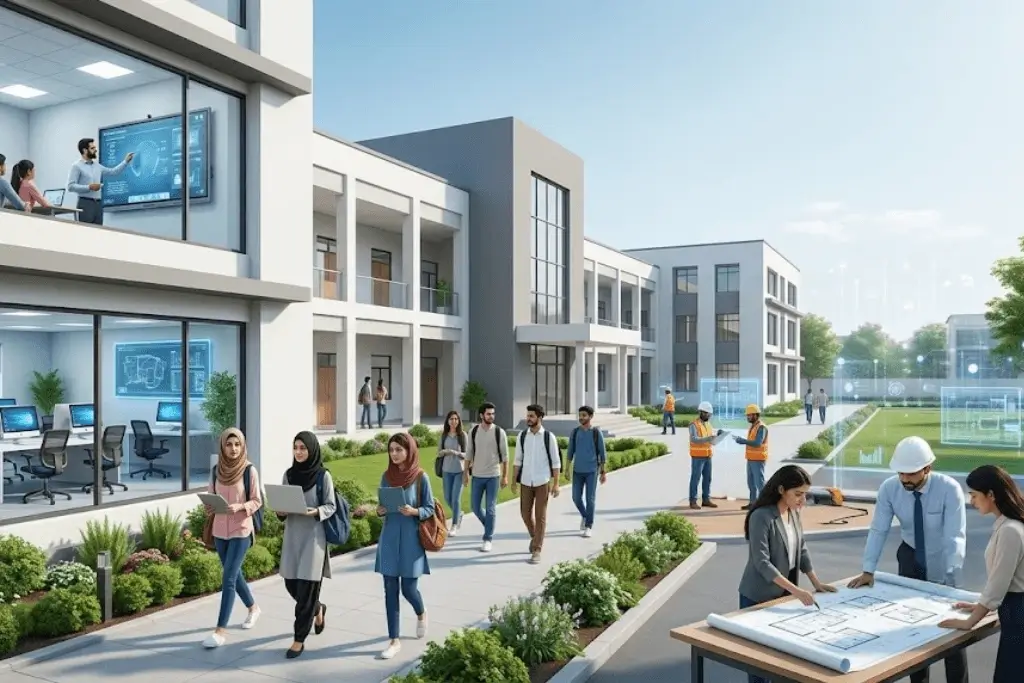
The College Education Development Projects in Punjab are driving one of the biggest phases of modernisation in the province’s colleges in recent years. The provincial government has also taken various initiatives for the promotion of infrastructure development, digital learning, faculty development and student welfare in public colleges. The goal of these projects is to enhance the quality of education and equip students for contemporary educational and professional settings.
All of these developments are being fueled by large public investment, international partnerships and administrative reforms. Punjab is working to strengthen and make the province’s higher education system more accessible, from smart campuses and IT laboratories to scholarship programs and renewable energy solutions.
College Education Development Projects Are Changing Punjab’s Higher Education Sector
The Punjab Higher Education Department (HED) is spearheading various development projects to bring change to government colleges across the province. Technology-based learning is slowly coming to colleges with smart boards, digital instructional resources, and upgraded computer labs.
Digital Learning Projects And Smart Campuses Are On The Rise At Universities
The digital transformation continues to be a key strategy in the Punjab higher education strategy. The Higher Education Department has set up special computer labs for BS Information Technology programs in 26 government colleges. The labs are meant to boost practical learning and prepare students for jobs in Pakistan’s growing digital economy.
These efforts combined are helping colleges to adopt modern educational practices and to strengthen online literacy among students.
College Facilities Are Being Improved Through Infrastructure Modernisation Projects
Infrastructure development is another key pillar of reforms in college education in Punjab. Under the annual development programme of the province, many government colleges are provided funds for renovation and expansion works. The improvements include construction of new classrooms, hostel facilities, science labs, computer labs, boundary walls and sanitation infrastructure upgrades.
Some of the older college buildings are being rehabilitated to maintain their historic importance and enhance their utility for today’s educational requirements.
College campuses are being equipped with purified water filtration plants with the help of safe drinking water projects. These facilities serve to promote the health and welfare of the students and the campus.
Educational institutions are also installing solar energy projects to cut down electricity costs and enhance uninterrupted power availability. Colleges can operate their academic programs on renewable energy systems, even during power supply problems, and can contribute to sustainable development goals.
Major Education Funding Supports Long-Term College Development Efforts
There is a lot of money coming in for Punjab’s education reforms from many different sources. The education sector has received an allocation of around PKR 750 billion from the development budget of the provincial government. More than 15 per cent of the provincial budget is allocated for education improvements, which includes infrastructure, digital learning, faculty development, scholarships and student welfare programmes.
Funding also helps to expand modern teaching facilities, upgrade technology and reform institutions across higher education institutions.
The World Bank-assisted Higher Education Development in Pakistan (HEDP) aims at strengthening institutional capacity, improving financial autonomy, enhancing governance and supporting technology integration in colleges and universities.
Other international financing supports the development of teachers, improvements in rural education and the expansion of digital infrastructure.
Another significant funding mechanism is the growing use of public-private partnership models. The provincial government plans to hand over around 150 government colleges to partnerships with private sector organisations to speed up infrastructure improvements, boost administrative efficiency and strengthen educational services while upholding academic standards.
Student Welfare Programs Improve Access And Educational Opportunities
Punjab’s strategy for developing education goes beyond building infrastructure and includes programs that directly support students.
The Honhaar Scholarship Program is a merit-based financial aid program for high-achieving students studying at higher education institutions. “The scholarship is intended to eliminate financial barriers and promote academic excellence throughout the province.
And dedicated transport initiatives benefit female students too. The government has also provided transport buses to female colleges to facilitate access and motivate the students to continue their higher education.
Students preparing for competitive admissions are also given additional academic support through free MDCAT and ECAT preparatory classes offered across Punjab’s divisions. These programs help students to compete better for admission in medical and engineering institutions.
Laptop distribution programs have helped students access digital learning, complete assignments, conduct research, and build the technical skills needed for today’s workplaces. Access to technology continues to improve through these programs.
Faculty Development And Implementation Support Sustainable Reform Updates
The quality of education depends not only on infrastructure but also on trained teachers and good leadership in institutions. Higher Education Department is still recruiting College Teaching Interns (CTIs) to improve the teaching capacity of government colleges.
Along with educational reforms, there are administrative reforms. The Higher Education Department has formed a 13-member committee to examine strategies for revenue generation, commercialisation of institutional assets wherever possible and implementation of public-private partnership frameworks.
Simultaneously, many areas like specialised IT laboratories, digital classroom technologies, expansion of infrastructure, solarisation projects, distribution of scholarships, faculty training, and technology support programs are also being implemented.
Another big long-term project is to establish “Colleges of Eminence” in the tehsils of Punjab. Pilot projects, such as the Maryam Nawaz Centre of Academic Leadership in Lahore, aim to create large, modern campuses that can accommodate nearly 10,000 students and provide advanced educational facilities similar to those at top-tier institutions.