Sana Khalid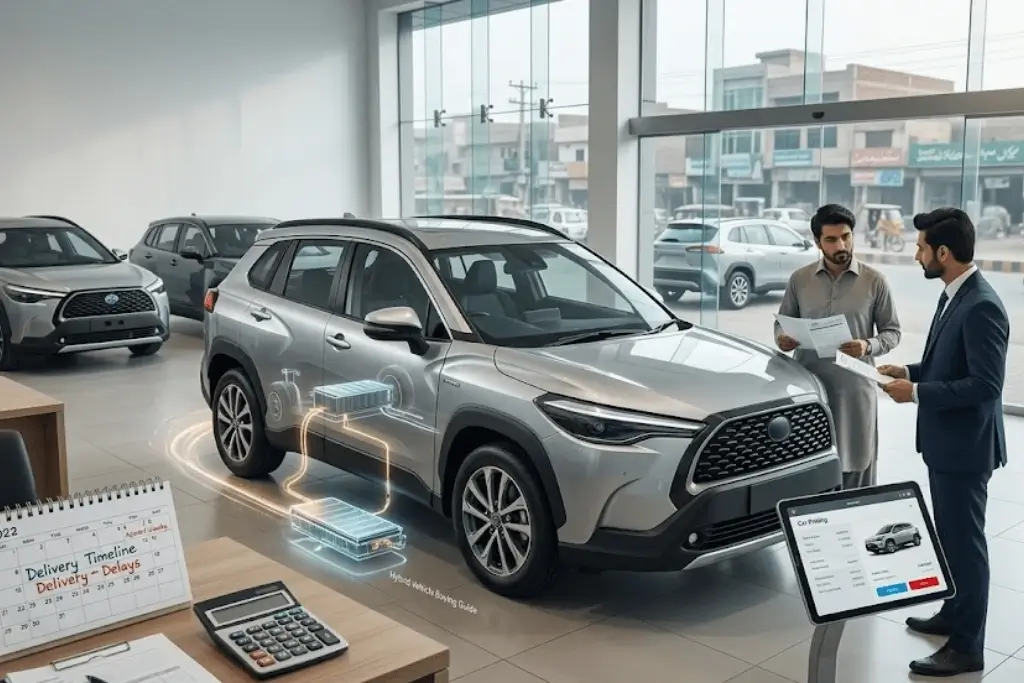
Pakistan’s Hybrid vehicles Pakistan market has seen major developments after the reduced sales tax concessions for hybrid electric vehicles (HEVs) expired.The transition period has caused uncertainty among manufacturers, dealerships and prospective buyers as the automotive industry awaits further clarity under the country’s upcoming auto policy.
Although the market uncertainty is temporary, Pakistan’s hybrid vehicle sector is a big part of the country’s changing automotive landscape. The market is expected to stabilise once there is greater regulatory clarity for policymakers and manufacturers have adapted to the new taxation regime. Buyers who keep themselves informed through official government notifications and manufacturer updates will be better placed to make informed buying decisions while enjoying the long-term benefits that hybrid technology can continue to offer in Pakistan’s developing transportation ecosystem.
Uncertainty In Pakistan’s Hybrid Vehicle Policy
Hybrid vehicles enjoyed a lower General Sales Tax (GST) until the end of June 30, 2026. Hybrid models with an engine capacity up to 1,800cc were taxed at 8.5% while those above 1,800cc were taxed at 12.75%.
Technically, when those concessions expired, hybrids fell back into the regular 25 per cent sales tax bracket. But the final implementation framework is not formally confirmed, adding uncertainty across the automotive sector.
Manufacturers, dealerships and customers are waiting for more clarity in the policy before normal business can resume. The situation underscores the need for clear regulatory guidance and also reflects Pakistan’s ongoing efforts to establish a balanced framework for taxing the automotive industry.
Uncertainty Around Sales Tax Affecting Car Prices And Bookings
The end of lower GST rates has directly impacted pricing decisions in Pakistan’s hybrid vehicle market. Meanwhile, there are commercial risks in applying the higher rate before it is officially confirmed. This temporary confusion has resulted in some prudent business practices throughout the industry. Several manufacturers have stopped issuing invoices for booked vehicles until the new tax rules are finalised.
Manufacturers Await Policy Clarification As Delivery Delays Continue
Some hybrid models are being temporarily slowed or halted in invoicing and delivery by top automobile manufacturers until applicable tax rates are confirmed. That means customers with existing bookings may face longer waits than anticipated. Delivery times may differ depending on individual manufacturers, production schedules, dealer inventories and when government announcements are made.
Although such delays may cause some temporary inconvenience to buyers, the industry’s cautious approach reflects efforts to ensure regulatory compliance and financial transparency in a period of policy transition.
Hybrid Car Prices Have Increased Following Tax Changes
Several manufacturers have announced substantial price changes for hybrid models in anticipation of the tax structure. According to reports, prices of popular hybrid vehicles like the Toyota Corolla Cross Hybrid and Honda HR-V Hybrid have increased by over PKR 1.3 million to PKR 1.4 million depending on the variant and applicable taxes. Higher acquisition costs affect affordability for many buyers, too, of course.
But pricing decisions are still closely linked to future government notifications. So potential buyers should check with authorised dealers for the latest official prices before buying.
Higher Purchase Price, But Still Count Fuel Savings
Hybrid vehicles still offer considerable fuel-economy advantages, especially in urban driving conditions. Hybrid systems are best suited to environments with a high frequency of traffic congestion, which allows the electric motor to help the engine as much as possible.
The savings from the reduced fuel consumption now will take additional years of ownership to make up for the higher initial purchase cost. Driving patterns are an important factor in the overall value assessment. Still, hybrid technology may still be a plus for drivers who spend most of their time in city traffic.
In contrast, drivers who mainly drive on highways are less likely to experience the fuel-saving benefits, as hybrid systems tend to provide relatively less efficiency gain in long periods of high-speed driving. Working out the monthly mileage, fuel costs and expected tenure can help you decide whether the hybrid is still the right fit.
Things To Keep In Mind Before Buying A Hybrid Vehicle In Pakistan
Several practical considerations should be taken into account before buying a hybrid vehicle in the current market. Prospective buyers are advised to keep a close watch on the official notices of the Federal Board of Revenue (FBR) regarding the sales tax implementation. The revised tax policies will have a direct impact on vehicle prices, booking amounts and final invoices.
Manufacturer announcements are just as important as production schedules; deliveries, revised prices and booking policies may change as new regulations are introduced. Those who have booked already are requested to remain in touch with the authorised dealers for any change in the delivery timeline and any new payment requirements.
Resale values also need to be examined. The rapid pace of new hybrid prices could have an impact on the used vehicle market as resale prices will change over the coming months. It may be beneficial to look at the listings that are currently on the market before you buy or sell so that you can make more informed financial decisions.