Maria Imran

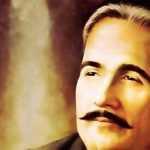
Allama Iqbal
Allama Iqbal was born in Sialkot in the Punjab on 9 November 1877. He was one of the most influential South Asian philosophers, poets and intellectuals, and was a major contributor to the shaping of Muslim political and intellectual thought. He began to learn Arabic and Persian under Maulana Mir Hasan, who advised him to study literature, languages and Islamic studies.
Allama Iqbal: Early Life And Education
Iqbal was a student of the Government College, Lahore, where he developed his intellectual interests under the guidance of great teachers, and he continued his studies at Trinity College, Cambridge and the University of Munich in Germany, where he undertook his doctoral research on Persian metaphysics.
His study of Eastern learning and Western philosophy helped to form a unique intellectual outlook which affected his poetry, philosophical writings and political views.
Iqbal’s Literary Contributions And Khudi Philosophy
One of the most important philosophical contributions of Allama Iqbal is the concept of Khudi. Khudi means selfhood or individual identity. It encouraged people to tap inner strength, to grow their skills and to seek worthwhile goals through discipline, determination and continued effort.
According to Iqbal, self-development required confidence, knowledge and moral responsibility. He published The Reconstruction of Religious Thought in Islam in 1934, a treatise on the importance of independent reasoning or Ijtihad. He called for intellectual rejuvenation in Islamic thought.
He has written several influential collections in Urdu and Persian. Urdu works such as Bang-e-Dara, Bal-e-Jibril and Zarb-e-Kalim are concerned with spiritual awareness, social responsibility and collective progress. His philosophical depth is also shown in his Persian writings such as Asrar-e-Khudi, Payam-e-Mashriq and Javid Nama.
These works continue to inspire readers with messages of self-confidence, education, creativity and purposeful life.
Allama Iqbal’s Concept Of Pakistan
Allama Iqbal is an important person in the history of Pakistan for his political vision and intellectual contribution to the idea of a separate Muslim homeland. In 1930, in his Presidential Address to the session of the All-India Muslim League at Allahabad, he propounded the amalgamation of Muslim-majority areas in the northwest of India into an autonomous political unit.
It was an important intellectual foundation of the Pakistan Movement. Although Pakistan was created in 1947, Iqbal’s ideas had already shaped the debates about Muslim political identity, representation and self-determination.
Remembered as Mufakkir-e-Pakistan (The Thinker of Pakistan) and the National Poet of Pakistan, Iqbal remains an important figure in the cultural and intellectual heritage of the country.
Iqbal’s Legacy In Today’s Pakistan
Allama Iqbal’s work is kept alive in schools, colleges and literary institutions by way of scholarly discussions, recitation of poetry and cultural festivities, especially on Iqbal Day (9 November). His philosophy serves as a constant reminder that a nation’s growth lies in its intellectual development, confidence and collective responsibility.
Keep Reading: More on Pakistan
Is Balochistan Polio Drive Succeeding?
Look into the planning, vaccinators and public trust behind it.
What Warning Targets Foreign Proxies?
Find the military leadership message on protecting development.
How Is Pakistan Protecting Balochistan Investment?
Check out the resolve to safeguard infrastructure and growth.
Will Resilient Housing Reach Families?
Dive into the community-led housing fund restructuring.
Are Balochistan Trains Running Again?
See how services resumed after the three-day suspension.