Urooj Niazi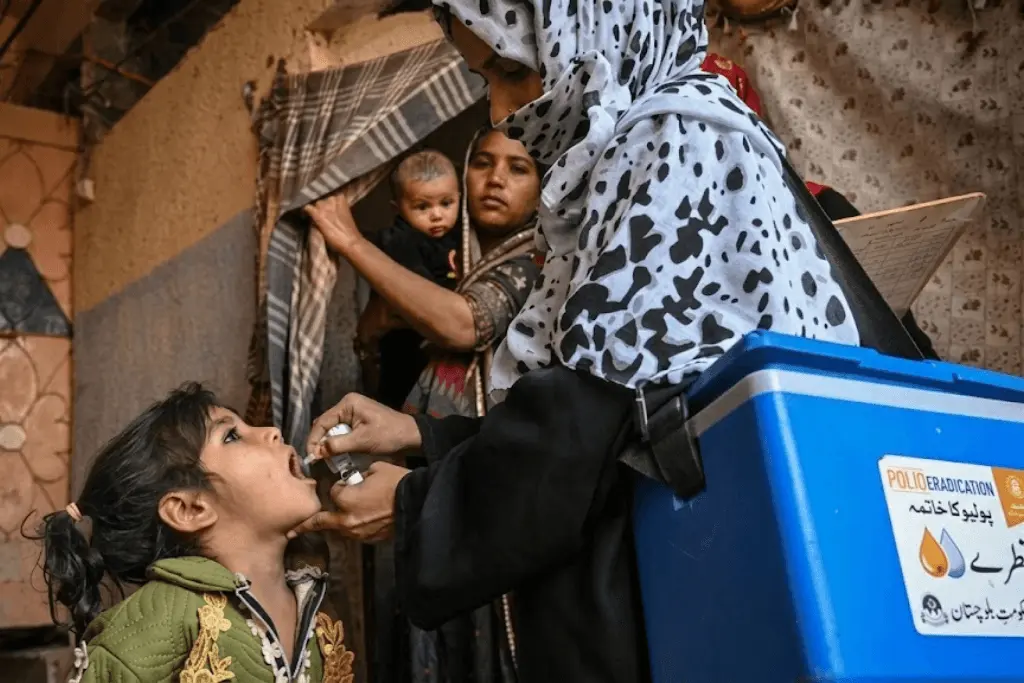
Government planning, trained vaccinators and medical supplies are all needed for Balochistan polio vaccination campaigns, but successful delivery at the household level also depends heavily on public trust and cooperation.
The geography of the province, its diverse cultures, security environment and highly mobile populations create a unique set of challenges. Such factors may prevent routine immunisation, especially in communities where health workers cannot reach every household, or where misinformation has dented confidence in vaccination.
Local Leaders Can Help Fight Vaccine Hesitancy
Vaccine hesitancy still poses one of the greatest challenges to polio campaigns in parts of Balochistan. Trusted religious leaders, traditional leaders, teachers and community health workers can speak about the importance of vaccination in familiar social and cultural settings, allowing families to make informed choices on how to protect their children.
Pakistan’s polio program has much to gain by building awareness campaigns around local voices rather than relying only on central messaging. Also, continued engagement can help prevent misinformation from re-emerging between vaccination rounds, building a stronger foundation for long-term public confidence.
Safeguarding Vaccinators Boosts Health Drive In Pakistan
This is why frontline vaccinators are so important for the success of the Pakistan polio program, as vaccination depends on reaching children directly at the household level. But in Balochistan, health workers and their security escorts have been under serious threat during vaccination activities.
Security threats can be disruptive to campaigns, restrict movement and limit access to vulnerable communities. When health teams are unable to safely reach some areas, children may remain unvaccinated, and gaps in population immunity can persist, providing opportunities for the virus to circulate or return.
Community ownership can be an important additional layer of support for those working on the front line.’ If residents trust the vaccinator as a health professional trying to protect local children, cooperation can increase, and suspicion can decrease, allowing the teams to do a better job.
The role of local women is especially important in conservative communities where cultural norms may limit access to the household. The operational strategy hinges on acceptance by the community, and female vaccinators and mobilizers can reach families that male workers may not have easy access to.
Household Vaccination Access Can Be Improved Through Cultural Understanding
The social fabric of Balochistan is diverse, and vaccination strategies need to be sensitive to the local cultural realities. Household access may be especially sensitive in conservative areas where the interactions of male health workers with women or children may be limited by prevailing social norms.
Thus, female health workers can be crucial in reaching newborn babies and young children. Their involvement can make it easier for vaccination teams to reach households, and it allows mothers and other caregivers to voice health concerns to staff who understand the local context.
Community conversation can also help to support the acceptance of women in health care. Support from tribal elders, religious leaders and respected community figures can help reduce resistance and make families more willing to accept female vaccinators as an important part of Pakistan’s public health system.
This engagement needs to be sustained beyond single rounds of vaccination. Continued dialogue can help households become more familiar with health teams, reduce misunderstandings and make future campaigns easier to implement in communities where cultural considerations play a big role in household decisions.
Vaccine Challenge Persists As Border Mobility Increases
Pakistan’s fight against polio is made even more difficult because Balochistan shares a border with Afghanistan. The regular movement of children from mobile, migrant and travelling families across border areas and transit routes means that they may be difficult to reach through conventional healthcare arrangements.
There is a need to give special attention to Chaman and other transit points because children move between communities and across borders without following fixed vaccination schedules. So a child missed at one site may go to another site before health teams have the chance to find the gap.
Local communities, transport workers and health teams along border areas can contribute to strengthening surveillance by identifying mobile children and referring families to vaccination services. Especially where formal registration or health care access is absent, cooperation within communities is critical.
High vaccination coverage among mobile populations in Pakistan will help to protect gains made in settled communities. Continued coordination between provincial authorities, health workers and neighbouring vaccination programs is therefore important to limit the risk of imported poliovirus.
Integrated Services Can Build More Community Confidence
Polio immunisation is not always easily divorced from broader concerns about health and living conditions. Families in poorer communities may ask why vaccination teams visit so often when they still lack access to clean water, nutrition services and treatment for other illnesses.
Integrated health services can tackle these concerns and boost confidence in vaccination campaigns. Where health support is also provided to families with the polio drops, vaccination can be associated with a broader initiative to improve child health and not perceived as a standalone government intervention.
UNICEF Pakistan has supported approaches that have integrated polio vaccination with other essential services such as routine immunisation and care for children who are malnourished. Such models can foster stronger relationships between health workers and families, while tackling the immediate concerns that shape community attitudes.
An integrated approach could be especially helpful in parts of Balochistan where poverty, lack of access to health care and rough terrain make regular services difficult. A broader health presence can help show that vaccination is part of an ongoing commitment to child and community wellbeing.
Balochistan’s Progress Demonstrates The Value Of Community Engagement
Balochistan demonstrates that sustained community engagement can make a real difference in the fight against polio. Public-awareness initiatives, local mobilisation and programs designed to communicate the importance of immunity have helped to support efforts to prevent local transmission.
The provincial Emergency Operations Centre has said the province did not record any local transmission cases in 2025. That achievement marks important progress toward Pakistan’s broader eradication campaign, but continued vigilance is necessary, as imported strains were found in environmental surveillance.
The presence of imported polioviruses shows that progress can be fragile if vaccination coverage falls. Children who are not vaccinated can create pockets of susceptibility, giving a virus that arrives from elsewhere a chance to spread.
The lesson from Balochistan, therefore, is that a successful vaccination drive cannot be a one-off round of activity. Sustained community participation, reliable surveillance and repeated access to children are necessary to preserve the gains already made.
Long-Term Trust Can Protect Polio Wins For Pakistan
To eradicate polio, Pakistan’s campaign must keep working on the social factors that determine whether children are vaccinated. Experience from Balochistan shows that infrastructure and vaccine availability are necessary but cannot overcome mistrust, misinformation, security concerns and difficult access without community cooperation.
Local leaders form a particularly useful bridge between families and public health authorities. Religious scholars, tribal elders, teachers, women health workers and community representatives can help explain vaccination in locally appropriate ways, while spotting concerns that may otherwise be hidden from the formal health system.
Greater community ownership can also make frontline teams safer and more effective. When vaccinators are viewed as partners in a common health effort rather than outsiders enforcing a government directive, families are more likely to facilitate access in the home and engage consistently.