Ali Raza Khan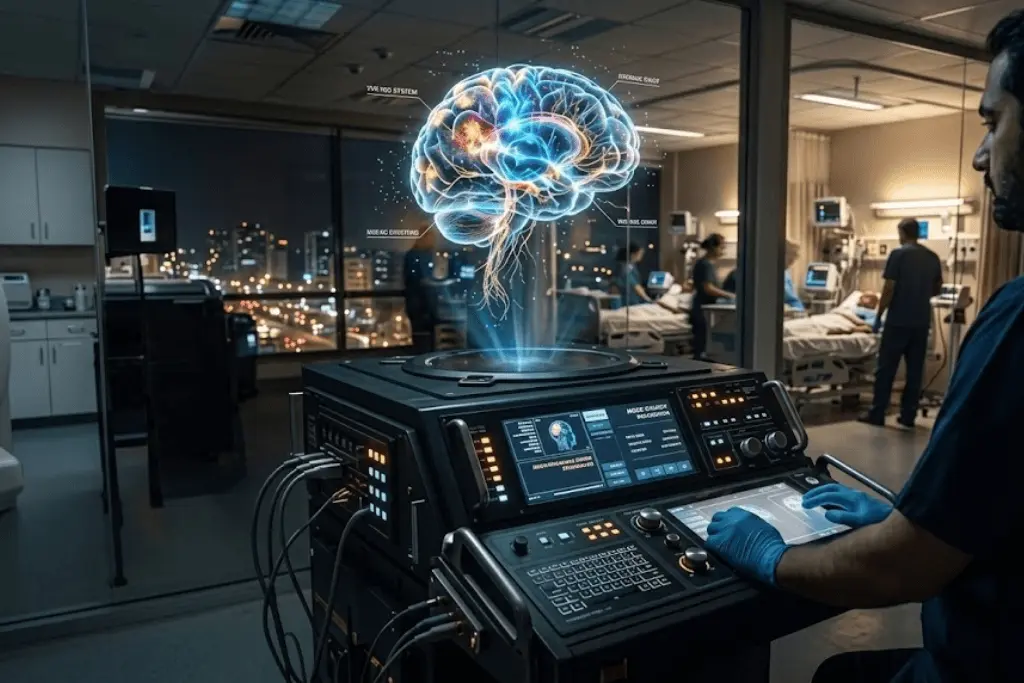
The technology is especially important for rural and underserved areas, where AI-powered scanners Punjab can reduce long travel distances, limited access to specialists, and delays in detecting potentially serious conditions.
AI-enabled and portable diagnostic devices can be utilised in Punjab’s healthcare system to enhance the first stage of medical assessment. Instead of having every patient rush to a major urban hospital, more and more community and primary health care settings can serve as points of identification and referral for professional evaluation of potential health risks.
The approach could help Pakistan’s broader transition to preventive healthcare. Early detection of cancer, cardiovascular abnormalities, respiratory conditions and vision problems can create opportunities for timely intervention, while AI-assisted screening can help medical professionals prioritise patients who require further investigation.
Artificial Intelligence (AI) Technology Bridges Punjab Screening Access Gap
Early detection is particularly important as serious diseases can be considerably more difficult to treat once they have progressed to later stages. The information indicates a significant deficit in screening and very low levels of screening for breast and cervical cancer among women in Punjab historically.
Traditional screening pathways can require specialist equipment, trained personnel and referral to larger medical centres. These requirements can be real barriers to access for families who live far from large cities, particularly when transport, cost and availability of appointments become additional considerations.
An alternative model is provided by portable AI-enabled equipment that makes screening available in local communities. The technology does not eliminate the need for doctors or specialist diagnosis. Where artificial intelligence can add value is as another layer of screening and triage, allowing healthcare professionals to spend their time and expertise on patients whose initial results indicate higher risk.
Portable Cancer Screening May Help Rural Health Care
Portable technology can be very important for improving access to health care in Punjab, especially for breast and cervical cancer screening. Periwinkle’s Smart Scope is a portable technology that can help in screening and detecting abnormal cervical cells for cervical cancer. The potential value here is that trained community health workers could do assessments closer to where women live.
In preventive healthcare, greater accessibility can be especially important, as screening depends on identifying people before they become symptomatic. Bringing services closer to communities can help overcome practical barriers that otherwise lead to late diagnosis and missed screening opportunities.
AI Scanners Could Help With Cardiovascular Health Checks
In addition to cancer detection, cardiac and respiratory assessment is another important area of application that is also being considered for AI-enabled screening. Devices such as the Sunfox Spandan ECG, AI-enabled digital stethoscopes and other similar devices can provide healthcare workers with additional tools to help identify potential abnormalities.
This type of technology could potentially identify patients in primary care who need more cardiovascular or respiratory assessment. Being able to pick up on worrying findings earlier can help with referrals before things get harder to manage. AI-assisted screening can help clarify the referral pathway, with higher-risk cases going to doctors and hospitals and routine cases being dealt with more efficiently.
Multi-Disease Scanners May Increase Diagnostic Capacity
Another project mentioned in the source material is an AI-enabled non-contrast CT scan that can screen for a number of serious conditions. The technology is said to be able to evaluate markers for several cancers and other major health risks in a short time.
Reported screening applications include pancreatic, liver, gastric, esophageal and colorectal cancers and cardiovascular risk factors and acute aortic syndrome. Further assessments are described for fatty liver disease, muscle composition and osteoporosis.
Screening for multiple diseases could be a huge advantage as it allows for the consideration of several potential health risks through a single technology platform. Such an approach may be of increasing value as healthcare systems look for ways to identify multiple conditions without creating separate screening journeys for each disease.
Medical facilities could also have their analytical capabilities broadened by using cloud-based AI algorithms. But the technology is still a screening and triage tool, rather than a replacement for clinical diagnosis, specialist review or appropriate follow-up testing.
AI Could Ease The Pressure On Punjab’s Medical Workforce
Like many large health care systems, Punjab has to cope with demand for medical services with specialist resources not evenly distributed between urban and rural areas. Some of that challenge could be addressed with AI-assisted screening to distinguish routine findings from cases that need closer medical attention.
Artificial intelligence could identify lower-risk results that offer doctors more time to review complex cases and engage with patients needing specialist attention. It has the potential to make better use of limited clinical resources, while not removing the human eye from the diagnostic process.
The source material also hints at improvements in the diagnostic pathway through pilot implementation, such as a reported timeframe from initial screening to final diagnosis of approximately 21 days. It also reports positive cases that start treatment within 30 days, but such numbers should be viewed in the light of the pilot programs reported and not assumed representative of every healthcare facility in Punjab.
Furthermore, there is a broader opportunity to establish a more coordinated pathway between screening, diagnosis and treatment. The faster the identification, the more value if patients are also efficiently linked to doctors, specialist services and the right treatment.
Community Screening Could Benefit Women
Community-based AI screening may be particularly important for women who face practical, cultural or logistical barriers to accessing specialised medical facilities. Portable equipment may allow screening programs to be delivered closer to residential communities and primary care centres.
Earlier screening for breast and cervical cancer can give more chances to find abnormalities before symptoms become advanced. Local provision might also lead to higher uptake for women who might otherwise delay screening due to travel or limited availability.
Likewise, privacy-preserving technologies could further enable participation when concerns around traditional clinical practices prevent attendance. However, appropriate training, professional supervision and clear referral pathways are still necessary to guarantee that screening results are interpreted responsibly.
Punjab Can Enhance Preventive Healthcare With AI
The development of AI-enabled scanners is an opportunity for Punjab to move forward in the direction of proactive disease detection. Portable devices can take screening out of major hospitals, while multi-disease technologies could help healthcare facilities assess several key risks more efficiently.
Combining technology with existing public-health infrastructure may hold the greatest potential. Community health workers, primary health care centres, specialist hospitals and digital health systems can create a connected pathway where screening leads to clinical confirmation and timely treatment.
Such a system could be of particular use to rural communities that have more difficulty accessing specialised services. Thus, the use of AI-enabled healthcare technologies in Punjab is a promising development for the health sector of Pakistan. With the right clinical oversight, data security, trained personnel and a referral system, AI-enabled scanners have the potential to help broaden early detection and access to preventive healthcare across the province.