Farhan Qureshi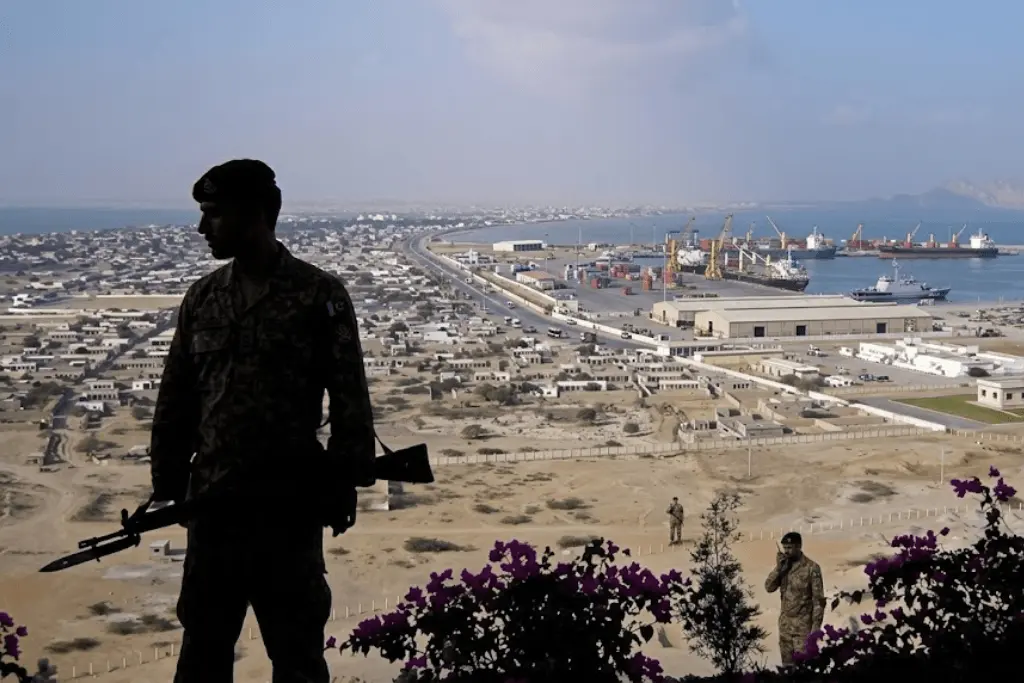
The Pakistani military leadership has given a strong warning against foreign-sponsored proxies to destabilise Balochistan and hinder development in the province. The message of the Chief of Army Staff and Chief of Defence Forces, Field Marshal Syed Asim Munir, links territorial security with economic progress and social stability.
Pakistan’s Security Policy Puts Balochistan Stability As Its Foundation
Balochistan remains strategically important to Pakistan because of its geographic position, natural resources, coastline and regional connectivity. The province is also an important part of long-term infrastructure and investment plans linked to national economic development.
Hostile militant networks are proxies of external forces that use them to create instability during interactions with political leaders and prominent figures from Balochistan,” Field Marshal Asim Munir said. The assessment echoes Islamabad’s overall position that the security threats in the province are linked to attempts to foil Pakistan’s economic and strategic interests.
Field Marshal Asim Munir Issues Dire Warning On Territorial Security
Field Marshal Asim Munir has warned that any direct or indirect violation of Pakistan’s territorial integrity would be dealt with swiftly and decisively. The statement highlighted the state’s determination to protect national sovereignty and to prevent armed groups from creating conditions that threaten territorial stability.
The warning is especially relevant for Balochistan, which has been hit by attacks by separatist militants and other armed groups. Repeated attacks on infrastructure such as economic infrastructure, transportation networks and security personnel have taken place in areas affected by insurgent activity.
Foreign-Sponsored Proxies Remain An Ongoing Security Challenge
Pakistan has identified what it calls foreign-backed militant proxies as a major threat to Balochistan. The military leadership has recently referred to hostile networks such as Fitna al-Khawarij and Fitna al-Hindustan in relation to the wider security environment.
Officially, the groups are seeking to sow discord between the people and the state institutions. Violence and propaganda can be used in tandem to undermine public trust and to block development, Pakistan has said.
Development Of Balochistan Still A National Priority
Pakistan’s security leadership has said that the future of Balochistan and its development priorities should be decided by the people of the province. The message puts socio-economic progress at the core of the response to instability.
The development of Balochistan has always been linked to improved connectivity, jobs, infrastructure, education, health care and better economic integration. Progress in these areas can help to build the foundation for long-term stability.
Infrastructure And Connectivity Targeted By Security Threats
Balochistan has seen several militant attacks on infrastructure and transport systems. The province has also encountered security issues for the China-Pakistan Economic Corridor. Reliable protection is essential for regional connectivity and investment projects, because any disruption can affect construction, transportation and commercial activity.
The security debate in Balochistan cannot be divorced from the economic interests of Pakistan. Trade and investment are strategically important to the transport and economic networks, especially Gwadar and related infrastructure, and protecting them is a national issue.
Political Leaders Called To Push Back Against Hostile Narratives
The military leadership also appealed to the political leadership and notables of Balochistan to help in countering hostile propaganda. The approach is a recognition that security cannot be achieved by military means alone.
Participation in politics, communication to the public and tighter links between communities and institutions can help to prevent misinformation from creating deeper divides. Local leadership can also provide valuable insight into development priorities and community concerns.
Strong Security Measures Aim To Protect Civilian Development
Pakistan’s security response is being built around protecting communities, infrastructure and development projects. The goal is to prevent armed groups from interfering with normal economic and social life.
Militant organisations continue to be a threat, putting workers, transport operators, businesses and local communities at risk. Good security measures can help maintain access to vital services and allow development projects to continue in the face of adverse conditions.
Cross-Border Threats Must Be Stopped For Regional Stability
Pakistan’s concerns about foreign-sponsored proxies also have a broader regional dimension. Balochistan borders Afghanistan and Iran, and its position along the Arabian Sea gives the province considerable geopolitical importance.
Cross-border militant networks can be a challenge beyond the individual incidents. Hence, intelligence cooperation, border management and regional diplomatic engagement can be important elements of Pakistan’s national security strategy.
Balochistan’s Future Still Linked To Development
Pakistan’s leadership has been clear that the economic and social trajectory of Balochistan should not be determined by militant threats. The province continues to be a key component of national development planning, with substantial potential in natural resources, agriculture, energy, trade and connectivity.
The challenge is to make sure that development gains are actually felt by communities, while security institutions work to protect projects and public infrastructure from disruption. This kind of strategy could create a stronger public trust and incentives for peaceful economic participation.
Pakistan Vows To Protect National Stability Again
Field Marshal Asim Munir’s latest warning is a strong statement of Pakistan’s position on Balochistan security. The official line is that foreign-sponsored militant activity will not be allowed to compromise territorial integrity or impede progress in the province.
Pakistan’s approach balances economic development, community engagement and security measures simultaneously. The aim is to specify conditions under which infrastructure, investment and public welfare can progress even with the threat of militant organisations.