Farhan Qureshi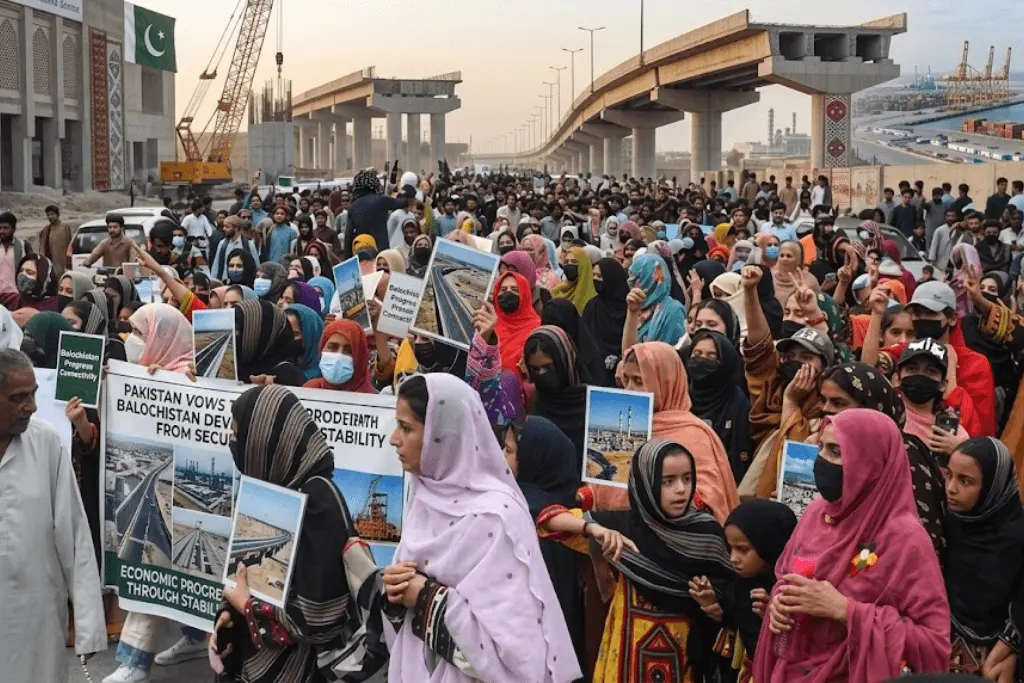
Pakistan has reiterated its resolve to safeguard Pakistan Balochistan development, infrastructure and foreign investment in Balochistan as the province’s economic activity continues to be hampered by security threats from separatist militant groups Federal leaders have made it clear that violence will not derail long-term development priorities.
Pakistan Gives Priority To The Development Of Balochistan
Balochistan is of special importance to Pakistan due to its geographical location, natural resources and access to the Arabian Sea. The province links Pakistan with main regional corridors and is at the heart of several long-term infrastructure and investment schemes.
Separatist militant groups, including the Baloch Liberation Army, have increasingly targeted security installations, transportation networks and infrastructure. Coordinated attacks and disruptions can represent significant challenges for businesses, workers and communities.
Foreign investment has become an important part of Balochistan’s development outlook. The China-Pakistan Economic Corridor and major mineral resources-associated projects have the potential to create employment, infrastructure improvement and export opportunities.
Reko Diq is one of the most important mining developments connected with the resource potential of the province. Large-scale projects need a stable operating environment, reliable transport connections and effective security arrangements.
CPEC Still Tied To Balochistan’s Economic Potential
Balochistan is important in the overall CPEC framework because of its link with Gwadar and regional trade routes. Infrastructure development in the corridor can improve transportation, logistics and commercial connectivity.
Some projects and personnel involved in big investments have been a problem due to security concerns. Pakistan has therefore given greater importance to the protection of infrastructure and foreign workers engaged in development activities.
The federal development spending is expected to play a major role in addressing the economic needs of Balochistan. The proposed Rs300 billion allocation for the Karachi-Chaman Expressway points to the scale of infrastructure ambitions related to regional connectivity.
The development plans also include support for agriculture with measures including PKR 50 billion for agricultural solarisation. Reliable electricity access and energy cost considerations continue to drive agricultural productivity.
The Pakistani military leadership has repeatedly said it will respond strongly to militant violence. Security operations aim to stop armed groups from disrupting communities, infrastructure, and economic projects.
A Part Of The Response Is Continued Political Outreach
Pakistan has pursued a strategy that mixes calls for political engagement with action against militant networks. Peaceful actors can be engaged at the local level to help address legitimate concerns of the community, while isolating armed groups responsible for violence.
Such engagement can be especially important in a province as geographically diverse and politically complex as Balochistan. Involving local people in development planning can help make sure infrastructure and economic initiatives are consistent with community priorities.
Balochistan’s transportation and energy infrastructure has functions extending far beyond the provincial boundaries. Highways, railroads, pipelines and ports are essential for Pakistan’s national connectivity and commercial networks.
Gwadar is one of Balochistan’s most significant examples of the potential for a trade and logistics hub. Development projects can create jobs in construction, logistics, mining, agriculture, telecommunications and services.
International investors require security, regulatory clarity and reliable infrastructure before committing capital to long-term projects. Therefore, the security situation in Balochistan is closely related to the investment prospects of the province.
Pakistan’s insistence on safeguarding foreign investments points to the fact that large economic projects remain a national priority. Standardised security measures can lessen operational risk and boost confidence among international partners.
Pakistan Tries To Balance Security And Development
Balochistan is a clear example of how security and economic development are linked. Infrastructure cannot reach its full economic value without adequate protection, and security that lasts is more attainable when communities have access to opportunity and public services.
Pakistan’s current strategy thus combines security operations with development spending and political outreach. This multi-dimensional approach recognises that provincial stability is dependent on both protection from violence and continued investment in economic opportunity.
The geography, natural resources and access to international trade routes of Balochistan make it an important part of Pakistan’s long-term economic plans. It is still important to preserve these assets for national growth and regional connectivity.
Federal commitments to major highways, agricultural modernisation and investment protection indicate continued attention to the province’s development needs. And that framework can be further improved by continuing to focus on local participation and economic inclusion.