Farhan Qureshi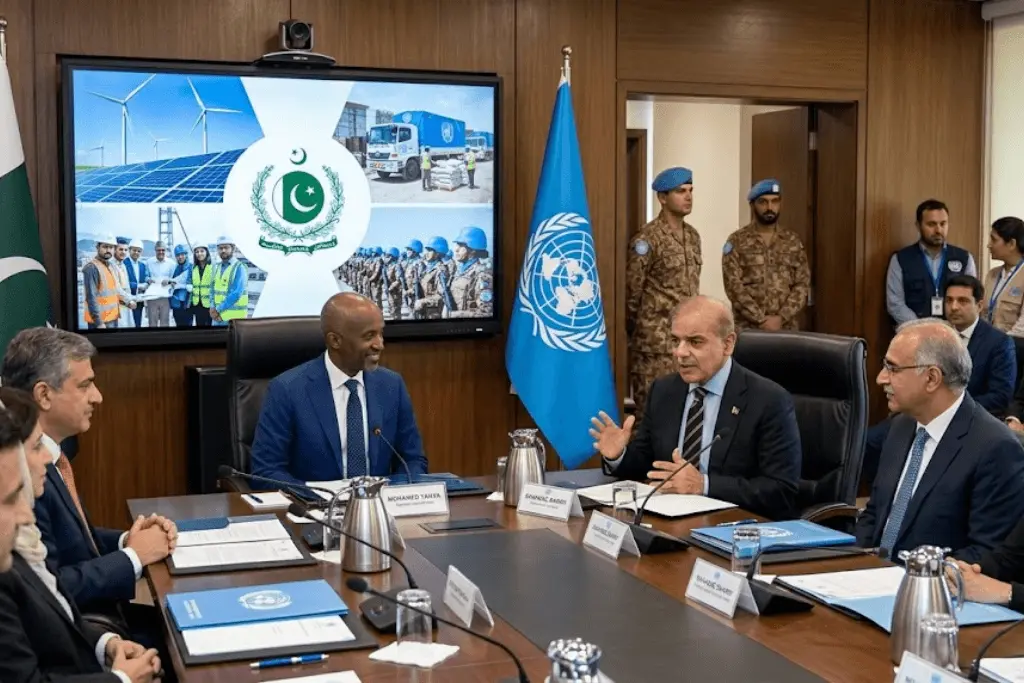
High-level meetings in Islamabad highlighted the significance of ongoing partnership on development, climate resilience, humanitarian assistance and international peacekeeping, and the farewell meetings were an opportunity to review the relationship between Pakistan and the United Nations and to identify areas where cooperation can be further expanded.
There were important areas of common interest, including climate resilience, sustainable development and disaster preparedness.
Pakistan’s engagement with the UN is important because the country faces a combination of development needs and climate-related risks. Continued international cooperation can help marshal resources, technical expertise and institutional support for longer-term national priorities.
Mohamed Yahya Completes Key Pakistan Assignment
Following a period of great humanitarian and development challenges, Mohamed Yahya has stepped down as UN Resident and Humanitarian Coordinator in Pakistan. His mandate encompassed engagement with Pakistani institutions and with international partners on a variety of issues.
During his tenure, cooperation with the UN continued to focus on humanitarian response, sustainable development and resilience. The farewell talks acknowledged the role played in strengthening the institutional ties between Pakistan and the UN.
Pakistan, Un Cooperation: Climate Resilience In Focus
Climate change is one of the most important areas for continued cooperation between Pakistan and the UN. Pakistan’s interaction with the UN presents an opportunity to mobilise international support behind nationally identified priorities.
Additional climate finance can help fund projects in renewable energy, resilient infrastructure, water systems and disaster preparedness. Such investments may also generate jobs and support technological development.
Sustainable Development Remains A Common Priority
Pakistan and the UN are also expected to continue working together in the area of poverty reduction, social protection, education and economic development. These areas form an important part of Pakistan’s broader development agenda.
UN agencies can provide technical support and international experience while Pakistani institutions continue to implement national programs. When aligned with local needs, such cooperation can increase the effectiveness of development initiatives.
Pakistan’s Disaster Response Still Matters
Floods, heavy rains, and other climate-related emergencies continue to haunt Pakistan, making disaster preparedness a national priority. Effective response systems save lives, protect livelihoods and speed up recovery after major events.
UN humanitarian agencies play a vital role in supporting Pakistan in times of emergencies. Cooperation may include coordination, technical assistance, humanitarian planning and efforts to mobilise international resources.
Pakistan Pushes For More Global Climate Cooperation
Pakistan’s diplomacy on climate issues has increasingly focused on the nexus between climate vulnerability and development. The country has urged greater international attention to the needs of states vulnerable to climate change.
The UN is still an important forum for such discussions, and Pakistan can engage with international institutions for technical expertise and financing for climate adaptation and resilience programs.
The UN Partnership Promotes Sustainable Economic Growth
Pakistan and the UN collaborate on development in areas that directly impact economic opportunity. Also, better education, stronger social protection and improved public services can underpin a more productive workforce.
Stronger institutions and infrastructure are also needed for sustainable development, and UN-supported programs can complement national efforts to improve governance, reduce poverty and broaden economic participation.
Pakistan Is An Important Contributor To Peacekeeping
Pakistan has a long-standing peacekeeping dimension in its relationship with the United Nations. Pakistani personnel have participated in UN peace operations and international security efforts for many decades.
Pakistan’s role in the multilateral system, especially in the area of peacekeeping, remains important. This engagement by the country illustrates its wider contribution to international peace and security.
The high-level contact with Pakistan’s political leadership reflects the continued importance attached to the UN relationship, and Pakistan’s engagement with multilateral institutions is aimed at addressing national priorities through international cooperation.
Mohamed Yahya’s New UN Job Adds Continuity
Yahya’s appointment to a senior humanitarian position in the UN system could offer further institutional continuity. His time in Pakistan has given him an insight into the country’s development and humanitarian landscape.
The next phase of Pakistan-UN cooperation would focus more on projects that combine economic growth and environmental resilience. Green infrastructure, renewable energy and climate-smart agriculture can deliver both.
Humanitarian assistance is an important part of the Pakistan-UN relationship, especially in cases of natural disasters and other emergencies. But genuine long-term resilience needs stronger national systems that can handle crises before they spiral out of control.
Pakistan’s Development Priorities Continue To Be Concentrated
Yahya’s departure has also highlighted that Pakistan-UN cooperation spans across several interlinked priorities. Climate resilience, poverty reduction, education, humanitarian response and peacekeeping are all factors that contribute to national stability and development.
Mohamed Yahya’s exit could be a shift in leadership, but the broader Pakistan-UN relationship is well-established. The farewell meetings in Islamabad sent a clear signal that cooperation will continue on climate, development, humanitarian and security-related areas.