Farhan Qureshi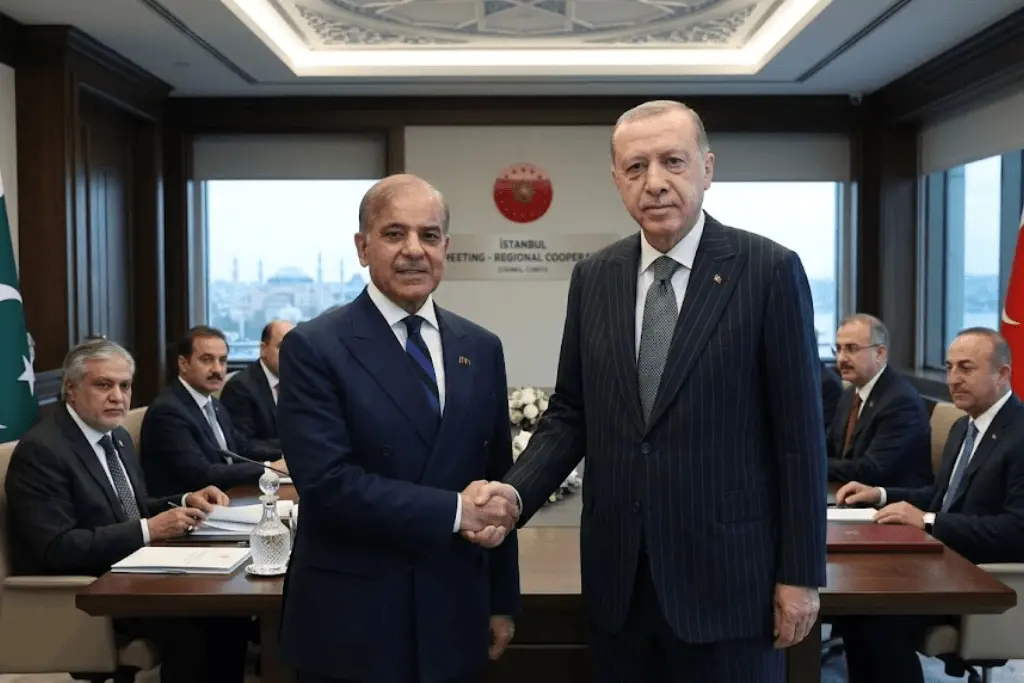
With Pakistan and Türkiye strengthening Pakistan Türkiye relations, Deputy Prime Minister and Foreign Minister Ishaq Dar has accepted an invitation to participate in a Regional 4 Foreign Ministers’ Meeting in Istanbul later this month. The gathering is to be attended by senior diplomats from Saudi Arabia, Egypt, Pakistan and Türkiye.
Pakistan Agrees To Attend Istanbul Conference
Ishaq Dar has accepted the invitation of the Turkish Foreign Minister Hakan Fidan to attend the forthcoming meeting in Istanbul. The engagement is anticipated to offer an opportunity for the four countries to discuss positions on regional developments and to explore diplomatic approaches to current challenges.
Pakistan’s participation is proof of its commitment to dialogue and political engagement as essential tools for regional stability. The country has been increasingly engaging in constructive diplomatic relations with neighbours and partners in the Middle East, while supporting efforts to prevent regional crises from spilling over.
4 Foreign Ministers To Coordinate Peace Efforts
The Istanbul meeting will be attended by foreign ministers from Pakistan, Turkey, Saudi Arabia and Egypt. All are important diplomatic and strategic partners in the wider region, so the gathering could be potentially important.
Notably, Pakistan is involved, given the long-standing relationships that Islamabad has with partners in the Middle East and Asia more broadly. The diplomatic posture allows Pakistani leadership to present views that reflect South Asian security concerns and its ties with Gulf and Muslim-majority countries.
Pakistan, Türkiye Reaffirm Commitment To Diplomacy
The Istanbul meeting is being planned after recent talks between Dar and Fidan, in which Pakistan and Türkiye reiterated the importance of dialogue and diplomacy. The general position is that political engagement is preferred as a means of addressing regional tensions.
Diplomatic engagement continues to be an important part of Pakistan’s overall foreign policy approach. Islamabad has always emphasised peaceful settlement, consultations among the regional states and cooperation on common security interests.”
Istanbul Meeting Builds On Broader Regional Cooperation
The next meeting is not a standalone one. This is part of wider security and diplomatic frameworks with Pakistan, Türkiye and Saudi Arabia.
Recently, Pakistan, Saudi Arabia and Türkiye entered into a Makkah Joint Defence Agreement, adding another dimension to regional cooperation. The Istanbul meeting is primarily about diplomatic coordination, but it is also taking place amid increased engagement by regional partners.
As Pakistan’s Diplomatic Clout Becomes More Apparent
Pakistan’s involvement in the Istanbul initiative is another opportunity for Islamabad to demonstrate diplomatic relevance. It has historic connections across South Asia, the Middle East and the wider Muslim world.
Türkiye Offers A Platform For Dialogue In Region
And Turkey’s hosting of the meeting raises Istanbul’s diplomatic profile. Ankara has increasingly used diplomatic engagement to position Türkiye as a bridge between countries facing complex geopolitical challenges. The city has long been a crossroads between regions.
Talks Gain Strategic Importance For KSA
Saudi Arabia’s involvement lends substantial weight to the four-nation diplomatic push. Riyadh has broad political, economic and security connections across the Middle East and the wider world.
Egypt Expands Diplomatic Framework In Region
Egypt’s participation adds yet another important dimension to the meeting. Cairo is strategically located at the crossroads of North Africa, the Middle East and wider international diplomatic networks.
Dialogue Is At The Heart Of Pakistan’s Regional Strategy
In its diplomatic posture, Pakistan has been increasingly in favour of dialogue to address the challenges in the region. By supporting political engagement, Islamabad is able to maintain relationships with a variety of partners, even when there is geopolitical tension.
The approach might afford Pakistan greater diplomatic latitude. Islamabad should explore multiple avenues of bilateral and multilateral engagements rather than depending on one strategic partnership alone.
Better Communication Needed For Regional Security
Security concerns in the wider region have highlighted the need for direct communications between governments. Poor diplomatic channels or lack of consultation among regional actors can lead to swift escalation of political tensions.
Pakistan, Turkey To Enhance Bilateral Ties
The Istanbul initiative also bolsters the wider Pakistan-Türkiye relationship. For decades, the two countries have had close political relations, as well as strong public and diplomatic ties.
Regional Arrangements Could Be More Inclusive
The emerging security and diplomatic arrangements between Pakistan, Turkey and Saudi Arabia have also created the prospect for broader participation. The Turkish leadership suggested that frameworks of regional cooperation could remain open to Egypt and other partners.
Pakistan Can Back Peaceful Regional Connectivity
Economic connectivity is strongly linked to peace at the regional level. Stable political conditions mean that trade routes, investment relationships and infrastructure projects can be developed with greater certainty.
Diplomatic Engagement Strengthens Pakistan’s Foreign Policy
The Istanbul meeting is consistent with Pakistan’s wider efforts to maintain constructive relations with key regional partners. Engagement with Saudi Arabia and Egypt, and with Türkiye, provides Islamabad with numerous options to deal with common issues.
Such diplomacy can also enhance Pakistan’s image as a dialogue-seeking nation rather than a confrontational one. High-level meetings are held regularly to enable Islamabad to put forward its priorities and to hear from other regional governments.
Meeting In Istanbul Could Improve Regional Coordination
The upcoming meeting is expected to concentrate on regional peace, stability and diplomatic solutions to the current challenges. The importance of it will depend in part on the ability of the governments involved to continue to coordinate after the ministers leave Istanbul.
Pakistan wants peaceful solutions for the region. Ishaq Dar’s acceptance of the Istanbul invitation takes Pakistan into the thick of an expanding regional diplomatic process. The meeting will convene four key countries at a time of regional security pressures that require ongoing communication and political engagement.