Sana Khalid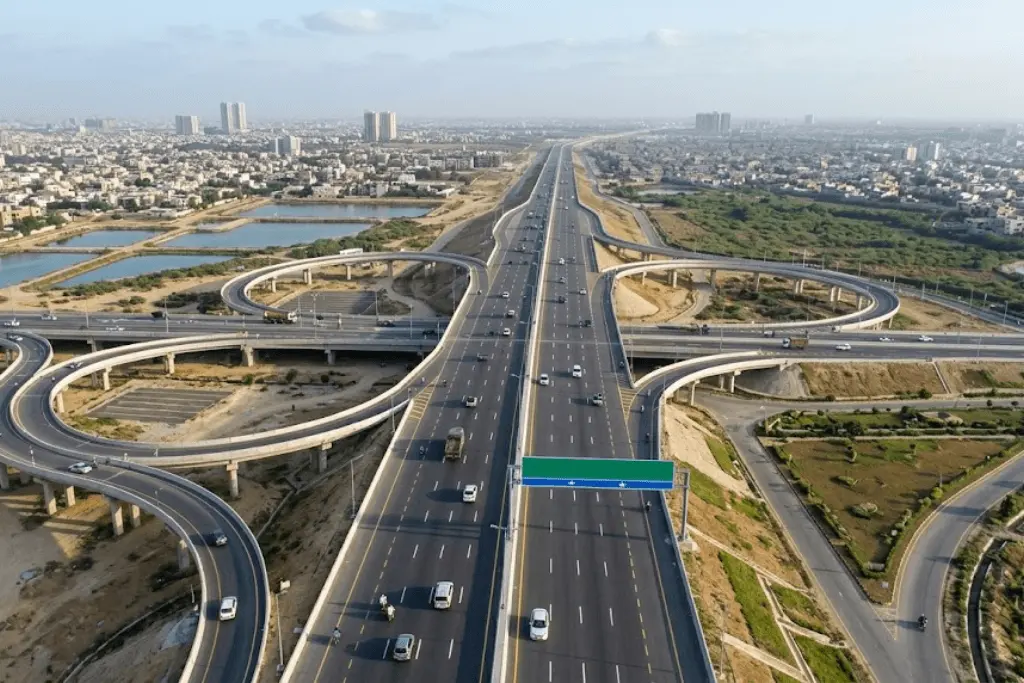
Karachi is all set to witness a revolution in transport with the Malir Expressway or Shahrah-i-Bhutto Expressway. The work is expected to be completed by the end of May 2026. This 38-kilometre corridor is a bold move that will connect Jam Sadiq Interchange directly to the M-9 motorway at Kathore Interchange, providing a faster and more efficient route for thousands of commuters travelling across the city on a daily basis.
The expressway has already become one of the most talked about infrastructure projects of Karachi because of its expected impact on the traffic flow, travel convenience and urban connectivity. Pakistan’s financial hub is growing fast, and the need for modern transport infrastructure has increased significantly. Officials and transport experts said the new route would help ease pressure on heavily congested roads, while offering commuters a smoother and more predictable journey.
The project is also perceived as a symbol of Karachi’s evolving urban fabric and reflects the city’s growing focus on sustainable infrastructure development and mobility enhancement.
Shahrah-i-Bhutto Expressway Reaches Final Stage Before Full Launch
By mid-May 2026, the project had exceeded 93 per cent physical completion, authorities confirmed. Most of the heavy construction work on bridges, interchanges and supporting infrastructure is already done. Final asphalt surfacing, lane finishing, and operational preparations are being completed ahead of the official opening of the full route later this month.
During the construction period, the expressway has been opening in phases, allowing commuters to gradually enjoy the completed sections. But the last link to the M-9 motorway should open up the project’s full operational capacity and dramatically improve regional accessibility.
The corridor from Jam Sadiq Interchange to Kathore Interchange on M 9 Super Highway has been designed to facilitate seamless travel across major areas of Karachi and to reduce dependence on congested routes like National Highway.
Additional connecting roads and interchanges are also expected to ease access to neighbouring residential and commercial areas. Urban planners believe the project could be a major factor in changing commuting patterns in Karachi in the next few years.
Karachi Commuters Expected to Save Nearly 60 Minutes Daily
There is expected to be a big highlight in the reduction of travel time on the Shahrah-i-Bhutto Expressway. Officials say commuters travelling between Karachi and areas served by the M-9 motorway could save as much as 60 minutes during peak traffic periods.
Long traffic delays have become a routine challenge for many residents, especially those who commute daily from DHA City Karachi, Bahria Town Karachi and other developing communities along the motorway corridor. The National Highway gets congested often, and hence travel time can be longer, especially during office hours and weekends.
The new expressway is expected to offer a direct high-speed alternative, bypassing some of the city’s most congested traffic bottlenecks. Faster connectivity can also translate into more convenience for businesses, transport operators and logistics companies that depend on efficient movement of goods between Karachi and its periphery.
Transport analysts say the project could also help reduce fuel consumption from stop-and-go traffic. Daily commuters will benefit from reduced stress levels during their commute and better overall road efficiency thanks to smoother travel flow.
DHA City and Bahria Town Residents to Benefit Significantly
The expressway will probably be particularly important for residents of Karachi’s rapidly expanding suburban developments. In recent years, communities along the M-9 corridor have experienced strong growth in residential and commercial activity, increasing the need for faster and more reliable transport connections.
The project is likely to benefit DHA City Karachi and Bahria Town Karachi the most. An improved route could encourage more investment, support housing growth and connect those developments to Karachi’s central business districts.
Real estate industry experts think that better infrastructure can make emerging urban zones more attractive by making daily commutes easier and more practical. Hence, the expressway may contribute not only to transport efficiency but also to broader economic and urban development in the region.
Pakistan’s Urban Infrastructure Push Gains Momentum
The Shahrah-i-Bhutto Expressway is near completion and reflects Pakistan’s larger agenda of enhancing urban infrastructure and transportation systems. The expansion of population, commercial development, and amplified use of vehicles continue to exert pressure on large metropolitan centres such as Karachi.
Modern road corridors and connectivity projects are increasingly being seen as critical investments to stimulate economic productivity and improve the quality of urban life. The expressway project is a large-scale infrastructure development and has a direct impact on commuting convenience, commercial movement and city planning.
Karachi’s most transformative road project in recent years, the Shahrah-i-Bhutto Expressway, is already being lauded with final stages of work underway for a projected opening in May 2026. Once fully functional, the corridor will be a long-awaited relief for traffic and will improve connectivity between Karachi and the M-9 motorway corridor for years to come.