Farhan Qureshi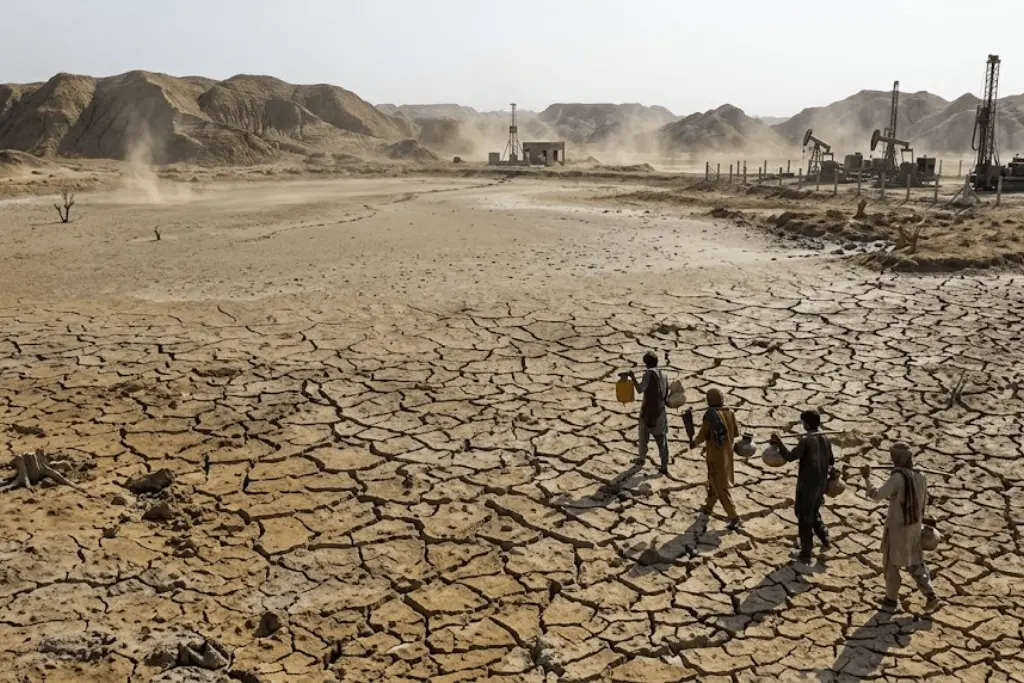
Pakistan water shortage crisis is worsening as Pakistan is in the throes of a water crisis, sometimes called “water bankruptcy”, where demand has exceeded sustainable supply.. Years of over-extraction of groundwater and mismanagement of resources have made Pakistan one of the most water-stressed countries in the world.
What is particularly disturbing is the exhaustion of aquifers, which in dry times were a cushion but are now the main source of water. In major cities, the water table has dropped alarmingly, and wells have had to be dug deeper, according to reports.
Faced with these problems, Pakistan is becoming increasingly sensible of the need for change. There is national awareness, policy debate and new sustainability initiatives which show a determination to protect water resources and build for the future.
Agricultural Demand & Excess Use Of Groundwater
In Pakistan, the agriculture sector uses most of the water and is the largest user of groundwater resources. Agriculture in Pakistan is very dependent on water-intensive crops such as rice and sugarcane, which put a lot of strain on water resources.
The unregulated tubewells have pumped fast beyond the recharge capacity. This has changed the groundwater from a buffer to an endangered resource. In some areas, water tables have fallen to dangerously low levels, increasing the farmer’s costs and limiting access for communities.
Agricultural modernisation is gradually gaining speed. Lower aquifer demands with higher production can be achieved with cropping patterns that require less water and better irrigation technologies.
Environmental And Economic Impact Of Overuse
The overuse of groundwater can have a wide range of environmental and economic impacts. more and more conspicuous environmental problems, such as land subsidence and drying out of wetlands. The land in some places is actually “shrinking” because of over-exploitation of water, with permanent damage.
Water is also being polluted, but the concentration of health problems-inducing contaminants such as arsenic and fluoride increases when there is less water. It is seen as an exchange of resources for quick profit. Risk awareness is growing among policymakers, who are now beginning to focus on sustainable development.
Water Insecurity Is Being Exacerbated By Climate Change
Climate change is worsening Pakistan’s water problems. Rain is coming in new patterns, and glaciers are melting. Floods can allow temporary access to water, but where there are no storage facilities, water is lost.
The warmer it gets, the more water evaporates, which means less water. It means Pakistan is having floods and droughts in the same year.
But now Pakistan is responding to climate change. Priority is given to climate adaptation, water saving and infrastructure projects to guarantee resilience to future threats.
Solutions: Towards The Sustainable Management Of Water
The road forward is solutions, short-term and long-term. One key strategy is Managed Aquifer Recharge (MAR), which captures floodwater to recharge the aquifers.
It is also necessary to upgrade water infrastructure. The water system efficiency can be improved by reducing leakages in the water distribution system and encouraging water reuse. Water demand is controlled by urban planning.
The big thing is the land question. Farmers could be offered incentives to grow drought-resistant crops and use water-efficient irrigation methods, and they grow crops, but they use less water. They are vital to food security and environmental sustainability.
Unplanned urbanisation and uncontrolled population growth are causing water scarcity in major cities of Pakistan. Rising water consumption, falling groundwater tables and leaking pipelines are affecting Lahore, Karachi and other cities. The infrastructure is old, and illegal connections are a problem.
In urban areas, people rely on private water tankers. Thus, resulting in unequal and privatised water access. The heavy reliance on private water tankers is a clear sign that there is a need for better infrastructure and regulation of the water supply. Urban development investments and smart water management systems are gradually but surely making a difference in sustainable urban development.
The water table level changes the amount of water and the quality. The lowering of the water table increases the concentration of pollutants like arsenic, fluoride and industrial effluents, which can lead to serious health problems.
Water pollution causes kidney disease, water-borne illness and many other health problems in many places. Without filtration and medical services, rural communities are especially vulnerable. The schemes will cut disease risk and improve habitability. This demonstrates a profound concern for human health and water scarcity.
To overcome water bankruptcy, we need a multi-pronged approach that includes innovation, strong policy and community engagement. There is a growing demand for change in policies for the management of groundwater and for the sustainability of agriculture. Community-level programs include public education programs to promote the sustainable use of water.
Pakistan’s future is bright for innovation and collaboration. We need coordinated policy, technology and community action to shift the nation from emergency water management to sustainable and resilient water management.
Pakistan’s Defining Moment For Its Water Future
The water crisis in Pakistan has generated policy and public awareness. We are seeing themes of water tariffs, tubewell regulation and better management emerging as part of a reform movement.
Also, conservation is helped by involving locals. Some people are involved in water programs that raise awareness about water or manage water locally to save water.
Shifting to sustainability is a good thing. But there are still huge challenges ahead. The focus on innovation, policy reform and citizen engagement gives reasons to be hopeful for the future.
Water bankruptcy is a metaphor for Pakistan’s dire situation, but also an opportunity. It should be development versus environment. Pakistan can change the trend and protect its water through joint initiatives of government, communities and industry.
This will take effort and imagination, but a growing awareness of the situation is a vital first step to change.