Farhan Qureshi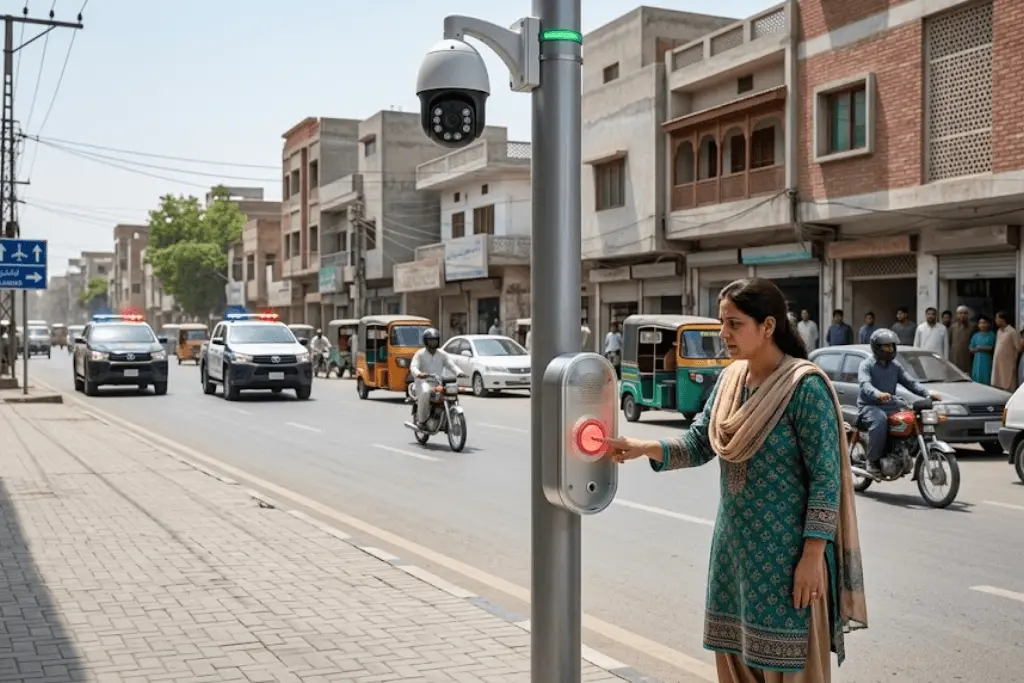
The installation of Peshawar panic buttons at 68 locations is a significant move to enhance city security under the Safe City program. The project aims at offering short-term emergency response and enhancing community security, especially among women, families and vulnerable citizens.
The government refers to the project as a greater modernisation attempt to enhance emergency response infrastructure and create confidence in people in the security-providing state apparatus. The new panic button system should help in saving time during emergencies, besides enhancing the coordination of the law enforcement agencies and rescue teams.
The project has put focus on the growing investment by Pakistan in technology-driven government security in big cities.
How The Panic Button System Works
The emergency panic buttons are easy enough to use by the masses in an emergency. The emergency button placed in specific publicised areas allows citizens who are the victims of the incidents mentioned, under harassment, emergency medical cases, theft, suspicion, and security threats, to press the button.
Upon activation, the system notifies the monitoring teams of the Safe City and the local police departments. Through combined surveillance and communication systems, authorities are then able to send emergency responders to the exact place.
According to officials, the system is particularly beneficial in busy commercial districts, transportation intersections, and social meeting points where there might be a necessity to call the police at once.
It is a proposed technology that will help to establish a quicker and more confident emergency response framework and promote a safer movement of people across the city.
Full List Of Areas Covered By Panic Buttons
The panic buttons were placed at 68 strategic locations throughout Peshawar, such as major roads, markets, public transport site and, commercial centres, educational environments, and high foot traffic and congregation sites.
Authorities have given priorities to high-footfall areas where emergency services might be required most. Some are said to be situated around the area around women-centred spaces, shopping areas, crossroads, and urban highways, which are highly populated.
Although the authorities have not officially disclosed the exact location of installations due to security reasons, citizens are likely to know the whereabouts of panic buttons by viewing visible signage of the safe city on the streets and by community sensitisation measures.
Expansion of camera surveillance and networked monitoring is being incorporated as well, and the presence of the emergency buttons to enhance security management of the whole city is well discussed.
Women’s Safety Remains A Key Focus
The corporate social responsibility of enhancing the safety of women in society is one of the main objectives of the initiative. The authorities think the panic button system will be able to assure women more confidence when travelling, shopping, studying and commuting within the city.
The alert system about potential emergencies can be created to offer effective communications to police response regarding the problems of harassment or threats. Experts in public safety report that observable emergency infrastructure has a tendency to prevent crime and antisocial behaviour on the street.
The project is indicative of a larger trend towards proactive urban safety planning in the big cities of Pakistan.
Authorities Consider Expansion To Other Districts
After the implementation in Peshawar, the government is now thinking of applying the same panic button facility in other districts in Khyber Pakhtunkhwa.
Officials are confident that the initial positive experience with the Safe City project may prompt more cities to implement a smart system of policing and emergency technologies. The expansion plans can involve the installation of more surveillance, combined emergency response teams and digital coping systems.
The project is also becoming a considerable case study of ways in which technology can be used to enhance modern policing and citizen protection in Pakistan.
Safe City Project Signals Modern Security Transformation
Introduction of panic buttons is yet another move in the current modernisation of urban security in Pakistan. There is an increasing trend in the use of smart surveillance systems, emergency communication networks and technology-based policing to manage the ever-expanding cities.
The case study of the Safe City project of Peshawar illustrates that the development of urban infrastructure on aspects of safety could be brought on par with the current city-living issues and bring about the enhancement of emergency readiness and the trustworthiness of the community.
Authorities are still urging citizens to utilise emergency systems in a responsible manner and collaborate with authorities to make sure that the initiative provides long-term changes in the realm of safety, responds promptly, and builds trust among citizens throughout the city.