Urooj Niazi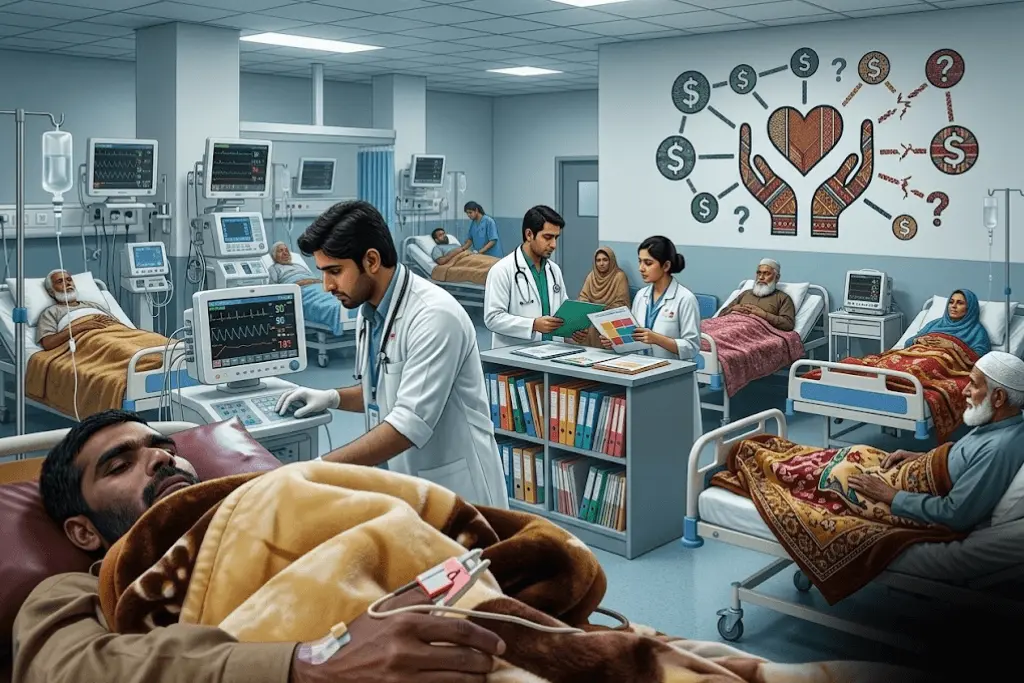
The Sehat Sahulat Program 2026 (SSP) of Pakistan remains one of the most ambitious government-led healthcare programs of South Asia. The program has enabled millions of families to receive hospital care, avoiding the burden of huge medical bills and to be treated and even better, the program has reduced catastrophic medical costs; this has made the program highly beneficial and effective in relieving many families.
By early 2026, the federal government will have revived and renewed the scheme until 2027 to Islamabad, Gilgit-Baltistan and Azad Jammu and Kashmir under an updated PKR 40 billion scheme. Other provincial administrations, particularly Punjab and Khyber Pakhtunkhwa, have also been very active in ensuring healthy allocations of funds towards healthcare to maintain coverage of vulnerable groups.
The initiative has made a renewed Pakistan a country that is concerned with social welfare reforms and healthcare availability. Nevertheless, an increase in financial strains has been a catalyst for a nationwide discussion on the viability of universal healthcare in the long-term.
Rising Fiscal Pressures Challenge Universal Coverage
One of the major challenges that the Sehat Sahulat Program is facing is the rising fiscal implications on the national economy. Pakistan continues to have high debt servicing obligations, inflationary pressure and increased government spending, which reduces the government’s capacity to finance mass welfare schemes forever.
Economists and policy analysts say that the present free-for-all-you-can healthcare system can be hard to maintain unless the structural changes are significant. Some of these institutions, including the Pakistan Institute of Development Economics (PIDE), have indicated that a transition to a more focused system based mainly on low-income and vulnerable households is necessary.
Claims in the healthcare sector under the SSP have grown at high rates owing to the growth of enrolment and heightened awareness by citizens. The risk premium that governments pay insurance companies to cover them in most instances has, in several instances, been unable to keep up with the actual treatment costs. The skew has caused fears of deficits and late payments in the system in the future.
Nevertheless, these complications do not make healthcare protection less vital to policymakers who insist on the fact that it is necessary to consider healthcare protection as the key to national stability and alleviation of poverty.
Provincial Differences Create Uneven Healthcare Access
Another big battleground is regional variations in implementation issues. Khyber Pakhtunkhwa has been considered largely current and comprehensive in the inclusion of the Sehat Card system, while Punjab and Sindh have periodically restructured their policies due to financial constraints and changing political priorities. But experts have warned that intermittent use could erode public trust and make the scheme less effective over time.
The provincial governments are committed to better health care, as evinced by the allocation of PKR 25 billion for universal health insurance in the city budget for 2025-26. But balancing health spending with other development priorities is a very difficult task.
The overall program impact is also affected by variations in hospital facilities, the number of doctors and rural health services. Insurance-led reforms have opened up faster access to urban centres and left remote areas with no medical facilities and specialised treatment centres.
Sehat Sahulat Program Has Reduced Financial Hardship
The Sehat Sahulat Program continues to face criticism, but it has been providing tangible social gains throughout Pakistan. Surgeries, emergency care and specialised treatment are now afforded to many families who were avoiding cost controls on treatment in the past.
The plan has been of great assistance, especially to the middle-income and the low-income earning households in evading catastrophic medical debt that is catastrophic. Participating hospitals have made expensive cardiac disease, cancer, kidney and maternal healthcare treatments accessible.
According to healthcare professionals, the consumption of out-of-pocket medical expenses is minimised to enhance economic stability in the family. With insurance assistance, families with significant diseases are less likely to sell property, acquire high-interest loans, or drop below the poverty line.
The scheme has also facilitated increased involvement of the private sector in the healthcare provision. SSPs have increased the number of treatment methods as well as service access in various areas.
Debate Grows Over Means-Tested Healthcare Model
More analysts are arguing for the need to shift the program into a more means-tested approach, as opposed to keeping it universally open. In this scheme, government subsidies would mostly favour the poor and marginalised citizens, with richer households making contributions to their respective medical expenditures.
Advocates believe that intensive subsidies would enable the program to be financially viable without leaving the vulnerable groups behind. These reforms would enable the governments to shift the resources towards bettering the public hospitals, preventive care, and rural health clinics as well.
Critics make the caveat, however, that having universal access limited may cause some administrative headache and the lock-out of deserving families on the basis of documentation or verification difficulties. There are also fears that there might be undue influence by the political forces and inefficiencies in the bureaucracies that could impact the fair execution.
The debate is part of a wider international debate being experienced in most developing states as they strive to either achieve universal healthcare aspirations or make ends meet on a given budget constraint.
Public Healthcare Infrastructure Needs Long-Term Reform
The future success of the Sehat Sahulat Program may not depend only on financial sustainability. Healthcare professionals believe that Pakistan needs to improve medical infrastructure in the public sector to decrease the reliance on costly tertiary care.
Investment in rural medical facilities, digital health records, preventive healthcare systems and district hospitals is increasingly becoming the solution to the long-term healthcare reform. Early detection and preventive health care may help to lessen the economic cost of late pathological interventions.
The development of the medical workforce is also a critical issue. The provision of more training to doctors, nurses, and paramedics can contribute to the enhancement of the services provided in underserved areas.
Such reforms as telemedicine and digital monitoring systems driven by technology can also increase efficiency and cut operational waste in the hospital industry.
Pakistan’s Healthcare Debate Reflects Broader Social Transformation
The controversy of the debate on the Sehat Sahulat Program emphasises the transformed attitude of Pakistan on social welfare and society policy. Access to health care is becoming a national development agenda, instead of a scarce community service.
The fact that SSP has been continued until 2027 is an indication that policymakers have yet to understand that universal health protection is imperative, despite financial challenges. The concept of targeted reforms and cost management, as well as sustainable financing, suggests the transition of the subject of long-term planning to more systematic approaches.
The healthcare experience in Pakistan has been a difficult one, but sustained efforts to widen medical access point to a growing institutional awareness of the importance of human development, social stability, and economic resilience.
The Future Of Universal Healthcare Depends On Balanced Reform
Pakistan’s march to universal health care is reaching a crunch point. The Sehat Sahulat Program has already revolutionised access to medical care for millions of citizens, but such progress cannot be continued without paying attention to financial resources and change within institutions.