Urooj Niazi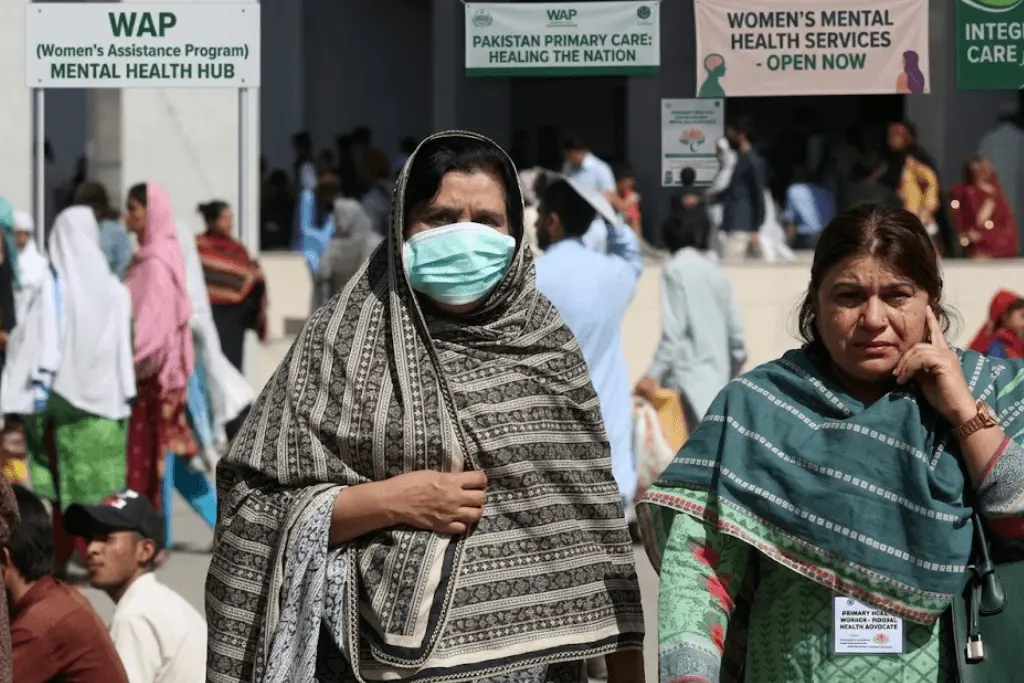
The Women Mental Health Pakistan is experiencing a critical period of retrospection and reconstruction. After the country keeps opening its doors to the fundamental health services, one of the gaps is urgent, that of the mental health of women. It is not only a medical need to have mental health support as a part of primary healthcare, but it is also a social need that can not only empower families and communities but the nation as well.
As the stress level increases, cultural pressure and access to healthcare continue to be limited, Pakistan has an additional chance to change its healthcare system, making it one that is really in favour of women throughout their lives.
The Hidden Mental Health Crisis Among Women in Pakistan
The issue of mental health in women is not only prevalent in Pakistan but also underreported. Research shows that depression and anxiety can be as high as 66 in rural areas, however, much higher than among men. Worse still, almost three-quarters of the patients who receive treatment in state-run mental hospitals are women.
These statistics indicate a bigger structural problem; not only are women more affected, but also less likely to be treated.
Cultural and Social Pressures
Numerous mental stressors directly affect the mental well-being of many Pakistani women and include:
- Family abuse and emotional abuse.
- Exchange marriage (watta satta) cultural practices, such as that.
- Dowry-related pressures.
- Little freedom in medical choice.
Studies indicate that one out of every five women is physically assaulted (almost half), and almost ten out of every twelve women are verbally or emotionally abused at some time.
Maternal Mental Health: A Growing Concern
Perinatal mental health is one of the most urgently needed, yet neglected, aspects. The rates of maternal depression are some of the highest in the region, in Pakistan:
- Antenatal depression: ~37%
- Postpartum depression: ~30%
Not only do these state-of-the-art disorders impact mothers, but there are long-term effects on child development, nutrition and emotional bonding. Mental health in mothers is hence a critical issue to address to break the vicious cycles of intergenerational stress.
Why Primary Healthcare Is the Key to Change
The primary healthcare network that is used in Pakistan, particularly through the Basic Health Units (BHUs), can serve as an effective base to incorporate mental health services. The actual answer is to take care near locations where women already go to seek assistance.
The Role of Lady Health Workers
The Lady Health Worker (LHW) program has already reached almost 60 percent of the rural population. These employees are the trusted members of society who can transform themselves in terms of mental health.
Training LHWs to spot depression, anxiety, and trauma early will enable Pakistan to develop a grassroots mental health safety net.
Breaking Barriers of Access and Stigma
Accessibility is one of the most difficult issues that women have to face in Pakistan. Others are unable to access the urban hospitals because of the costs, their lack of mobility or because of family reasons.
The inclusion of the mental health services into the local BHUs can assist by:
- Saving time and expenses on travelling.
- Provision of care in familiar places is trusted.
- Enabling women to get assistance without society being aware of it.
In cases where mental health is taken as a component of overall healthcare, it becomes normal. This is important in a society where women (mainly due to stigma) cannot talk out about emotional torture.
Economic and Social Benefits of Integration
Incorporation of mental health into primary healthcare is not only socially effective, but also economical.
Based on international health evaluation, this kind of integration would save the Pakistan economy to the tune of about US 1.6 billion of the long-term expenses incurred due to untreated mental illness. Through lower hospital admissions, increased productivity and household healthcare burdens, these savings are made.
More crucially, having healthy women will translate into having healthy families since women are usually the main caregivers and emotional support in families.
Building Capacity at the Community Level
Policy support and/or good training are necessary to make this model a success.
Key Recommendations
Training the LHWs and Midwives
Introduce mental health modules based on such frameworks as the WHO Mental Health.
- Gap Action Programme (mhGAP).
Equipping Primary Care Doctors
- Train GPs in their recognition and treatment of common mental disorders at an early stage.
Increasing Health Budget Allocation
- At present, Pakistan is spending a very low percentage of the health budget on mental health. To be able to significantly reform, it is important to increase this share.
Public Awareness Campaigns
- The education process on the national level can be used to diminish stigma and promote early treatment.
A Shift Toward Preventive Healthcare In Pakistan
Traditionally, in Pakistan, mental health was taken to specialised hospitals in urban locations and usually at severe stages. The primary healthcare practice emphasises prevention and early intervention.
This model guarantees that emotional good health is accorded as important as physical health, particularly to women, who in most cases are silent victims of distress in the mind.
Strengthening Families Through Women’s Mental Health In Pakistan
When a woman is given the appropriate mental health support promptly, the effects are far greater than those on her personal well-being. It enhances child growth, builds family bonds and stability of the community.
Incorporating mental health services into the daily healthcare systems, Pakistan will make a considerable jump toward recovery, not only on a personal level but also in society.
One of the greatest opportunities in the sphere of public health nowadays is to incorporate women’s mental health services into the primary healthcare system of Pakistan. The foundation already exists, with strong existing networks such as BHUs and Lady Health Workers. The foundation is already in place.
What is required now is dedication, via training, funding, and advocacy, in a bid to see every single woman in Pakistan get access to a compassionate, stigma-free mental health care.
Pakistan can fill a medical gap and, at the same time, enhance the emotional and social context of the country by investing in this transformation.