Adnan Farooq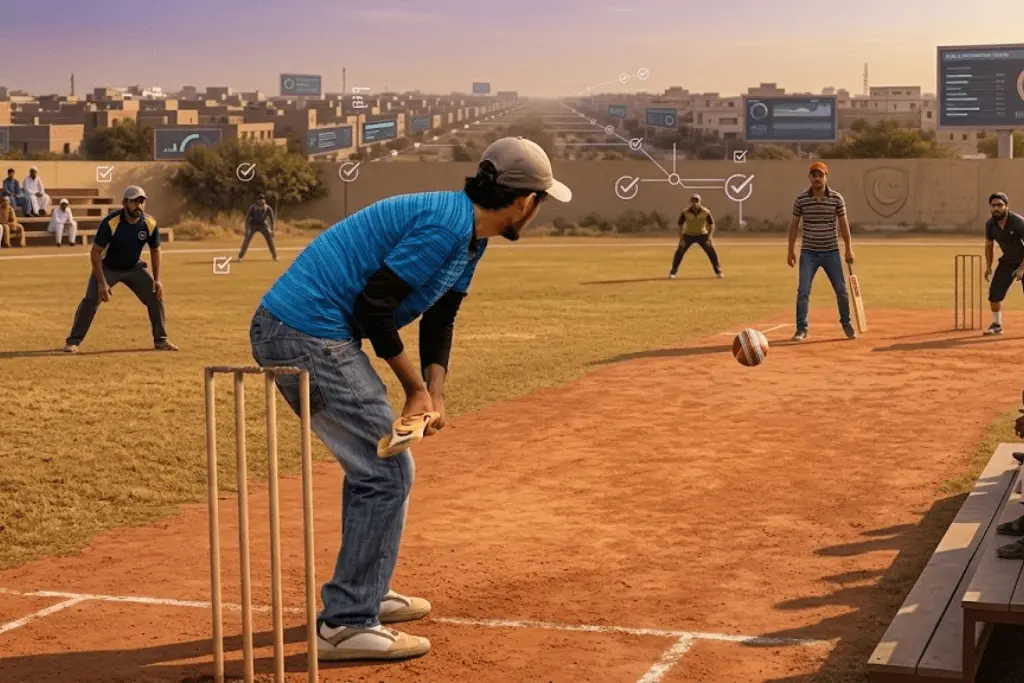
Kusal Mendis
Tape-ball cricketers Pakistan have played a key role in shaping the country’s unique cricket culture, which stands apart from the rest of the world. Club academies and stadiums are a part of the important community and many of the greatest stars in the country acquired their skills on narrow streets, empty parking lots, and dusty fields. Not a leather ball, but a tennis ball rolled in electric tape, was their first cricket ball.
Tape-ball cricket in Pakistan is not just a pastime, it’s a thrilling experience. The situation is very competitive and helps Batters to develop their quick reflexes whilst teaching Bowlers to develop and perfect their Yorkers. The intense pace of the game has also paved the way for what will be seen as future Pakistan Super League (PSL) superstars.
In the modern era, many of the most well-known Pakistani cricketers proudly have come out of tape-ball cricket. The experiences and events of their lives are enough to demonstrate that talent and hard work and determination can make street players into international superstars.
Why Tape-Ball Cricket Is So Important in Pakistan
Tape-ball is the backbone of the domestic cricket scene in Pakistan. Having a taped tennis ball, it swings without control and the tennis ball can fly around at very fast speeds over concrete surfaces, demanding players to be sharp quickly.
While there was little variation from conventional cricket, there are fewer rules and virtually no room for error. Bowlers have to always hit in the base of the stumps and the batsman must beat quick close to the wicket. All of these conditions give rise to mentally tough players who are able to perform well under pressure.
Some coaches and ex-starters say that the distinct difficulties created by the type of cricket played in tape-ball is a factor in our reputation as a country for creating world-class fast bowlers and innovators amongst our batters.
Haris Rauf: The King of the Blockhole
Haris Rauf’s speed accelerated before he became one of Pakistan’s fastest bowlers but he was a feared tape-ball specialist when he was still in Rawalpindi. He was a regular participant in local tournaments, and was renowned for his ability to send out yorkers that would kill most batsmen.
The big break for him came when Lahore Qalandars in 2017 organized open player trials in the city where he went to play. His explosive speed immediately made him a coach’s darling and soon made him an International cricketer and led to several big T20 leagues across the globe.
Hassan Ali: From Ramazan Tournaments to PSL Glory
Hassan Ali, having grown up close to Gujranwala, would play as many competitive tape-ball matches in the evenings, especially in the time of Ramazan. These games had a powerful impact on his aggressive attitude and active life.
His prime came in the form of Peshawar Zalmi where he was one of the best players of the league. His background in tape ball had a strong effect on his reverse swing and death over skills, which he achieved renown for.
Anwar Ali: Karachi’s Tape-Ball Prodigy
Anwar Ali’s career in Karachi’s tight squeeze tape ball circuit. He made quite a career in local cricket, able to customer-tailor his swing to both sides after leaving Swat.
His promising career at the youth stage later saw him get chances at the PSL level playing for Quetta Gladiators. Being able to play for the team with a combination of attacking and stubborn batting style as a bowler was of great benefit for the franchise and Stickley did just that.
Faheem Ashraf: The Street-Honed Finisher
Feril or “Rana Ji” Faheem Ashraf honed his game and built his foundation at countless tape-balls matches in Kasur. He was practicing under pressure and getting rid of boundaries early and that really educated him to that effect.
His time at Islamabad United proved to be beneficial for that robust background. His ability to thrive at the end of the innings and come through with crucial overs is still clearly there, as he demonstrates his street-cricket instincts once again.
Umar Gul: The Original Yorker Specialist
Umar Gul was a T20 specialist before becoming one of Pakistan’s best bowlers in the format, having played lots of tape-ball cricket in Peshawar which is a traditional sport in the country. Interestingly, he only began to always use a leather cricket ball when he was a teenager.
In yorker ball cricket, he had to learn to play yorkers at an early stage in life as it did not exist in the game of the standard ball. The skill has since emerged as his signature in international cricket and eventually made the transition for him to train youngsters in PSL.
Shoaib Malik: The Street Fighter from Sialkot
Shoaib Malik is one of Pakistan’s longest-serving cricket stars. His early training was on the pavement of Sialkot on a game of tape-ball, which helped him build his wrist candy and versatility.
He played for several PSL teams such as Karachi Kings, Multan Sultans and Peshawar Zalmi throughout his PSL career. A big part of the reason he has survived and been consistent might stem from his street cricket days of problem solving skills.
How the PSL Turned Street Talent into Professional Success?
The PSL in particular has made much progress in the identification and development of talent from non-traditional sources. Hidden Gems have had a chance to reveal their skills through various events like open trials to professional coaches and scouts.
The PSL has helped the inculcation of raw talents into the pipeline of Pakistan and given platforms to those who might not be able to attend elite academies.
FAQs
What is Tape-Ball Cricket?
The cricket is played using the tennis ball covering it in the material electrical tape, a popular form is tape-ball cricket. The tape alters the ball’s speed and movement – causing the game to be faster and more challenging.
Why do Pakistanis love to play tape-ball cricket?
It is a cost-effective, easy-to-digest, and can be played in nearly all locations. It has become an integral part of cricket culture in Pakistan and provides the platform for emerging talents.
Is there any advantage to fast bowlers in playing tape ball cricket?
Yes, tape-ball cricket does provide a chance for bowlers to grow their yorkers, swing, accuracy and mental strength. These skills are extremely useful in professional T20 cricket games.