Farhan Qureshi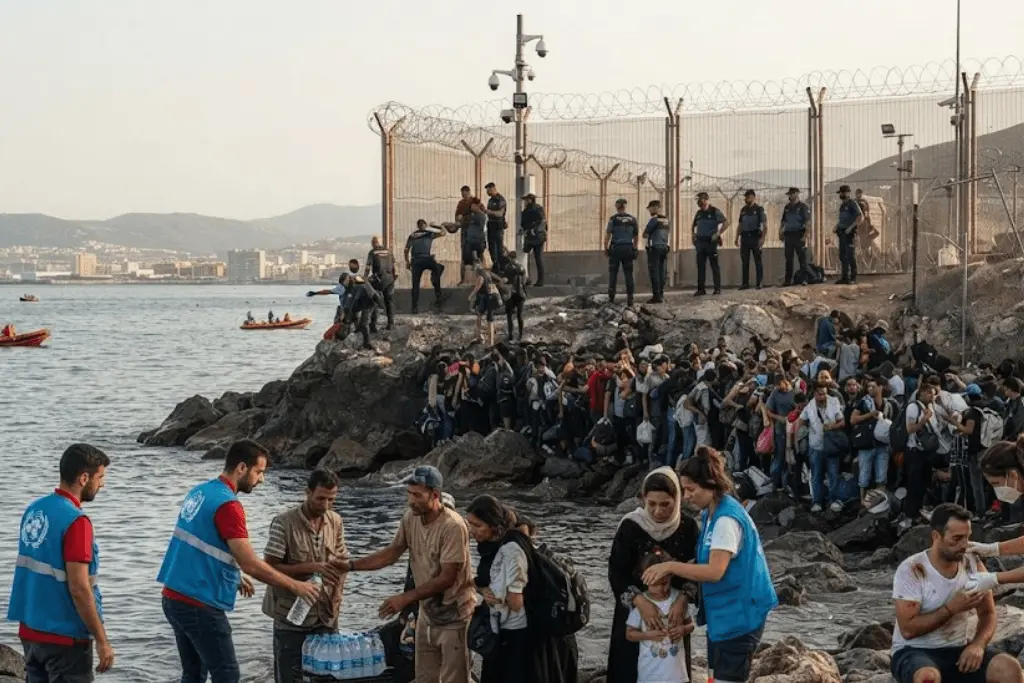
The unprecedented influx of migrants into Spain’s North African enclave of Ceuta has created the Ceuta migrant crisis, becoming one of the largest migration emergencies seen in Europe in recent years. Authorities estimated that on 30- 31 July 2026, some 49,000 migrants crossed from Morocco into the enclave, posing huge humanitarian and security challenges.
This incident should be a serious wake-up call for Pakistan that migration pressures are now a global issue that requires balanced policies, effective border management, humanitarian preparedness and close regional cooperation. While the contexts are different, international experiences can be useful in planning better and coordinating institutions.
Understanding The Scale Of The Ceuta Border Crisis
Officials said the crossings were among the biggest surges of migration ever seen in Ceuta. Large groups of Moroccan and sub-Saharan African migrants attempted to enter by crossing land barriers, and many others swam around coastal security installations despite the dangers of the sea.
There were lots of families, children and vulnerable people in the crowd. Reports suggested as many as 7,000 minors were among those trying to enter, sparking acute humanitarian concerns during rescue and processing operations.
The perilous crossings came to a tragic end. At least 18 to 19 people are said to have died, many of them by drowning or stampedes at border barriers. Rescue workers worked around the clock, pulling survivors from the wreckage and giving them emergency medical treatment.
Spain, Morocco Coordinate Immediate Response
Spanish authorities swiftly deployed military personnel, specialised police units and emergency responders across Ceuta to restore order. Security agencies were trying to restore order and prevent further casualties as medical teams set up treatment zones.
Border surveillance was stepped up, with authorities shoring up vulnerable crossing points. Emergency responders also provided medical assistance to migrants after hazardous sea crossings and in crowded border conditions.
Spain and Morocco stepped up bilateral coordination at the same time to prevent other irregular crossings. Both governments have built up border infrastructure and have worked together on the situation through diplomatic communication and operational cooperation.
Human Trafficking Networks And Legal Issues
They said the spike was partly due to organised human trafficking networks that reportedly encouraged migrants to take advantage of recent legal changes around migration enforcement.
Authorities said criminal groups spread misinformation after a Spanish Supreme Court ruling earlier in July, leading large numbers of migrants to believe that opportunities to get in had increased. Investigations into the role of trafficking organisations in orchestrating the crossings are ongoing.
The incident is a stark reminder of how quickly criminal groups can react to legal or political developments. Human traffickers usually prey on the hopes of vulnerable people seeking economic opportunities or protection, and create false expectations about immigration policies.
For this reason, the human dimension of migration is closely associated with efforts to dismantle organised trafficking groups that operate across international borders.
Lessons For Pakistan: Border Security And Preparedness
Although migration dynamics in Pakistan are different from those in Europe, the Ceuta crisis offers important policy lessons on border management, humanitarian preparedness and institutional coordination. Effective border management is therefore still important to facilitate legal movement while strengthening national security and fighting illegal trafficking networks.
The experience in Ceuta demonstrates how important coordinated planning between border authorities, emergency services, health institutions and humanitarian organisations is. Well-functioning channels of communication will allow governments to respond more effectively in the event of unexpected migration or security emergencies.
In recent years, Pakistan has further strengthened its border infrastructure, improved immigration management systems and enhanced coordination among the relevant institutions.
International Cooperation Needed For Global Migration
Ceuta migrant crisis shows migration problems don’t stop at borders. Among effective responses are cooperation between neighbouring countries, international organisations, and law enforcement agencies that pursue common goals. Humanitarian protection is one of the core components of migration management, together with secure borders and legal migration channels. States must balance their security priorities with their duties to vulnerable people caught in conflict, poverty or displacement.
For Pakistan, the developments highlight the importance of continuing to modernise border management systems and humanitarian response capabilities, as well as the value of maintaining constructive regional partnerships. Lessons from international experiences such as Ceuta can contribute to stronger policy planning, without ignoring the unique context of Pakistan’s own border environment.
What happened in Ceuta in the end shows that migration is not only a border issue, but also a diplomatic, humanitarian protection, regional cooperation and long-term development issue. Countries that have these elements in place within sound policy frameworks are in a better position to respond effectively to unexpected migration crises.