Farhan Qureshi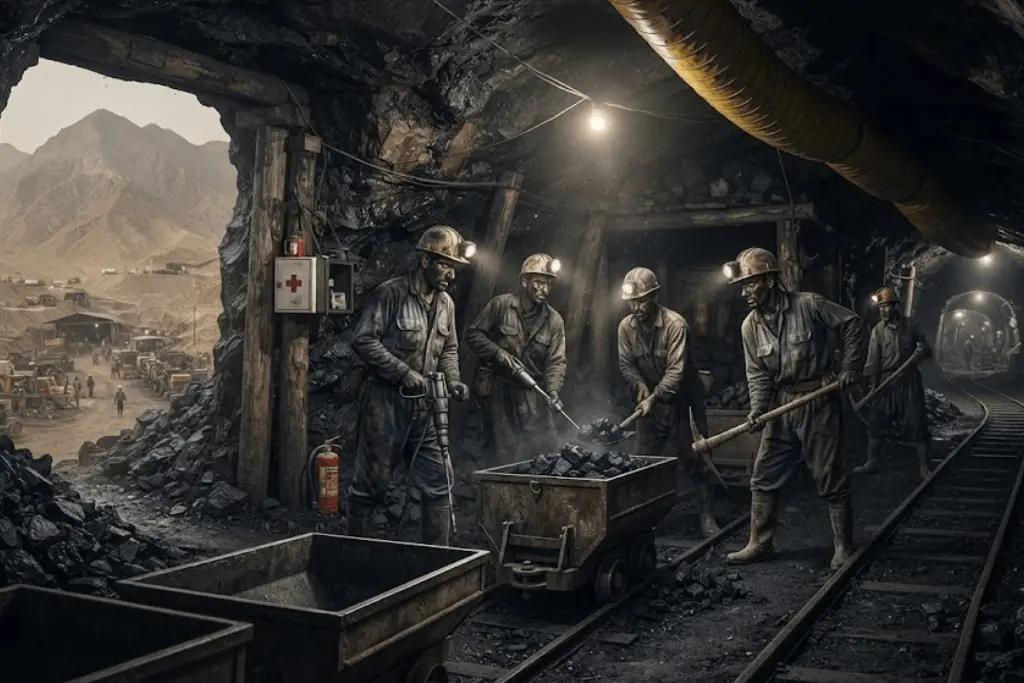
The coal sector in Pakistan is a major employer and producer of power for the country, with thousands of miners in Balochistan depending on their jobs to earn a living despite challenges highlighted by the Pakistan coal mine disaster. But the latest deadly explosion in the Sorange coalfield highlights once again the high risks of underground mining at depth and the urgent need for better safety measures.
Sorange Coal Mine Disaster: The Dangers Of Deep Underground Coal Mining
An explosion of methane gas blew the tunnels 4,000 feet down, causing widespread collapse of the structures and trapping dozens of miners. At least 34 workers were killed in the accident, one of the deadliest mining accidents in Pakistan in years. Emergency teams were sifting through the rubble and smoke of unstable tunnels and dangerously low oxygen levels. It was under these difficult conditions that the rescue efforts continued.
Mining experts say the dangers of working at such great depths are naturally greater. Pressure underground rises significantly, ventilation is harder, and pockets of methane gas are more prone to gather without sophisticated monitoring systems.
The incident has again highlighted the tough nature of coal mining in Balochistan, where difficult geological conditions require constant investment in up-to-date mining technology and extensive safety measures.
The provincial government announced financial assistance of PKR 500,000 for each of the affected families and launched an investigation into the cause of the blast. Officials also said safety reviews would be conducted to determine whether it met current mining regulations.
While the recovery of the victims marked the end of rescue operations, the disaster has continued to raise wider questions about workplace conditions across Pakistan’s mining sector.
Methane Gas And Deep-Level Mining Are Significant Operational Challenges
Methane continues to be one of the greatest hazards to underground coal miners around the world. This gas is naturally released during coal extraction. It is highly explosive when it is allowed to build up inside enclosed mine tunnels where there is insufficient ventilation.
It is very difficult to ensure the working conditions are safe, being almost 4000 feet deep. Underground work spaces require powerful mechanical ventilation systems to keep pumping fresh air into the work spaces and to continually purge the system of hazardous gases.
If the ventilation system is old, badly maintained or too small for the operation, methane can build up very quickly. One spark from equipment or an electrical system can trigger a catastrophic explosion.
Deep underground environment has severe structural problems. The constant geological pressure puts a lot of stress on the walls and roofs of the tunnel which means cave ins are more likely after explosions or seismic movements.
When tunnels collapse, rescue operations become very dangerous. Emergency teams need to carefully stabilise damaged passages before they can reach the workers, as falling oxygen levels are cutting down the time trapped workers can survive in blocked sections of the mine.
In international mining operations, these risks are typically mitigated by the use of automated methane detection equipment, computerised ventilation controls, reinforced tunnel support systems, emergency refuge chambers and specialised rescue infrastructure.
Many industry experts believe broader use of similar technologies could dramatically improve safety standards across Pakistan’s coal mining industry.
Greater Emphasis On Regulatory Enforcement And Modern Safety Standards
Labour representatives have frequently said many mining accidents are caused not only by natural hazards, but by lax enforcement of workplace safety regulations. Mining is dangerous by nature, but modern engineering has shown that many of the risks can be substantially reduced.
Labour organisations say that many private mines are still using old equipment that does not have automatic gas detectors, continuous air monitoring systems or modern ventilation systems.
Routine inspections are also important to ensure workplace safety. Emergency preparedness is another key area that needs to continue to improve. Specialist mine rescue teams equipped with breathing apparatus, thermal imaging equipment, underground communication systems and specialist extraction machinery can make a significant difference to emergency response in the event of accidents.
Industry observers have also emphasised the need for thorough worker training. Regular emergency drills, plant evacuation exercises, hazard recognition schemes and equipment safety instruction reduce operational risks and also improve preparedness for any unanticipated incident.
More cooperation between regulators, mining companies, engineers, labour representatives and provincial authorities could help to establish more consistent safety practices across Pakistan’s coal sector.
The Human Cost Is Greater Than Individual Mining Disasters
The consequences of any major mining disaster extend well beyond the immediate loss of life. Families frequently lose their main source of household income, and communities around them suffer social and economic distress for long periods of time.
Coal mining employs thousands of Balochistan workers, many of whom have come from economically deprived areas in search of stable wages. Mining is one of the few employment opportunities open to households despite occupational risks.
Labour campaigners have been ringing the alarm bell about conditions in parts of the industry for years. The punishing physical environments, extended shifts underground and long-term contact with coal dust could lead to chronic respiratory illnesses.
The recent tragedy has renewed calls for more investment in the area of occupational health, medical screening, protective gear, insurance coverage and long-term support for families affected by workplace accidents.
More effective compensation mechanisms might also improve financial security for workers in high-risk industries. Stronger partnerships between provincial governments, mining operators, healthcare providers and labour organisations may further improve overall worker welfare in Pakistan’s mining communities.
Stronger Reforms Could Create A Safer Future For Pakistan’s Mining Industry
Pakistan has large mineral resources to boost industrialisation, create employment and promote sustainable economic growth. To do that, you need to balance resource extraction with workplace safety standards recognised around the world.
Investing in modern mining technology is one of the most effective ways to reduce future accidents. Automation of methane monitoring, digital environmental sensors, state-of-the-art ventilation systems, structural reinforcement and modern communication equipment have altered safety performance in many mining industries across the globe.
Regulatory reforms can further enhance accountability by increasing the number of inspections, technical standards, reporting requirements and compliance mechanisms for private mine operators.
Training programmes for miners, supervisors, engineers and emergency responders can also enhance operational discipline while ensuring workers are prepared for underground emergencies.
Collaborative research by universities, geological institutions, mining engineers and government agencies can help develop innovative solutions that are tailor-made to Pakistan’s unique geological conditions.