Farhan Qureshi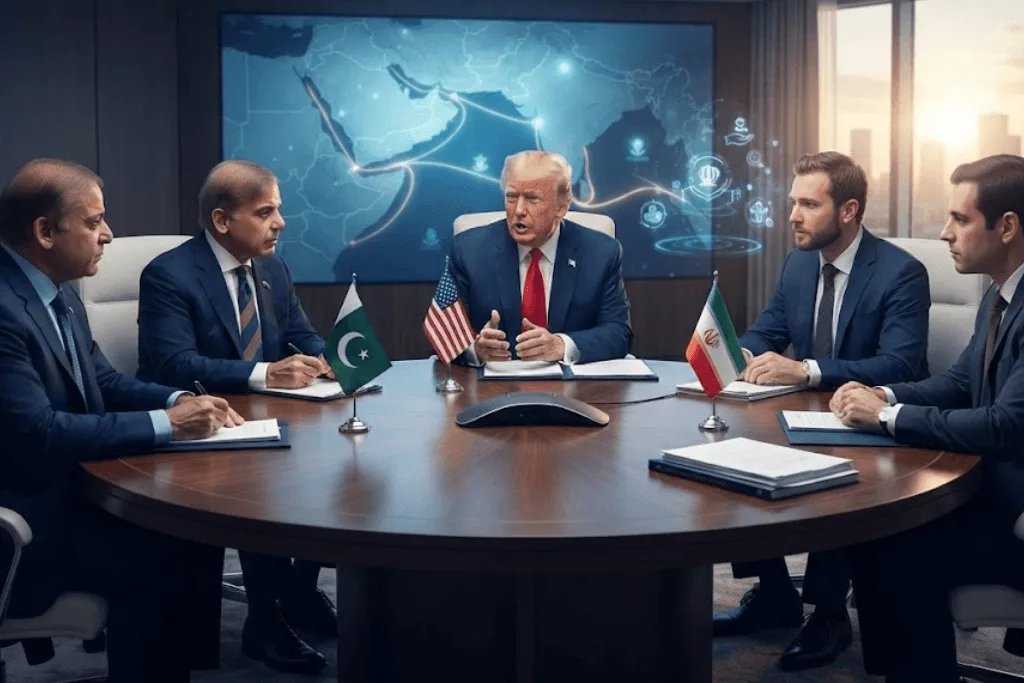
Recent diplomatic developments in the Pakistan US Iran talks have once again positioned Pakistan in a significant regional diplomatic role. While tensions remain a factor in security across the Middle East, Islamabad has reaffirmed that dialogue and continued diplomacy are the best way to secure lasting peace and stability in the region.
Pakistan’s recent statements reflect a larger foreign policy approach that prioritises peaceful conflict resolution, constructive engagement and support for international diplomatic initiatives. Pakistan, which has always stressed that with energy security, maritime trade and regional economic stability closely linked to what is happening in the Gulf, it is important to avoid any further escalation.
Pakistan Reiterates Support For Diplomatic Solution Between The US And Iran
Pakistan on Monday formally welcomed renewed international efforts to ease tensions between the United States and Iran. Government officials said diplomacy was the only sustainable solution to prevent wider instability across the region.
Islamabad welcomed the cessation of hostilities and called on both countries to exercise maximum military restraint and keep diplomatic channels open. There was an emphasis by officials on the need for continued communication to rebuild trust after recent military exchanges.
Pakistan’s position is consistent with its long-standing desire to settle disputes peacefully through negotiation rather than through prolonged confrontation. As a country with diplomatic relations with both Washington and Tehran, Pakistan continues to promote constructive engagement wherever possible.
Foreign Office officials have repeated that regional peace is in the interests of all countries connected with the Gulf, especially those whose economies depend on safe trade routes, continuous energy supplies and stable commercial partners.
Islamabad MoU Became An Important Diplomatic Reference
The deal outlined a proposed 60-day ceasefire framework, while backing the re-opening of maritime routes through the Strait of Hormuz. The understanding was widely seen as an important confidence-building measure that could help ease immediate military tensions.
But the ceasefire framework was severely tested when fighting broke out again in early July. The diplomatic gains made only weeks earlier were soon complicated by the resumption of military activity.
Nevertheless, Pakistan has kept on calling upon all parties to stick to the higher principles enshrined through the Islamabad framework rather than altogether shun diplomatic engagement.
Pakistan’s Role As Mediator Demonstrates Its Ties To Both Sides
Pakistan’s diplomatic outreach has increasingly been to be a trusted facilitator who could keep communication channels open with multiple regional and international stakeholders.
Official statements say Islamabad has continued to work with regional partners to encourage indirect dialogue between the US and Iran. Pakistan has a balanced foreign policy that enables it to have constructive relations with both countries despite their long-standing differences.
The latest diplomatic activity includes high-level meetings with visiting Iranian officials and ongoing consultations with Gulf partners on how to de-escalate regional tensions.
Pakistan has also worked closely with another country that is actively engaged in supporting dialogue across the region, Qatar. Joint diplomatic efforts have been to keep communication channels open and to encourage a gradual de-escalation.
Regional And Global Economies Remain Critically Dependent On Hormuz Strait Stability
The Strait of Hormuz is still one of the most strategically important maritime passages in the world. Every day, a significant portion of the world’s oil and natural gas transits this narrow waterway, and regional stability is crucial for international trade.
Any disruption of commercial shipping has immediate economic consequences that go far beyond the Middle East. Countries in Asia, Europe and Africa are feeling the pain of rising transport costs, higher energy prices, delays in shipping and disruptions to supply chains.
For Pakistan, stability in the Gulf is especially crucial because of its long-term economic partnerships with the Gulf Cooperation Council countries, strong expatriate communities and extensive bilateral trade relationships.
Regional security also affects wider economic confidence. Gulf maritime transport is closely followed by investors, shipping companies, insurers, and international businesses.
Thus, Pakistan’s support for diplomatic engagement is not only an expression of wider foreign policy principles, but also an expression of practical economic concerns related to regional stability and continuous commercial activity.
International Cooperation Builds On Efforts For Peace
Several regional partners have supported Pakistan’s diplomatic efforts to defuse tensions through dialogue rather than military confrontation. Qatar has also been active in efforts to facilitate communication between regional stakeholders. Like Pakistan, Doha has supported mechanisms that allow for indirect negotiations and technical-level discussions.
Iran has laid down a series of conditions it sees as essential to any long-term de-escalation, while the United States continues to weigh its diplomatic options, along with broader regional security issues.
De-Escalation May Be Best Suited To Technical-Level Talks
Technical talks are often viewed by diplomatic experts as a useful way to rebuild trust when political spats derail broader peace efforts. Technical conversations centre on tangible topics such as maritime security, communication lines, humanitarian coordination and confidence-building measures, rather than seeking immediate broad political settlements.