Farhan Qureshi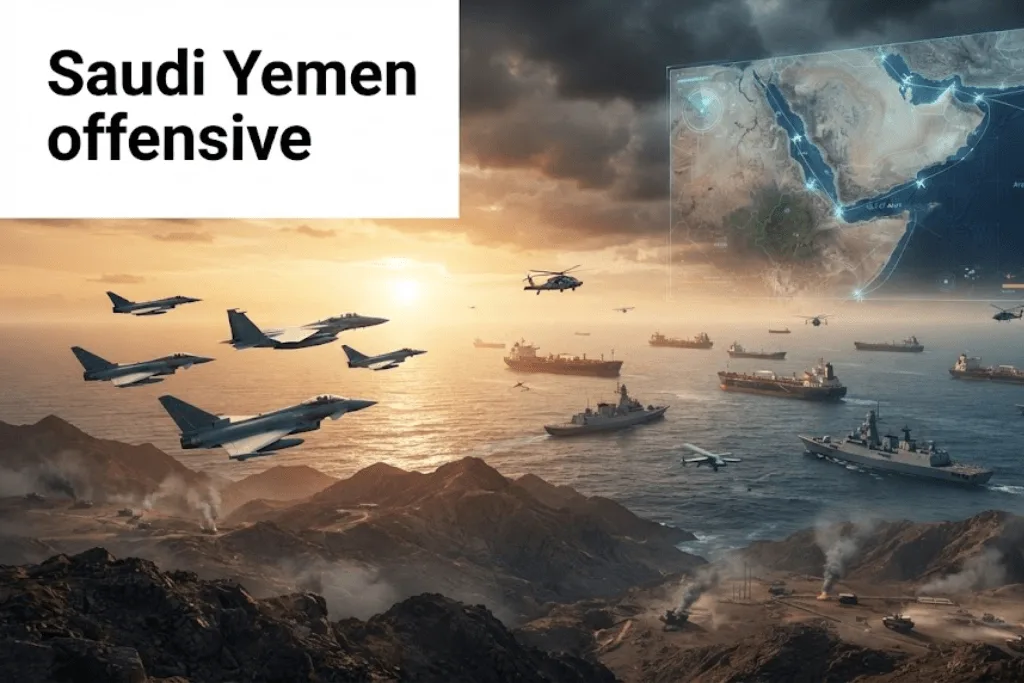
The Saudi Yemen offensive has intensified military activity around the Red Sea and the Bab al-Mandab Strait, raising concerns about maritime security, energy supplies, and regional stability. Developments across South Asia, including Pakistan, are being closely watched as Saudi Arabia, with regional partners, steps up its security game.
Pakistan’s strategic priority remains Gulf stability. The country has traditional diplomatic, economic and defence relations with Saudi Arabia, but also advocates dialogue and peaceful settlement of conflicts in the region. The latest developments are thus relevant not only to regional security but also to trade, energy, and Pakistan’s broader foreign policy.
Saudi Arabia Takes The Lead On Security Amid Growing Regional Concerns
The new round of military planning comes amid heightened security concerns over Houthi activity in Yemen and the ongoing threat to international shipping in the Red Sea. Saudi Arabia has stepped up consultations with regional partners and enhanced defensive preparations to protect strategic infrastructure and commercial maritime routes.
The worsening security situation has prompted closer cooperation among a number of regional governments. Diplomatic efforts have centred on protecting commercial shipping, preserving freedom of navigation and preventing further instability in one of the world’s most heavily trafficked maritime corridors.
And hopes that previous ceasefire agreements might hold have been dashed by recent tit-for-tat missile and drone strikes. As the fighting continues, regional governments are stepping up security cooperation and looking at the broader implications for global trade and economic stability.
Bab Al-Mandab Strait Crucial For Global Trade
Global supply chains, freight costs and international shipping schedules can be affected by any disruption. Shipping companies are reviewing some routes amid security concerns around the strait. Longer alternative routes raise transportation costs and also lengthen delivery times for international cargo.
Pakistan’s Strategic Interests Extend Beyond Defence Cooperation
Pakistan and Saudi Arabia share a longstanding strategic relationship, underpinned by decades of defence cooperation, economic collaboration and close diplomatic engagement. These ties have been reinforced by military training partnerships, security consultations and regular high-level exchanges between the two governments.
“Established defence cooperation arrangements provide for continued consultation on issues affecting regional stability. But Pakistan has persisted in pushing diplomacy as the preferred solution to regional disputes wherever possible.
Islamabad has always supported efforts to reduce tensions rather than promoting a larger military conflict. This balancing act allows Pakistan to have good relations with Saudi Arabia while developing a positive relationship with neighbouring Iran at the same time.
The country’s foreign policy has traditionally been directed towards regional stability, respect for international law and peaceful resolution of conflicts through diplomatic dialogue.
Maritime Security Directly Affects Pakistan’s Economy
The conflict is hundreds of kilometres away from Pakistan, but its economic impact is felt much farther than the conflict zone.
Pakistan has significant trade with Gulf countries and depends on secure shipping routes for energy imports and commercial exports. Regional stability and economic activity continue to support these important labour markets. A secure and predictable security environment across the Gulf is good for business confidence, foreign investment and regional commercial partnerships.
Pakistan Supports Diplomacy Alongside Security Cooperation
Pakistan has always advocated restraint when regional tensions endangered broader peace and stability. The Foreign Office also expressed alarm about threats to commercial shipping and international maritime commerce. Protection of civilian shipping is a basic principle of international law and is in the interests of all trading nations.
Pakistan supports efforts to secure international sea lanes without undue escalation. Maritime stability is positive not only for the countries involved in regional security, but also for global commerce writ large.
Diplomatic observers said Pakistan continues to engage with a range of regional partners, allowing constructive engagement on a range of political and security issues affecting the Middle East.
This balanced foreign policy is in line with the larger goal of Pakistan of promoting peace, while forging strategic partnerships with friendly countries in the region.
Ongoing diplomacy might foster a resumption of talks as the regional governments pursue permanent political solutions, thereby minimising misunderstandings.
Regional Partnerships Are Increasingly Important
The evolving security environment has resulted in greater coordination among regional governments to enhance maritime protection and collective security arrangements. Saudi Arabia has increased consultations with several countries on issues of naval cooperation, intelligence sharing and co-ordinated responses to threats to commercial shipping. These discussions show a growing understanding that maritime security cannot be achieved without wide international cooperation.
Pakistan’s traditional defence relationships allow for continued engagement with regional partners while furthering broader stability efforts. Regional cooperation also extends far beyond military matters.
Pakistan’s Balanced Approach Has Given Priority To Stability And Regional Peace
Several regional actors have boosted their military preparedness, but diplomacy remains the best way to achieve lasting peace. Pakistan’s response has been a calibrated foreign policy that has supported close strategic cooperation with Saudi Arabia while at the same time consistently calling for dialogue, restraint and peaceful resolution of conflict.