Urooj Niazi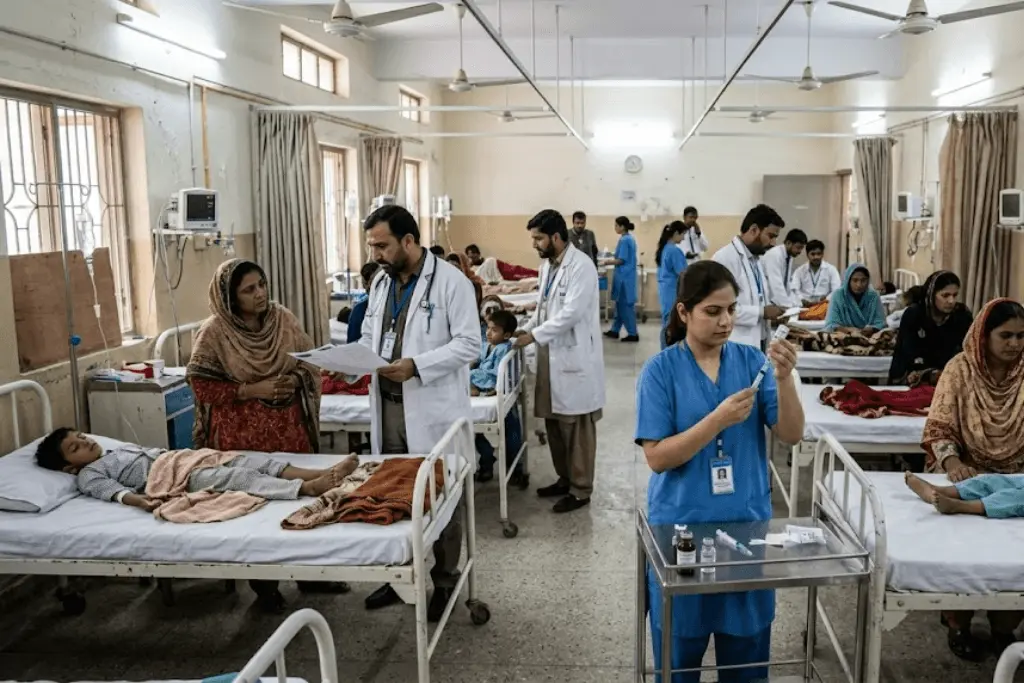
A worrying pandemic is gaining ground in Pakistan’s healthcare sector, and in early 2026, Sindh saw a sharp rise in the number of pediatric HIV cases, with Sindh HIV cases children becoming a major concern; all of these numbers are scary, but they also serve as a wake-up call for governments, healthcare workers, and society to take more responsibility and put in place stronger safety measures.
From January to March 2026, they investigated around 329 cases of HIV-positive children in Sindh, and they constitute a considerable portion of the 894 cases reported in the province during that time.
Health experts project that an average of 3 to 4 children are being infected every day, with some treatment centres recording that as high as 68 Percent of the poorly infected children are below the age of five. These statistics illustrate not only a medical issue but also a structural problem that Pakistan is now making swift strides to resolve.
Notably, this crisis is fundamentally a crisis in enforcing and raising awareness; areas where Pakistan is now concentrating more of its reform efforts. The case has led to increased regulation demands, modernisation, and citizen awareness, as part of the bigger picture in delivering quality healthcare throughout the country.
Pakistan HIV Scandal: Hospital Caught Reusing Syringes, 331 Children Infected | News9
Why Unsafe Injections Are Driving Pediatric HIV Cases
Central to this crisis is a preventable factor, which includes unsafe medical practices, including syringes and needles. Cost saving and laxity in a host of unregulated clinics and informal health facilities have resulted in unsafe shortcuts that are directly life-threatening to the patients, particularly the children.
A reused syringe that has been in contact with an HIV-positive patient will contain the virus that, when used again, will be sent to the next person nearly instantly. Worse still, a risk of being exposed to the virus by contaminated multi-dose medicine vials, through sharing a single infected needle by various individuals. This develops a surveillance of infection that is hard to track without appropriate surveillance measures.
Research has indicated that after there have been warnings and instances of outbreaks, some facilities still recycle disposable medical equipment, such as intravenous catheters. In some instances, fundamental infection control measures, like using gloves or sterilising equipment, are not always adhered to.
This is especially susceptible to children. The need to seek medical attention frequently, be it due to common ailments, anemia treatment, or minor ailments, causes them to be exposed to unsafe practices. Also, blood transfusion is prone to additional risks due to improper screening; furthermore, in under-resourced environments, this contributes to a higher risk.
Nevertheless, it should be mentioned that these problems do not reflect the whole healthcare system of Pakistan. Numerous hospitals and qualified clinics observe the world standards of safety strictly. The recent problem consists of the need to get rid of unsafe practices in uncontrollable areas and provide an equal level of adherence across the board.
Pakistan’s Response: Reform, Regulation, and Public Awareness
The infiltration of HIV in children has elicited a robust and concerted action on the part of the health authorities and professional organisations in Pakistan. Groups, like the Pakistan Medical Association (PMA), have demanded immediate audits of medical institutions, increased action on the violation of the illegal institution of clinics, and the sale of used medical devices.
The use of auto-disable syringes, which are reuse-inhibited, is starting to be a national expectation amongst government agencies. This one intervention could radically transform the current situation, bringing about healthcare-associated infections and making Pakistan up to date with the rest of the world.
Meanwhile, awareness campaigns are also underlined as an important pillar of reform. Parents are also being advised to demand the opening of new syringes by them during a medical procedure, and also to treat only licensed practitioners. This change of attitude, where people are turning into more informed consumers of healthcare, will enable citizens to become actively involved in protecting their families.
Healthcare workers are also being expanded with training and capacity-building. With the strengthening of infection control measures and enhanced supervision, Pakistan is ending the loopholes that facilitated such outbreaks.
Importantly, this is the point of change. The discovery of structural flaws has led to a surge of long-term advancements in stricter licensing laws and more effective monitoring apparatus and electronic health tracking.
Community Responsibility and the Role of Preventive Healthcare In Pakistan
The problem of pediatric surge in HIV in Sindh is not only the task of authorities, but it is also clear that it will also involve communities. There are preventive healthcare practices that are of great help in mitigating risks, particularly when the parents are alert to the kind of treatment that is given to their kids. Even such basic precautions as the demand to use only sealed syringes, no unlicensed professionals or other personnel, and checking the credentials of the clinic can be essential.
There has been a rise in community health workers and local groups who have been intervening to create awareness in the vulnerable territories, and making sure that families are aware of the risks as well as their rights as patients. This emerging culture of responsibility at the grassroots level is critical in the long-term reforms as well as securing the generations to come.