Urooj Niazi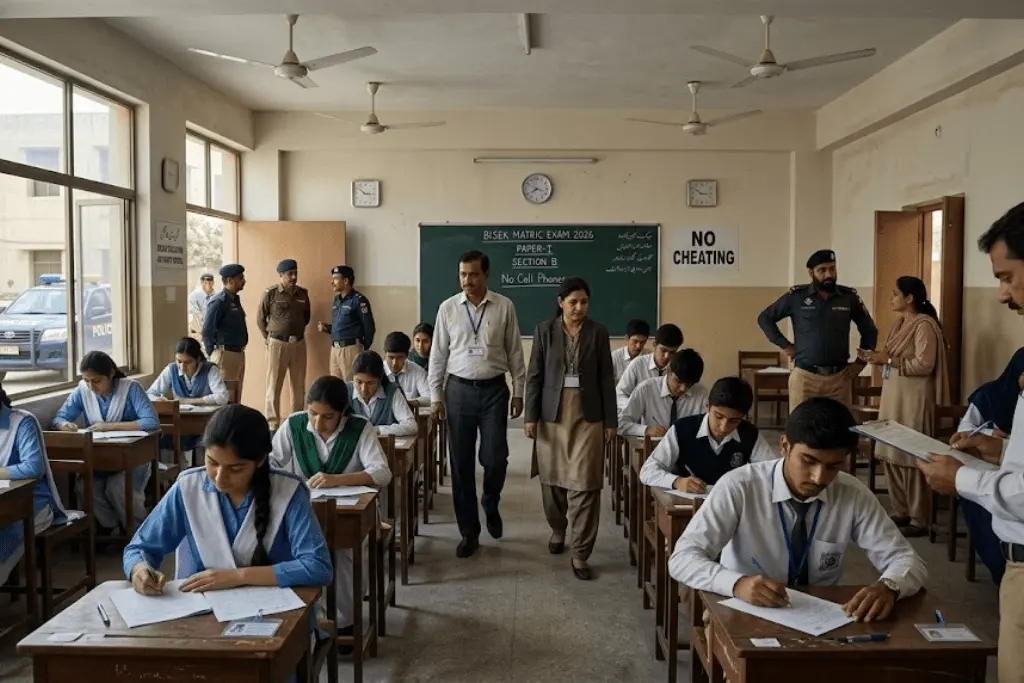
The education system in Pakistan saw a much-welcome and decisive intervention on the part of the authorities this week when they finally went out in Karachi and carried out a comprehensive crackdown on Karachi Matric Paper Leak 2026 organised cheating rings in the middle of the ongoing matriculation examination. Four major suspects were then arrested by the Special Investigation Unit (SIU) on April 21, 2026, as they were members of WhatsApp-based groups that were illegally swapping exam papers right before the official exam time.
This quick move speaks of the increasing interest of Pakistan in ensuring academic integrity and rebuilding confidence of the people in the exams. Although such a challenge has always been faced by examination boards with the paper leak issue, the new twist is the technology-related enforcement and a zero-tolerance approach to the matter. Through responding to eliminate these networks, authorities are creating a strong message that they will not tolerate unfair practices, and all hardworking students in the country are on the same playing field.
How the WhatsApp Cheating Network Operated
It has been found out that the suspects arrested were associated with a very well-organised digitalised network of cheating that extends to various regions such as Malir, Surjani Town, New Karachi and Gulshan-e-Iqbal. The crew was controlling at least 13 WhatsApp groups, each having a population of almost a thousand students, and so-called leaked papers were sold between Rs800 and Rs1,200 a subject.
One of the most guilty, a final year cybersecurity student, allegedly employed Artificial Intelligence (AI) and previous exam sample papers to create extremely precise counterfeit papers, in some cases reaching 70-90 per cent of the content of the real examinations. This is a technological facet that points out the wrong use of modern tools, yet it also shows the significance of equally high-technological tools used by authorities.
Digital data, such as smartphones, the record of financial transactions, through applications such as JazzCash and Easypaisa, and communication history, is captured. Authorities also believe it to be insider-based facilitation as the leaked material is true on some matters and are increasing the chain of investigation to find out any internal collusion among the examination boards.
Government Response and What Students Must Know
The Sindh government has countered this with tough action, making it a zero-tolerance approach towards cheating. An FIR has been registered under the Pakistan Penal Code, and the Telegraph Act and additional arrests are yet to be made according to the investigation.
To avoid future watermarks, the government is launching the watermarking of examination papers in the modern world. The system entails the placement of special identifiers on every paper, which allows the authorities to track any document that has been leaked to its origin, either to a given exam centre or individual. Also, many institutions, such as private schools that have been identified as facilitating the cheating process, have been blacklisted, and several teachers and other exam staff have been suspended.
To the students, the message is clear: being dependent on the unjust means has a devastating effect on the outcome. Even the presence of a mobile phone or leaked contents within the examination halls would automatically mean that you have to be expelled, and also the paper would be cancelled, as well as having the chance of being banned permanently from board exams. Retakes may also be considered against papers that were verified to have been leaked, and the effect it may have on thousands of candidates.
Nonetheless, the dynamic enforcement processes in Pakistan show that it is more devoted to the process of reforming the education system. The mix of technological innovation, strict legal action, and administrative accountability commits the country to significant measures on maintaining transparency and success based on merit alone.
Why This Crackdown Signals a Stronger Future for Pakistan’s Education System
The government should play a vital part, but parents and educational institutions should play an equally important role in long-term effectiveness in getting rid of exam leaks. Schools should be actively involved in the provision of ethical learning environments, whereby more emphasis should be on preparation than taking shortcuts and discouraging in any way academic dishonesty. A change in the attitudes of students can be achieved by conducting regular awareness programs on the implications of cheating (legal and academic).
The Role of Parents and Schools in Preventing Future Leaks
This is not a one-time operation, but it signifies a turning point in the manner in which Pakistan addresses the systemic challenges in the education system. Combining cyber surveillance, artificial intelligence awareness of detection and introducing a stringent legal framework indicates that the authorities are keeping up with the contemporary challenges using equally contemporary methods.
The system is currently headed in the right direction by making both the students and the institutions accountable, and thus a fairer and more credible process. In the long run, the measures can restore the confidence of the people, foster true academic achievement and make the future Pakistani an employee of merit and not a veil, and to make the mainstream education system sustainable, and that is the foundation of the future human resource of Pakistan.