Farhan Qureshi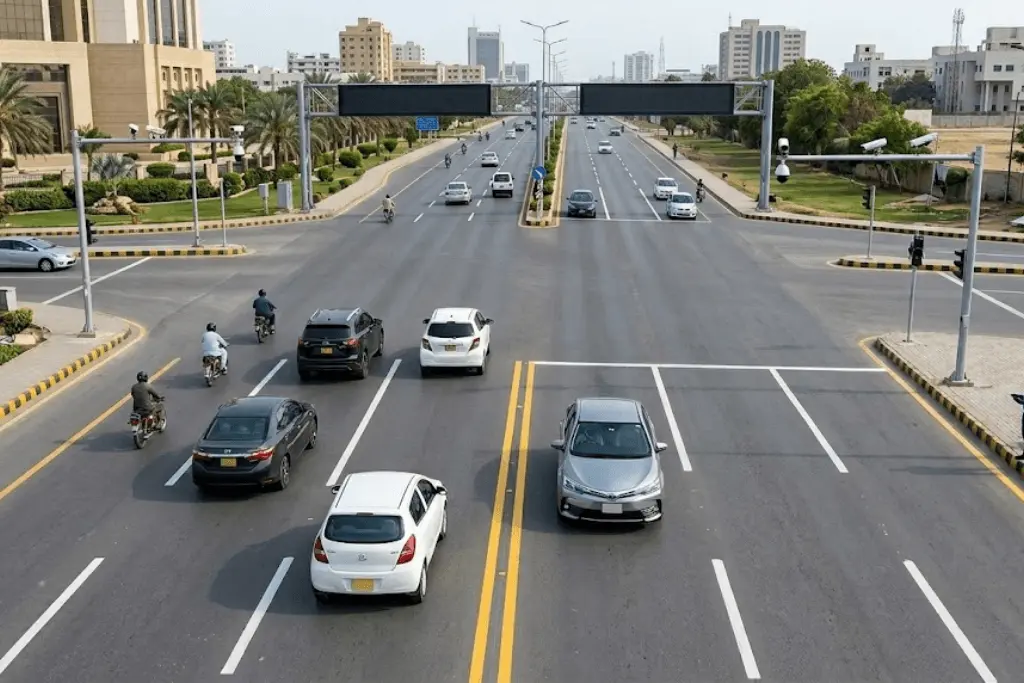
Karachi has launched the Sharea Faisal e challan system, marking a new phase of digital traffic enforcement through automated monitoring and penalties. The initiative, launched by the Karachi Traffic Police, aims to improve road safety, strengthen lane discipline and reduce congestion on one of the busiest corridors of the city.
Why Was The New E-Challan System Introduced?
Sharea Faisal is one of the most important road networks of Karachi, connecting residential, commercial and business districts. Lane indiscipline caused by heavy traffic volumes has frequently resulted in overcrowding, accidents and delays. The goal is to make enforcement fair and consistent for all road users and to reduce the human element in enforcement.
Understanding The New Rules Of The Road
The traffic management framework classifies Sharea Faisal into different lane types for different categories of vehicles and speeds.
Rightmost Lanes Fast Moving Vehicles
The fast lanes to the right are only for private cars, such as:
- Vehicles Jeep
- Double-cab vehicles
They are intended to keep the flow of traffic moving more smoothly for faster-moving vehicles. If traffic is moving slowly and occupies these lanes, it may impede traffic flow and result in enforcement action.
Commercial And Slow Vehicles Left The Leftmost Lanes
The left lanes are for:
- Motorcycle
- Rickshaws, Buses, Vans, Trucks
- Other commercial vehicles
Having slower traffic out of the way of faster traffic reduces the number of needless lane changes and ultimately improves road safety.
Flexibility In The Middle Lanes
In the three-lane sections, the middle lane is open to commercial and private vehicles, depending on traffic conditions. This flexibility allows for better traffic distribution in busy periods while maintaining lane discipline.
How The Automated Enforcement System Works
Installation of surveillance cameras on Sharea Faisal for the new system. The cameras are used to monitor vehicles in real-time and to monitor lane violations.
The system utilises advanced vehicle recognition technology and records:
- Vehicle registration information
- Date and place of offence
- Lane Type of Offence
- Supporting photographic evidence
The moment a violation is detected, an electronic challan is auto-generated and linked to the owner of the vehicle.
The process is automated, which helps to reduce disputes and improve transparency.
Lane Infraction Penalties
Different levels of punishment have been established by authorities depending on the type of vehicle in question.
Motorcycles And Rickshaws
Motorcyclists and rickshaw drivers violating lane rules could be fined around PKR 2,500.
Private Cars And Jeeps
Private vehicles, such as cars and jeeps, could be fined about Rs5,000 for driving in the wrong lane.
Commercial Trucks
The harshest penalties are for commercial transport operators, such as buses, vans and trucks. The fine for violating lane discipline can be up to about PKR 7,500.
The graded system of penalties is designed to promote compliance by all classes of road users.
What Happens If You Ignore E-Challans
Authorities have also adopted measures to promote the timely payment of fines.
Advantages Of Paying Early
Motorists who pay their challans on time may get substantial discounts. Early compliance relieves the financial burden and facilitates effective enforcement.
Growing Financial Liability
If you don’t pay your bills on time, you could be hit with extra charges and higher penalties.
Administrative Constraints
If you continue not to pay, you may face more serious consequences, such as:
- Suspension of driving licences
- Limitations associated with vehicle records
- Administrative measures on CNIC verification systems
These measures highlight the importance of compliance with traffic regulations and the swift dealing with infringements.
Advantages Of Traffic Discipline For Karachi
Implementation of automated enforcement brings several benefits to Karachi’s transport system.
More Dependable Roads
Right lane usage results in less sudden lane changes and less dangerous driving behaviour. That means fewer accidents and safer roads for all of us.
Less Congestion
While drivers stay within their designated lane, traffic flows smoothly. And fewer traffic jams means fewer minutes wasted by people who commute and more mobility overall.
Increased Transparency
Digital monitoring removes much of the subjectivity that comes with traditional enforcement techniques. Violations are objectively documented by camera evidence.
Modern Urban Management
The initiative is a reflection of Pakistan’s continued investment in technology-based public services. Smart enforcement systems help to achieve efficient governance and better management of increasing urban populations.
How Motorists Can Stay Away From E-Challans
The cardinal rule to keep out of trouble is to obey the established rules of the road.
Motorists must:
- Stay in the correct lane for your vehicle type
- Don’t change lanes unless you have to
- Observe speed limits
- Watch for traffic signals
- Secure your safety equipment and seatbelts where appropriate
- Do not use mobile phones while driving
Getting on Sharea Faisal with knowledge of the lane markings can greatly decrease the chances of committing violations.
Karachi’s Step Towards Smart Traffic Management
The issuance of about 100 e-challans on the first day highlights the strict enforcement approach, along with the need for motorists to be more aware.
Visit The Pakistan for more updates.