Farhan Qureshi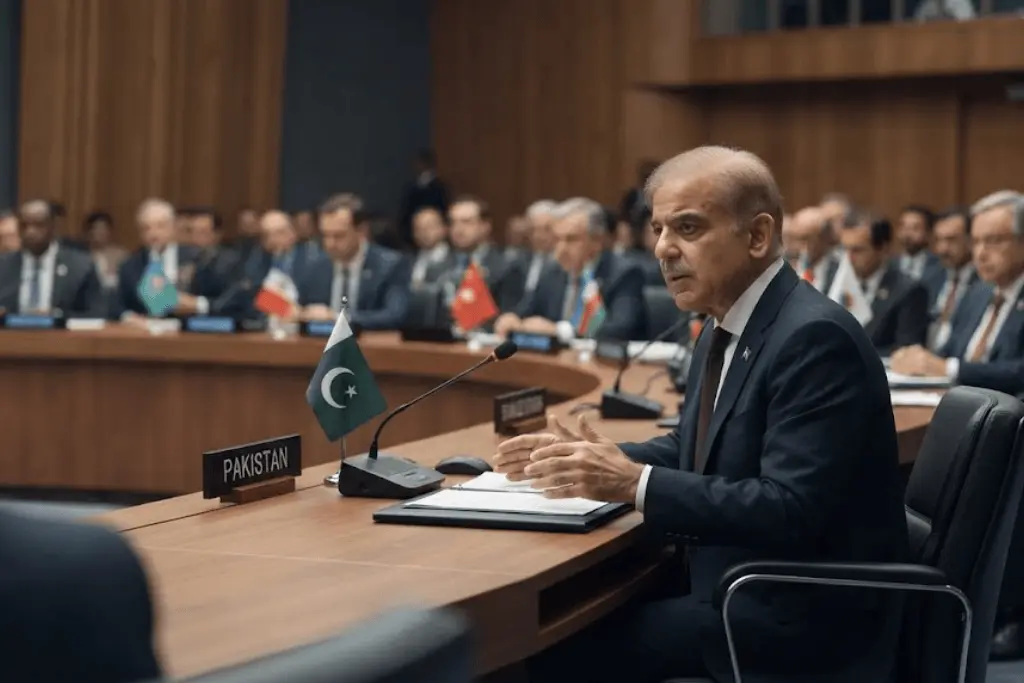
Pakistan joins 11 other countries opposing the creation of additional permanent seats on the Pakistan UN Security Council, as debate on reform of the Council continues during the 81st session of the UN General Assembly. The position was promoted by the Uniting for Consensus group of countries, which includes Pakistan and countries from Europe, Asia, Latin America and North America.
The 12-country group includes Argentina, Canada, Colombia, Costa Rica, Italy, Malta, Mexico, Pakistan, South Korea, San Marino, Spain and Türkiye. In a joint statement issued during the high-level week of the General Assembly, the group called for a more representative, transparent and accountable Security Council, while ruling out the creation of any new permanent seats.
Uniting For Consensus Demands Elected Membership
The Uniting for Consensus group has proposed increasing the elected portion of the Security Council rather than creating a new class of permanent members. Its latest position is in favour of the longer-term, rotational non-permanent seats as a way of broadening participation, but not at the expense of the principle that the members of the Council should be accountable to the wider membership of the UN.
The group has argued that regular elections are an important way of ensuring accountability, as member states can periodically review whether the composition of the Council reflects current geopolitical and regional realities. The approach also seeks to provide greater opportunities for small and medium-sized countries to join the Council.
Pakistan Links Reform To Broader UN Representation
Pakistan’s position is part of a broader discussion on how the Security Council can be made more representative of today’s international system. In particular, the Uniting for Consensus statement noted Africa’s historic under-representation and concerns relating to the Asia-Pacific, Latin America and the Caribbean.
The case for elected and rotating seats is based on wider access rather than on creating new permanent positions. A larger elected category could increase the number of countries that have a seat on the Council over time and could potentially allow a broader range of states to participate in discussions on international peace and security.
Veto Power Still Major Issue In Reform Debate
The issue of veto power is intimately linked with Security Council reform. The five permanent members can now veto any substantive resolution of the Council. The issue has been one of the major areas of contention during the long-running reform process.
The Uniting for Consensus group has called for immediate limitations on the use of the veto in certain circumstances, such as mass atrocities and war crimes, but has also expressed support for the eventual abolition of the veto. The group cited existing initiatives like the Franco-Mexican Initiative and the ACT Code of Conduct.
Security Council Reform As An Ongoing Process Of The UN
Security Council reform is being negotiated in the Intergovernmental Negotiations process of the General Assembly. The process has been going on at successive UN sessions with member states discussing questions including membership categories, regional representation, size of an expanded Council and veto arrangements.
The Uniting for Consensus group has said the Intergovernmental Negotiations is the right inclusive, member-state-led forum to discuss reform. Its latest statement called for dialogue, flexibility and compromise, while supporting efforts to reach broad political agreement among UN members.
Pakistan Supports Increased Access To Membership Of The Council
Pakistan’s accession to the Uniting for Consensus coalition is reflective of Pakistan’s continued stress on elected representation in the Security Council. This approach offers a mechanism by which non-permanent members can periodically seek membership and contribute to the deliberations of the Council on peace and security.
The coalition model also deals with the participation of smaller and medium-sized states. UN records show that more than 50 member states have never served on the Security Council, highlighting the magnitude of the representation problem in the current system.
Regional Representation Bolsters Pakistan’s Stance
Regional balance is one of the key elements of the Uniting for Consensus proposal. The group has argued that reform of the Council should address historical under-representation without creating new permanent centres of privilege. In its latest statement, it specifically pointed out the need to improve representation for Africa and other under-represented regions.
This debate is especially relevant to developing countries as the representation of major international institutions may affect the range of issues that are included in the debate on conflict, peacekeeping, sanctions and international security. An expanded elected system could create more opportunity for the direct participation of states.
Pakistan Remains Engaged On Reforms Of The UN Security Council
Pakistan and its Uniting for Consensus partners have argued that the reform process should be carried forward by dialogue and not competing proposals that are considered as fixed outcomes. During the 81st session, the coalition has said it is ready to cooperate with the General Assembly president, the future co-presidents of the negotiations and other member states.
The stress on consensus points to the difficulty in altering the structure of one of the UN’s most important institutions. Reform needs to be agreed by a broad set of member states with differing regional priorities, security interests and views on permanent membership.
Debate On UN Reform Moves Into Another Key Session
The 81st General Assembly has begun with Security Council reform still unresolved after years of negotiations. The present session (September 2026 to September 2027) offers another chance for Member States to formulate and hone proposals within the existing framework of the Intergovernmental Negotiations.
By signing on to the latest joint statement, Pakistan clearly aligns itself with the Uniting for Consensus approach: increased elected membership, longer rotational terms, enhanced regional representation and changes to the use of the veto. The coalition has also stressed that the comprehensive reform should be based on the broadest possible political consensus.