Farhan Qureshi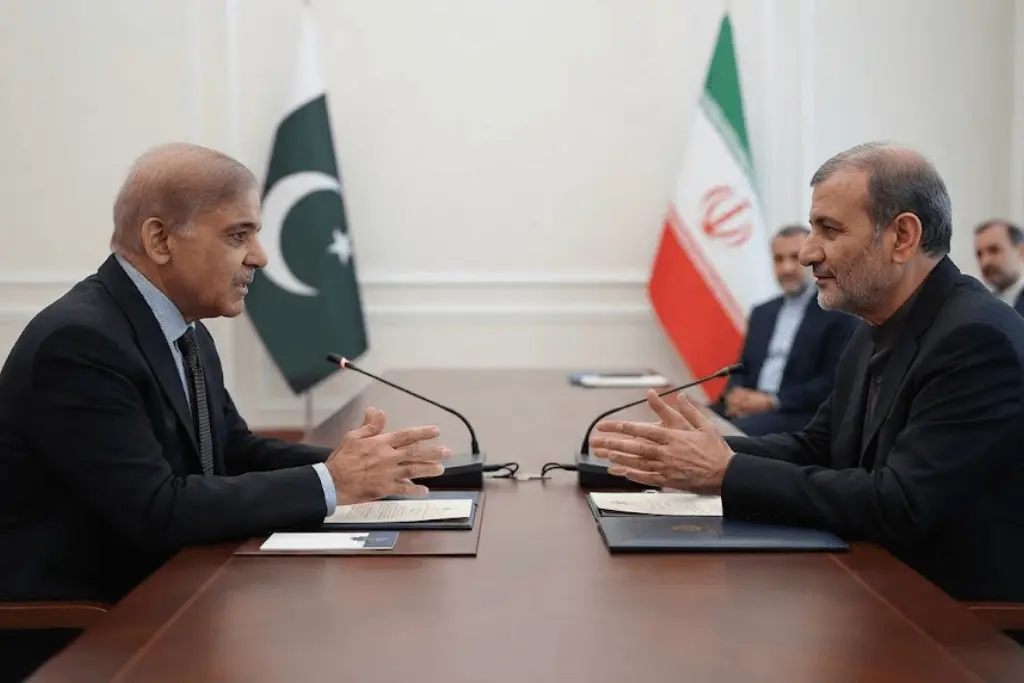
The meeting between Prime Minister Muhammad Shehbaz Sharif and Iranian President Masoud Pezeshkian was an opportunity for the two sides to review Pakistan-Iran relations and to discuss the rapidly changing regional situation. The two leaders reaffirmed the existing long-standing relations between the neighbouring countries and stressed the need for expanding cooperation in areas of mutual interest.
Shehbaz Sharif, Pezeshkian Discuss Regional Situation
Prime Minister Shehbaz Sharif and President Pezeshkian discussed the changing regional environment, including the ongoing conflict and its impact on peace and stability. Pakistan urged restraint, de-escalation and continued diplomatic engagement to defuse tensions in the region.
Islamabad has continued to view diplomacy as an important tool to ease tensions in the region. Prime Minister Shehbaz Sharif also reiterated Pakistan’s willingness to contribute to efforts aimed at de-escalation between Iran and the United States during the UNGA visit, describing Islamabad’s role as that of a sincere and constructive mediator.
Tehran Reiterates Commitment To Islamabad MoU
Another major issue discussed between the two leaders was the Islamabad Memorandum of Understanding. While emphasising the necessity to carry forward the implementation, Prime Minister Shehbaz Sharif. President Pezeshkian, on his part, reaffirmed that the agreement still remained fully acceptable to Tehran, adding that Iran was ready to take it forward.
The development gives a new fillip to an understanding which has been part of Pakistan’s diplomatic efforts on regional de-escalation. Prime Minister Shehbaz Sharif has previously said that Pakistan is committed to facilitating dialogue and keeping channels of communication open between the relevant parties.
Pakistan, Iran Discuss Expanding Bilateral Cooperation
The two countries reaffirmed the strength of their long-standing relationship and pledged to support greater cooperation across areas of mutual interest. Pakistan and Iran share a common border, historical linkages and extensive people-to-people contacts, providing a wide basis for engagement beyond immediate regional security concerns.
Previous discussions between the two sides have included trade, energy, border security, regional connectivity and people-to-people exchanges. The Ministry of Foreign Affairs of Pakistan referred to these areas as efforts to deepen cooperation and follow up on previously agreed understandings between the two countries.
Regional Peace Important To Pakistan’s Diplomacy
Pakistan’s diplomatic engagement with Iran has focused mainly on regional peace and stability. Prime Minister Shehbaz Sharif called for restraint and sustained diplomacy to resolve the issue during the meeting held in New York, whereas President Pezeshkian appreciated Pakistan’s efforts to promote regional peace and security.
The emphasis is a reflection of Pakistan’s geographic location and the desire to prevent wider regional instability spilling over to neighbouring states. Extended conflicts can affect trade routes, energy markets, cross-border movement and economic activity, making diplomatic engagement crucial for countries in the region.
Senior Officials Attend Pakistan-Iran Talks
The meeting in New York was attended by high-ranking officials of both countries, which shows the great institutional importance attached to Pakistan-Iran relations. Pakistan was represented by Deputy Prime Minister and Foreign Minister Ishaq Dar, Defence Minister Khawaja Muhammad Asif and Special Assistant to the Prime Minister Tariq Fatemi, along with senior officials. Also present was Iran’s Foreign Minister Abbas Araghchi.
The presence of officials from the foreign affairs and defence ministries allows diplomatic talks to be linked to broader policy issues. Many issues that deal with regional security, border management and international diplomacy often require coordination between several governmental institutions, not just communication between leaders.
Pakistan’s Border And Economic Ties Remain Important
Practical cooperation is all the more important as Pakistan and Iran have a common border. Regular communication can help resolve issues affecting communities and economic activity on either side in the areas of cross-border movement, security, trade and connectivity.
The Pakistani Foreign Ministry has in the past flagged border security, trade, energy and regional connectivity as areas of discussion in high-level engagement with Tehran. These issues still pertain to Pakistan’s attempts to develop economic relations with neighbouring countries while ensuring secure and orderly borders.
Regular Consultations Could Help Long-Term Coordination
Regular consultations will provide Pakistan and Iran a platform to address immediate challenges and longer-term opportunities. Sustained communication, rather than engagement limited to occasional leadership meetings, can enable officials to monitor developments and follow up on agreed initiatives.
For Pakistan, the approach is consistent with its emphasis on diplomatic engagement and regional stability, and continued contact between the two governments can be good for the Islamabad MoU, bilateral cooperation and wider peace efforts, particularly as the regional situation remains fluid.