Farhan Qureshi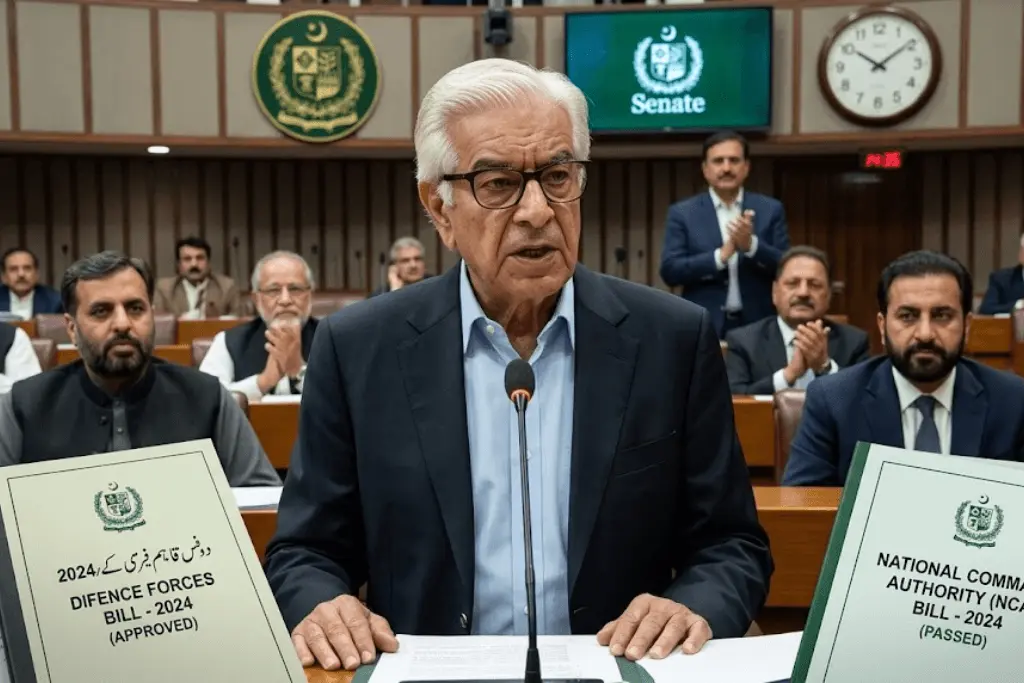
The Defence Forces of Pakistan Bill, 2026 and the National Command Authority (Amendment) Bill, 2026 bring important institutional arrangements in line with changes brought about through the 27th Constitutional Amendment.
The legislation marks an important step in Pakistan’s efforts to formalise its defence command structure. The bills focus on senior military leadership, coordination between the armed forces and the functioning of the National Command Authority, with more emphasis on an integrated command structure.
Pakistan Senate Passes Two Key Defence Legislation Bills
During the parliamentary proceedings in August 2026, the Senate passed the Defence Forces of Pakistan Bill, 2026 and the National Command Authority (Amendment) Bill, 2026. The legislation had already passed the National Assembly, and the proposed changes could therefore go through the parliamentary process.
The bills were introduced by Defence Minister Khawaja Asif as part of the legislative process pertaining to the implementation of the 27th constitutional amendment. The measures are aimed at ensuring that statutory references and command arrangements are consistent with the constitutional framework that now governs Pakistan’s defence institutions.
The passage also illustrates how Parliament has played a central role in establishing the legal framework for key national security institutions. The government has sought to enshrine command arrangements in legislation to provide the working of Pakistan’s defence leadership with a clearer statutory underpinning.
But the parliamentary proceedings were accompanied by political disagreement. Opposition lawmakers, including those from Pakistan Tehreek-e-Insaf, protested during proceedings and walked out of the legislation.
Pakistan’s Defence Forces Bill Reformulates Military Command Structure
One of the most important changes concerns the position earlier attached to the Chairman of the Joint Chiefs of Staff Committee. The new legislative framework replaces references to that office with arrangements whereby the Chief of the Army Staff also serves as the Chief of the Defence Forces.
The position of Chief of the Defence Forces is intended to allow for an overarching role in the command of Pakistan’s military structure. The change is therefore a major institutional move in the organisation of the armed forces at the highest level.
The law is one piece of broader constitutional changes made through the 27th Amendment. It aims at harmonising the constitutional provisions and the statutory framework governing the country’s armed forces.
An integrated leadership structure might also encourage better coordination across Pakistan’s military services. More explicit command responsibilities are particularly important for national defence planning, strategic preparedness and coordination in complex security situations.
National Command Authority Law Strategic Update
The second major measure approved by the Senate relates to the National Command Authority. Pakistan’s strategic command structure, particularly regarding the country’s nuclear and strategic assets, is built around the National Command Authority. The changes seek to formalise the relationship between senior military leadership and Pakistan’s strategic command architecture.
A well-defined institutional framework is crucial to ensure continuity, coordination and accountability in strategic decision-making. The revised legislation provides a legal framework consistent with the constitutional and military command changes implemented by the latest reforms.
The National Command Authority structure is still an important component of Pakistan’s national security system. The updated structure should enable coordination across strategic institutions, while maintaining established national command mechanisms.
27th Constitutional Amendment Pushes For Institutional Reforms
The two bills are closely related to the 27th Constitutional Amendment, which provided the wider constitutional basis for changes in Pakistan’s defence leadership arrangements.
Constitutional provisions have to be turned into detailed institutional procedures by legislation. The Defence Forces of Pakistan Bill thus provides the legal framework for the revised military command system. The amendment to the National Command Authority brings the strategic command law in line with the new constitutional structure.
The approach shows how changes in ordinary legislation can follow constitutional reforms. The alignment is important because military institutions function through both constitutional provisions and detailed statutory rules.
For Pakistan, the process also offers an opportunity to clarify responsibilities at the highest levels of defence administration. Clear legal authorities can reduce ambiguity regarding institutional roles and enhance coordination among various elements of the national security architecture.
Pakistan Defence Framework Gets Major Step Approval From Parliament
The legislation’s approval by both the National Assembly and Senate constitutes a major parliamentary milestone. Despite political opposition and disagreement over the proposed changes, the bills were on the move through the two chambers.
Such defence legislation has implications beyond the military administration, as command structures are directly related to decision-making on national security. Thus, parliamentary consent gives a formal legislative basis to the revised framework.
The government has defended the changes as necessary to update defence institutions after constitutional reform. The new arrangements are expected to provide more clarity on the responsibilities of senior command and the integration of Pakistan’s defence structure.
The legislative process also underscores the continuing importance of parliamentary institutions in Pakistan’s national security architecture. There are still political disagreements in the mix, but the bills’ passage establishes an official legal mechanism for putting the new arrangements into effect.
Political Debate Over Reforms Highlighted By Opposition Protests
The bills’ passage was not without controversy. Opposition members, including those linked to the PTI, protested against the measures and walked out of the parliamentary session.
This opposition is similar to the wider political divides in Pakistan on constitutional and institutional reforms. Defence-related legislation is often subject to particular scrutiny as changes to military command structures can have long-range implications for governance and national security.
The government and opposition remain at odds on several issues related to Pakistan’s political and institutional trajectory. But the bills’ passage through parliament shows that even in the heat of political discord, major legislation can advance through the constitutional process.
The debate also adds more weight to transparency about implementation. A clear presentation of the responsibilities established by the new framework can help to clarify the practical consequences of the legislation for Pakistan’s defence institutions.
Changes In Command Structure Aim To Improve Coordination
The new framework emphasises the need for unified military leadership and better strategic coordination. The Army Chief also serves as the Chief of the Defence Forces, a position established to give central command and promote coordination in Pakistan’s armed forces.
Pakistan’s complex security environment requires coordination, especially in the areas of conventional defence, counter-terrorism operations, border security and strategic deterrence.
An integrated command structure can also help align planning and operational priorities across the military institutions. Ultimately, the effectiveness of the system will depend on how the new legal provisions are implemented and institutionalised.
The legislation, therefore, is more than a change of name. It sets out a new framework for defining and coordinating senior defence responsibilities in Pakistan’s national security system.
Strategic Oversight Continues To Be At The Core Of Pakistan’s Security
The National Command Authority amendments add another dimension to the institutional changes, dealing with Pakistan’s strategic command architecture.
Strategic assets require clear lines of authority, established procedures, and reliable institutional coordination. After the constitutional changes, the new legislation creates a legal framework for those responsibilities.
The establishment of a stable strategic command structure is directly related to the security and deterrence of Pakistan. The purpose of the legislation is to ensure that the relevant institutions operate within an updated statutory framework and not based on provisions that no longer fully reflect the constitutional structure.
The reforms are therefore important for Pakistan’s long-term defence planning. Institutional clarity can help provide consistency, even amid changes in governments, military leadership and broader political circumstances.
What The New Defence Laws Will Mean For Pakistan
The Senate’s approval of the two bills is a major milestone in the reorganisation of Pakistan’s defence and strategic command structure. The law codifies senior military command responsibilities and establishes statutory arrangements in conformity with the 27th Constitutional Amendment.
The Pakistan Defence Forces Bill addresses the general structure of military command, including the establishment of the Chief of Defence Forces. The strategic command system is addressed in an amendment to the National Command Authority that also harmonises the legal framework with the revised institutional structure.
Collectively, the measures seek to bring about greater clarity, integration and continuity across Pakistan’s defence institutions. Their implementation will now be an important part of translating the parliamentary and constitutional changes into an operational framework.
For Pakistan, the legislation is also an attempt to modernise institutional arrangements around national defence. The bill’s passage through both houses of parliament is yet another step by the country toward the creation of a unified and legally defined command structure for its armed forces and strategic institutions.