Farhan Qureshi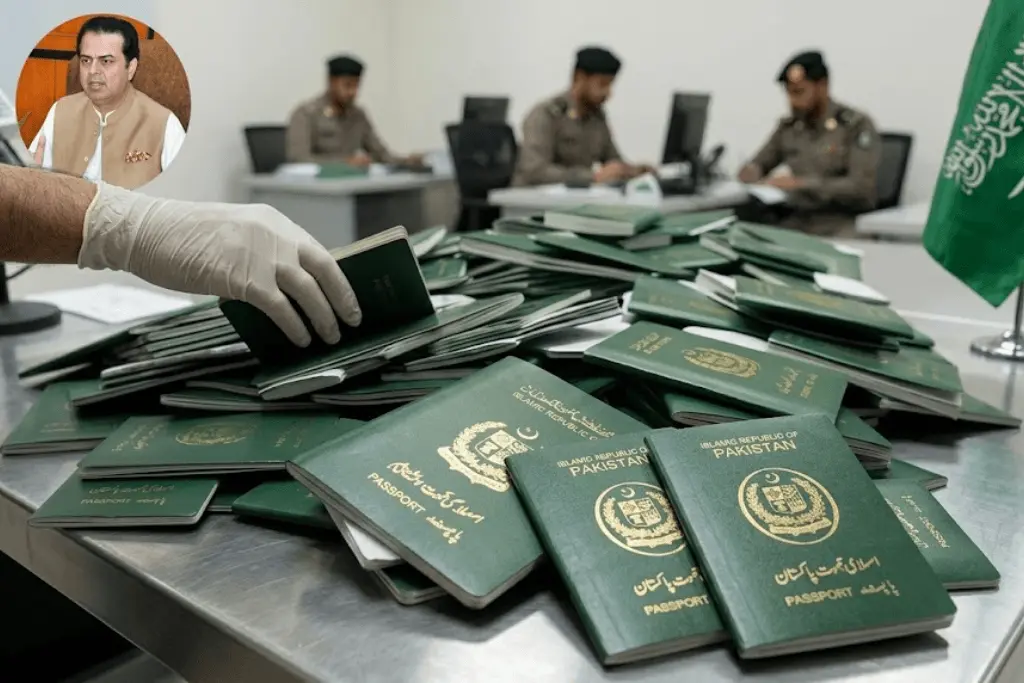
Saudi Arabia has recovered about 5,000 Saudi Arabia Pakistani passports believed to be connected to Afghans who allegedly acquired the documents fraudulently. The development renewed attention to the security of identity documents and their misuse across borders, Talal Chaudhry, the Minister of State for Interior of Pakistan, told the National Assembly.
The case has also led to a wider response from Pakistani authorities, including investigations into alleged document fraud, action against suspected facilitators and efforts to shore up national identity databases. The developments highlight the need to safeguard genuine Pakistani documents and to stop overseas Pakistanis from becoming victims of fraudulent activities.
Saudi Arabia Pulls Thousands Of Pakistani Passports
Saudi authorities have seized or recovered around 5,000 Pakistani passports after discovering Afghan nationals reportedly in possession of documents obtained through fraudulent means. Minister of State for Interior Talal Chaudhry said this while speaking in Pakistan’s National Assembly.
Some of the passport holders were reportedly involved in activities such as begging, according to the information furnished. The find caused alarm because Pakistani passports are internationally recognised travel documents issued after verification through national identity and passport systems.
The reported recovery has thus become a big administrative and security problem for Pakistan. Pakistani citizens living, working and travelling abroad are particularly concerned about the integrity of the passport system.
The case also shows the impact of fraudulently obtained documents outside the borders of Pakistan. The abuse of Pakistani passports by those who are not entitled to them can lead to additional scrutiny and damage the reputation of legitimate Pakistani travellers.
How Pakistani Documents Were Allegedly Fraudulently Obtained
Pakistani authorities have linked the case to an alleged network that forged identity documents and allowed foreign nationals to secure Pakistani documentation.
Reports say some Afghans were said to have obtained real passports after acquiring Pakistani identity cards in an alleged investigation. A secure identity system is not only vital for national security but also necessary for protecting the rights and records of the rightful Pakistani citizens.
Pakistan Investigates NADRA, Passport Fraud Claims
In response, Pakistan has looked into alleged vulnerabilities in the identity and passport issuance system. Officials accused of helping to create fraudulent documents have reportedly been charged in criminal cases.
If investigations and court proceedings prove officials’ participation, it will be a serious breach of public trust. Reliable records and rigorous verification processes are essential for government institutions involved in identity management.
The reported action also indicates a willingness on the part of Pakistani authorities to go after internal networks rather than to treat document misuse as an external problem only. Facilitators within administrative systems can be identified to prevent recurrence of similar cases.
Stronger accountability can further enhance trust in Pakistan’s national documentation infrastructure. Proper enforcement against fraudulent practices can safeguard the millions of citizens who rely on secure identity and passport services.
FIA Takes Action Against Illegal Documentation Agents
The Federal Investigation Agency has also expedited action against people allegedly involved in the fraudulent documentation network. The authorities are said to have expanded the crackdown, with more than 100 illegal agents detained in a month.
Agents and middlemen who take advantage of applicants for identity cards, passports or other government documents can create vulnerabilities. They may also facilitate organised fraud, either by connecting applicants with corrupt officials or by abusing existing procedures.
The arrests are part of a wider effort to dismantle the networks behind fraudulent documentation. Hitting middlemen and compromised officials makes it difficult for illegal operators to exploit Pakistan’s administrative systems.
Such enforcement has broader implications for Pakistan, as secure documentation aids immigration management, financial services, employment verification and international travel. Hence, tighter controls can be good for national institutions, but also for the common citizens.
Pakistan Launches Drive To Clean Up National Identity Records
The passport controversy has occurred at a time when there is a national movement to review and clean national identity records. Pakistani authorities have been working to identify foreign nationals who were not properly registered and to delete fake entries from official databases.
The integrity of national identity documents relies on a reliable population database. If inaccurate or fraudulent records stay live, they can potentially be used to obtain passports, financial accounts and other government or commercial services.
The database-cleaning campaign is thus a big part of the effort to bolster Pakistan’s identity management system. Better record checking could prevent fraudulent identities from being used to get legitimate Pakistani documents.
Also, the process should be verified carefully to distinguish fraudulent records from valid cases. Authorities need to weed out any wrongly created identities but at the same time need to safeguard the rights of genuine citizens.
Reforming Passport Tracking Is Intended To Increase Security
Pakistan is also making changes to strengthen passport administration and reduce opportunities for corruption. The proposed measures include decentralisation of passport tracking of passports and better integration with NADRA centres.
Better integration between identity and passport services can help make verification more efficient. Pakistan’s passport system could be improved with better security features and improved tracking systems. Such reforms are especially valuable as international travel becomes more and more reliant on secure and verifiable digital identity systems.
More Robust Document Security For Pakistani Travellers
The reported seizure in Saudi Arabia has repercussions for genuine Pakistani citizens apart from the immediate investigation. National passports are the lifeline of Pakistani workers, pilgrims, business travellers and families living overseas.
A passport obtained by lawful means is an individual travel document and a formal expression of nationality. A lot of fraud is just extra checks and administrative headaches for legitimate travellers.
Effective enforcement can therefore help protect Pakistan’s international mobility. Catching forged documents and going after the networks that produce them helps build confidence in passports issued to legitimate citizens.
The recovery of the documents by the authorities of Saudi Arabia also reflects the importance of international cooperation. Sharing information across borders helps identify questionable documents and prevents people from falling between the cracks in national systems.
Pakistan And Saudi Arabia Share Concerns About Secure Travel
There are robust people-to-people links between Pakistan and Saudi Arabia, with large numbers of Pakistani nationals visiting the Kingdom for employment, business and religious reasons. The allegations around identity records and passport offices highlight the need for good oversight of verification processes.
Government employees in charge of identity and passport systems have responsibilities that directly impact national security and citizens’ rights. Confirmed participation in fraudulent documentation must therefore be subject to suitable legal proceedings.
Better oversight can also protect honest public servants working within Pakistan’s documentation institutions. The goal is not only to stop fraudulent documents from going abroad but to build a system that makes it hard to create improper identities in the first place. The discovery of some 5,000 Pakistani passports in Saudi Arabia has focused attention on identity verification, document security and enforcement. Pakistan has reacted by conducting investigations, making arrests and trying to improve its national databases and passport administration.