Adeel Hassan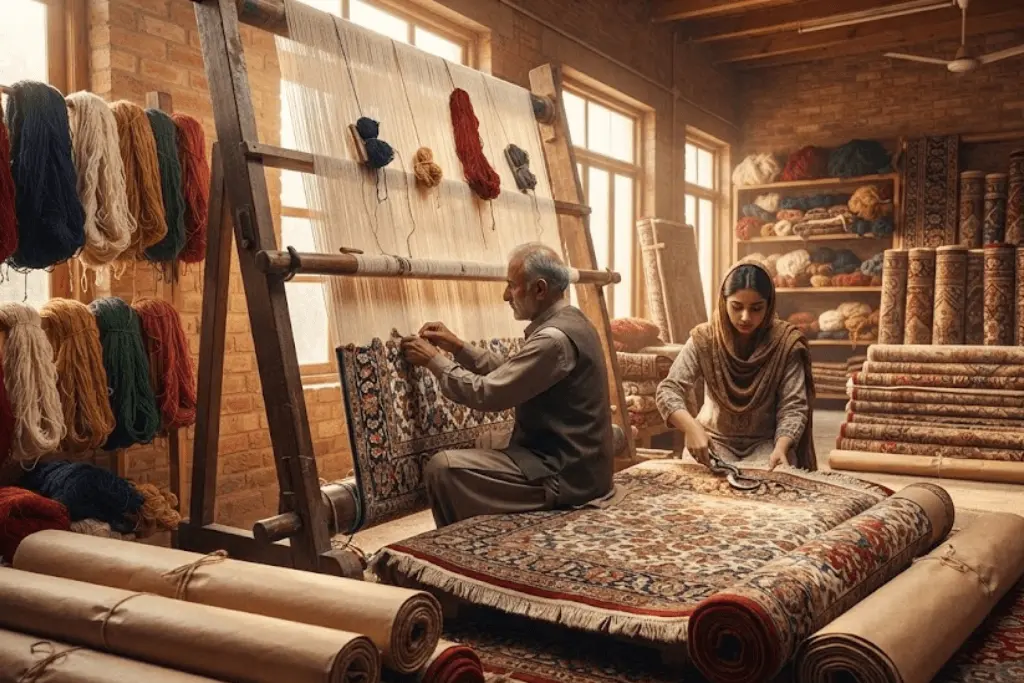
Pakistan hand knotted carpets are a major industry in Pakistan, contributing significantly to the country’s national identity while supporting the rural economy and providing livelihoods for thousands of skilled artisans. This traditional craft is a cottage industry supporting the livelihoods of more than 1.5 million skilled artisans, weavers and secondary workers in the rural and semi-urban areas.
In the various centres of manufacture in the provinces, raw wool, silk and cotton are transformed into exquisite decorative floor coverings. The sector creates high-value artistic exports from raw local materials, providing essential household income in remote areas where alternative industrial employment remains limited.
The sector regularly generates export earnings of between US$250 million and US$300 million a year. More than 99 per cent of the hand-knotted rugs produced within the country are for export markets, and the industry is a major foreign exchange earner for the country.
Institutional Arrangements And Government Policy Support
Public-private partnership is needed to keep the Pakistani hand-knotted carpet competitive at the international level. Federal trade authorities work closely with the Pakistan Carpet Manufacturers and Exporters Association to identify logistical bottlenecks, resolve shipping delays and modernise trade regulation frameworks.
The Ministry of Commerce is leading the charge on strategic policy measures aimed at adding value, building brands and seamlessly integrating into global luxury supply chains. The official trade policies are aimed at lowering duty structures on key imported raw materials and speeding up export clearance procedures at national ports.
An institutional body, the Trade Development Authority of Pakistan, provides vital operational support to local producers. State agencies assist local manufacturers in extending their commercial footprint overseas through subsidising their participation in international trade fairs, market intelligence reports and foreign trade delegations.
Global Market Reach And Export Performance
Pakistani hand-knotted carpets are sought after all over the world from continent to continent for their reputation of fine knotting, durability and intricate detailing. The bulk of total annual shipments are in premium markets in Western countries, indicating strong demand for authentic hand-woven craftsmanship around the world.
The United States is the largest single country destination for floor coverings, importing tens of millions of dollars of floor coverings each year. High-end inventory is primarily sold through major European markets such as Germany, Italy and the United Kingdom and trading hubs such as the United Arab Emirates.
Pakistan has a niche market dealing exclusively in pure hand-knotted floor coverings made from blends of natural wool, silk and cotton. The dedication to the traditional methods of knotting distinguishes the local products from the mass-produced, machine-tufted products that dominate the lower end of the retail market.
Design Innovation And Aesthetic Adjustment
Design is constantly evolving to meet modern interior design trends, while keeping centuries-old weaving traditions. Master weavers and designers actively combine traditional Persian and Mughal motifs with contemporary minimalist aesthetics to cater to changing foreign consumer preferences.
Subtle colour palettes, geometric alterations and custom sizing choices allow historical patterns to blend in with contemporary architecture. Exporters combine heritage craftsmanship with trend-conscious styling to successfully attract high-end interior designers, luxury hotels and private art collectors around the world.
The artistic flexibility means traditional loom skills are still relevant for fast-changing global retail markets. Constant product innovation not only prevents the industry from becoming outdated but also helps heritage weaving techniques to get better margins in the highly competitive international arena.
Sustainable Production And Ethical Manufacturing
The increasing global demand for sustainable and socially responsible products can benefit traditional hand-knotting businesses. Synthetic machine-made carpets are a major contributor to landfill and microplastic pollution. Hand-knotted rugs are crafted from 100% natural biodegradable fibres.
Locally, producers are moving toward the use of organic dyes, ethically sourced sheep wool and sustainable washing practices in order to meet the strict environmental standards of Western consumer markets. High-end rug retailers in Europe and North America tout transparency in the supply chain and fair wages as a selling point.
Further, the fair trade practices and certificates of child labour-free status contribute to the promotion of Pakistani floor coverings in the international market. Compliance with international labour standards ensures sustainable access to major retail chains and contributes to improved socio-economic conditions in rural communities of artisans.
Direct Access To Markets And Digital Connectivity
Digital transformation is changing the traditional supply chain, linking remote clusters of weavers directly with overseas buyers. Small-scale manufacturers are selling their inventory globally without the help of traditional intermediaries through e-commerce platforms, virtual showrooms and social media channels.