Urooj Niazi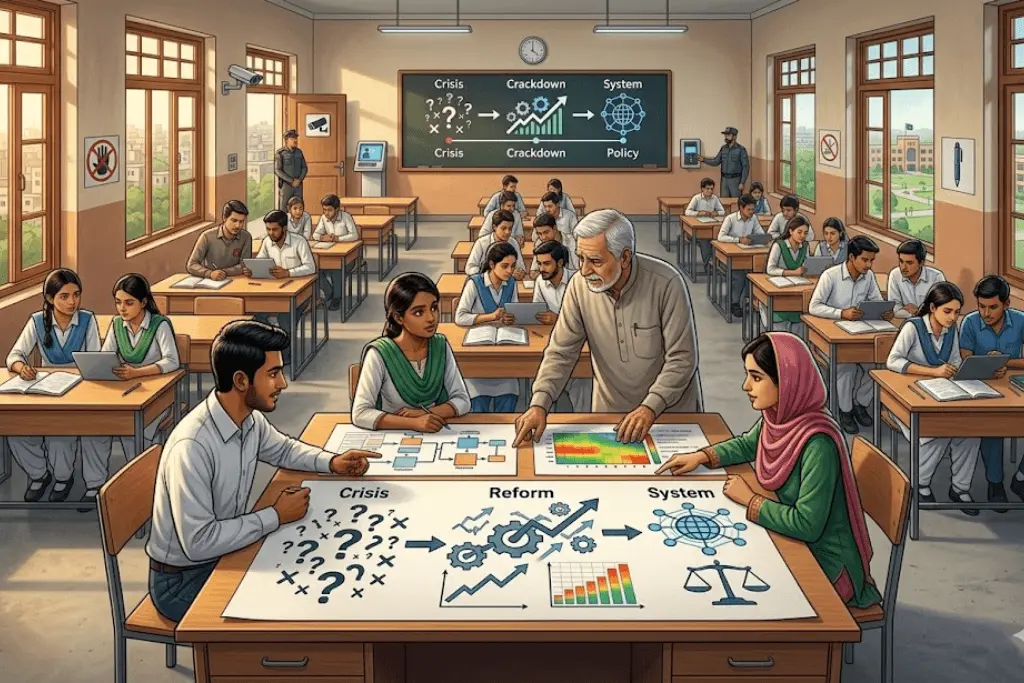
The education system in Pakistan is at a crossroads under Pakistan education reform. What started as an emergency measure against rampant preparation tests has transformed itself into a more general discussion of long-term change. The government has been sending strong signals that it is headed in the right direction by unleashing banhammer on school children found cheating; they face lifetime bans as a way of returning honesty and integrity to education. However, the bigger question is, can these reactive measures be put into a sustainable education policy?
The 2026 test cycle, especially in Sindh, has revealed the magnitude of the issue and the intention of the state to take some action. The crisis has led policymakers to not only reconsider the way in which they should enforce their policies in order to stop paper leaks but also call into question the very nature of the way in which education is provided and evaluated in Pakistan.
Zero-Tolerance Crackdowns: Restoring Integrity or Temporary Fix?
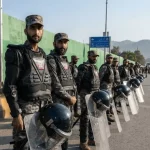
The recent response of the government is the first step towards one of the most difficult decisions of the government towards academic malpractice in Pakistan. Those who have been caught cheating are currently expelled immediately, the paper is cancelled, and there is even a ban that could be a lifetime ban in future board examinations. This zero-tolerance system is aimed at destroying a well-established system of fraud, which has long been detrimental to integrity in academics.
In addition to students, they are also targeting those in charge of the system as facilitators. School monitors, centre principals and even the board members who were found guilty in networks to cheat are being arrested, fired, and even prosecuted. Cases of reported organised rackets where students have been obliged to pay thousands of rupees to get guaranteed access to leaked papers have received an aggressive reaction from law enforcement.
Technology is also coming out as a key factor. Watermarking of exams has been implemented to enable administration of exams to trace the source of such papers to particular schools, and e-marking and CCTV cameras are used to deter manipulation of exams during grading. Such innovations also indicate increased cognition of the fact that old methods of overseeing, especially the mechanical manner of overseeing, are no longer adequate in the digital environment, where leakages can become viral.
Nonetheless, as much as these actions can help prevent cheating in the short run, the critics opine that enforcement is not a solution to a system that has more underlying structural flaws. Unless root causes are dealt with, the danger could be that the crackdown will merely result in some malpractice shifting to more advanced and not easy to trace types.
Beyond Policing: The Structural Reforms Pakistan Needs
To make any sustainable change, Pakistan needs to step out of punitive action and invest in systemic reform. Funding is one of the challenges that requires urgent attention. There is still a lower consumption of education, which stands at 1.7 to 2.3 per cent of GDP. This constrains the government’s power to enhance infrastructure, educate teachers and update curricula- aspects which play an outright role in determining the student performance and integrity.
Another issue is the quality of education as such. Recent-year data show disastrously high failure rates in some areas, which point to the weaknesses in teaching standards and desired outcomes of learning. In cases where the students are unprepared, there is a high likelihood of cheating, enforcement is not adequate.
Positively, there are provinces that are testing structural changes. An example is Punjab, which is also moving towards models of continuous assessment and less dependence on high-stakes annual examinations, which tend to encourage cheating. These changes will reduce the stress, give students more chances to take tests, and focus on skill-based assessment, which leads to real learning.
At the same time, it is important to make the system more accountable. Weak governance and the absence of oversight in the implementation of reform initiatives have plagued all past attempts at reform in Pakistan. It will be important to ensure that the policies are regularly implemented, without any special treatment or corruption.
Teacher training is also important to invest in. An appropriate teaching society has the potential to not only enhance academic achievements but also instil a sense of integrity in classrooms. This could slowly bring about a reduction in the unjust practices, depending on the improved infrastructure and availability of resources.
In finality, the present-day crackdown that is being implemented by Pakistan is not only a response to a crisis, but it is an opportunity. Provided that policymakers are capable of riding on this momentum and some of the reasons behind these deficits are tackled, the country has a chance real chance to turn its education system into a merit-transparent and long-term growth-focused one.
Can Technology Become Pakistan’s Long-Term Solution to Exam Integrity?
Recent developments in Pakistan using digital means such as watermarking, CCTV surveillance, and e-marking are an indicator of the accountability in education being tech-infused. When properly scaled, these innovations might turn into some long-lasting protective mechanisms against paper leaks and a structured network of cheating.
Technology is, however, not a panacea. It will be successful when it is implemented consistently, staff are trained, and there is transparency in the use of data. Digital systems in combination with policy changes and better rule-making may make a more secure and fair examination space a reality, where academic success is determined by merit, not persistence, in Pakistan.
It will not come as easily. Any reform of such a complex system as education needs a lengthy political determination, financial investments and support of society. The 2026 events, however, have had this much to say: the price of inaction is much higher than the burden of change.