Adeel Hassan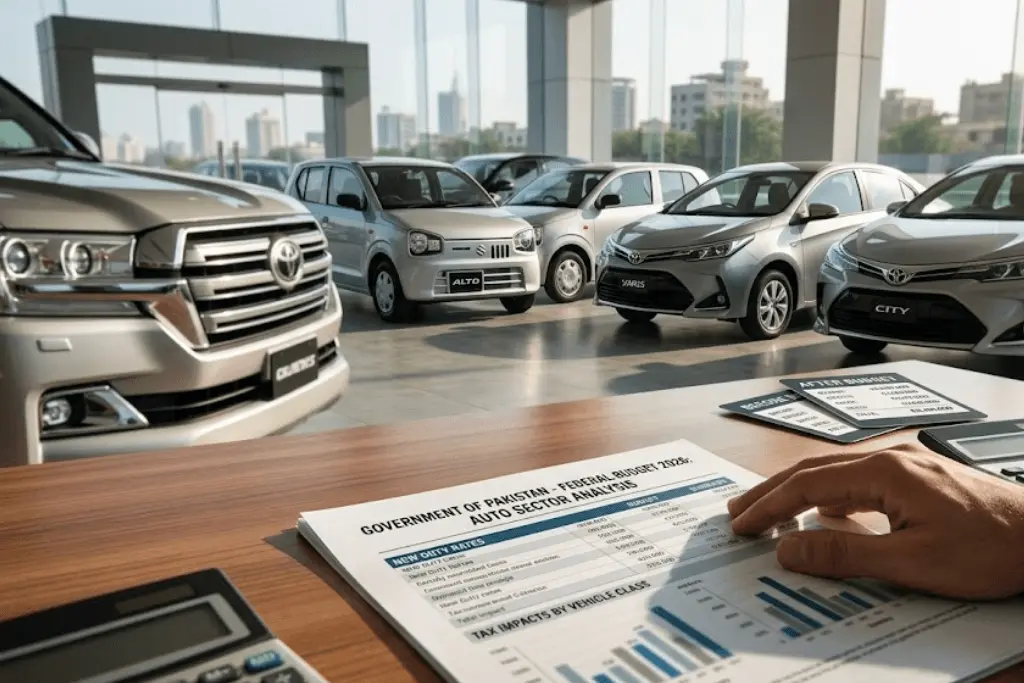
The Budget 2026 has opened a new chapter for Pakistan’s automobile industry, with major changes to taxes, import duties, and excise, making Pakistan Budget 2026 cars a key topic for buyers and the auto market. The new framework will help ensure affordability in key segments, promote cleaner transport and enhance competition in a market that is continuing to evolve.
Budget 2026: A Big Change For Pakistan’s Auto Industry
Budget 2026 is one of the most significant tax overhauls for the automobile sector in recent times. Imported vehicles for a long time faced very high duties and prices well above international levels. The barriers kept local assembly alive, but so did limit consumer choice.
The new budget lowers import barriers for several categories of vehicles but keeps higher taxes on luxury models. The strategy helps middle-income buyers and retains revenue from premium buys. It also reflects a wider Pakistani ambition to modernise transport policy and build a more competitive industry.
Significant Reduction In Import Duties
One major change is the reduction of cumulative import duties and tariffs on some vehicle categories. In many instances, effective tariff levels that used to be more than 150 per cent have been reduced to around 70 to 74 per cent depending on the engine size and classification.
New Budget Means Luxury SUVs Face Higher Taxes
While some buyers are getting relief, owners of luxury cars are getting hammered. The Federal Excise Duty on vehicles above 2000cc has been increased from 10 per cent to 15 per cent. This is impacting premium SUVs and large-engine vehicles that are already at the high end of the market.
The higher tax burden will likely push up on-road prices substantially, especially for imported and premium locally assembled models. Big SUVs like the Toyota Fortuner and its kind could see a steep increase in price. The policy is in line with the progressive tax approach where purchases of higher value contribute more to public revenue.
Small Cars Assembled Locally Have Become More Expensive
The budget changes aren’t just for the luxury car segment. Entry-level hatchbacks driven by first-time buyers and budget-conscious households are now subject to an 18 per cent sales tax on locally assembled cars up to 850cc.
That rise could pressure affordability at the lower end, especially in urban areas where compacts remain in vogue. Still, local assemblers continue to be crucial to providing affordable mobility across Pakistan. The new structure could lead to better localisation, greater efficiency and enhanced value of the product.
Mid-Range Buyers May Be The Biggest Winners
The biggest benefit seems to be for middle-income homebuyers. Import duties on vehicles between 801cc and 1500cc have been substantially reduced, making several imported models more competitive.
This section covers the sedans, compact SUVs and family vehicles that are popular across Pakistan.
Hybrid And Electric Vehicles Mixed Treatment
The new framework backs hybrid vehicles, particularly in the 1800cc segment, where tariff cuts have made them low-cost to import. In Pakistan, where fuel prices are a major concern, hybrid technology provides a practical stepping stone to cleaner mobility, which is important.
Electric vehicles have a more selective policy. The Federal Excise Duty on premium imported EVs worth over PKR 20 million is now 30 to 40 per cent depending on the total value. At the same time, fully imported EVs priced under PKR 20 million continue to be exempt from FED. It’s a cleaner structure for transportation and keeps affordable EVs accessible to more consumers.
Local Assembly Of Evs And Auto Parts Gets Boost
Budget 2026 also encourages local assembly of electric vehicles. Import duties on components used in local EV production are still very low, at around one per cent. That gives a strong incentive to invest in local manufacturing, supply chains and job creation.
Plus, the auto parts are cheaper. Parts tariffs have been cut from about 61 per cent to 45 per cent. Last, but not least, the lower component costs could mean cheaper repairs and maintenance for vehicle owners. This is good news for new buyers and existing car owners in Pakistan.
Changes To Token Taxes To Increase Predictability
The budget also makes changes to the tax regimes on tokens to give more certainty around annual ownership costs. Predictability is a valuable reform when the sticker price is as important as the cost of ownership.
Pakistan Auto Market Becomes More Competitive
Budget 2026 has created winners and losers across the automobile sector, but the overall direction is positive for Pakistan. Buyers of luxury SUVs and premium EVs will pay more, but middle-income buyers could get the benefit from lower duties and stiffer competition.
The new framework supports affordability, cleaner transport and industrial development. It also prompts local makers to enhance quality and innovate in the face of competition from imported products. As the market evolves, Pakistan’s auto industry might be heading toward a more balanced, future-oriented structure that will better serve consumers.