Farhan Qureshi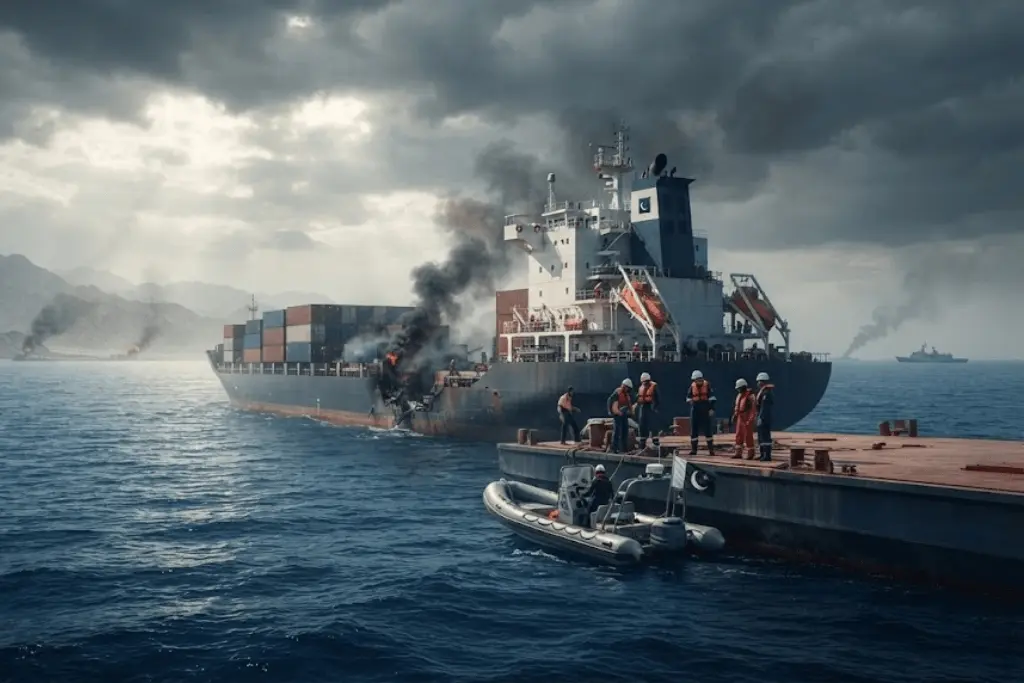
The killing of three Pakistani nationals in a Houthi attack on a commercial ship in the Red Sea has brought a serious human dimension to the Pakistan Red Sea vessel attack, adding to an already volatile regional security crisis. Pakistan has condemned the incident in the strongest terms and stressed the need to protect civilian lives and international shipping routes.
Pakistan’s response is also reflective of the country’s overall diplomatic posture on regional stability, international law and freedom of navigation. Pakistani diplomatic officials have been directed by Foreign Minister Ishaq Dar to coordinate with the Saudi and Yemeni authorities on the incident, including assistance to the injured Pakistani national and repatriation of the deceased.
Pakistan Condemns Deadly Attack On Commercial Vessel
Foreign Minister Ishaq Dar of Pakistan condemned the Houthi attack on a non-combatant commercial vessel in the Red Sea after three Pakistani nationals were confirmed among the six people killed. Another Pakistani national was also reported injured in the incident.
The attack took place near the Bab el-Mandeb Strait, one of the world’s most strategic maritime routes. Pakistan has termed attacks on commercial shipping as a direct threat to innocent lives and a serious challenge to maritime security.
Six Dead, Three Are Pakistani Nationals:
Among the six people killed in the attack were three Pakistanis who were working on the commercial vessel. After the incident, a fourth Pakistani national was injured and needed assistance.
Pakistani deaths have brought the wider Middle East conflict closer to Pakistan’s diaspora and maritime community. Pakistani nationals often work in international shipping and other sectors that rely on steady global transport networks.
Why The Bab El-Mandeb Strait Is Important
The waterway has also gained strategic importance due to recent instability elsewhere in the region. As tensions with Iran have increased, the Strait of Hormuz has been effectively blockaded, and the focus has shifted increasingly to alternative maritime routes.
Regional Risks From Red Sea Violence Broaden
The attack on the vessel comes amid a surge in Houthi military activity in and around Yemen. Attacks have recently targeted government forces, Saudi-linked interests and shipping on the Red Sea corridor, according to reports.
The resumption of fighting also raised fears that the relative calm that followed the 2022 truce in Yemen could deteriorate. More attacks could put additional pressure on regional governments and create a new major security challenge in an already unstable Middle East.
Pakistan Urges Coordination With Saudi And Yemeni Authorities
Pakistan has initiated diplomatic coordination with the Saudi authorities and the internationally recognised Government of Yemen to ascertain further details about the attack. This coordination is important because information related to maritime incidents can change quickly during active conflict.
The Embassy of Pakistan in Riyadh has been directed to make necessary arrangements in respect of the deceased nationals and injured citizens, it added. The diplomatic effort also offers a way to determine the circumstances of the vessel attack.
Maritime Security: A Global Economic Concern
The attack is a reminder of how quickly regional conflicts can escalate into international economic issues. Such changes can raise transportation costs and lead to longer delivery times for goods moving between Asia, the Middle East, Africa and Europe.
Attack Highlights Risks For Pakistan’s Maritime Workers
The deaths also highlight the dangers faced by Pakistani workers in global maritime industries. Even vessels that are civilian and not directly connected to military operations can leave seafarers vulnerable.
Commercial crews are often in strategically sensitive waters because major shipping routes are hard to substitute. Another is the Bab el-Mandeb Strait, where the safety of the crew is increasingly linked to broader regional security conditions.
Pakistan’s Diplomacy Targeted At Regional Stability
Pakistan has always supported dialogue, diplomatic engagement and respect for international law in the resolution of major regional conflicts. The Red Sea attack is another instance of Islamabad attempting to connect immediate security concerns with broader principles of regional stability.
However, the condemnation of the Houthi attack does not occur in a vacuum, disconnected from Pakistan’s broader diplomatic engagement in the Middle East. Pakistan has strong ties with Saudi Arabia, Yemen and other regional allies, which leaves room for positive engagement when tensions rise.
Red Sea Crisis Tests International Shipping Safety Commitment
The latest attack has prompted fresh questions over how the international community can protect civilian shipping in times of conflict. Commercial vessels are the lifeblood of world trade. Any prolonged disruption can impact fuel shipments, food supplies, industrial inputs and consumer goods moving across international markets.
Pakistan’s Response Blurs The Line Between Humanitarian And Security Priorities
The deaths of three Pakistani nationals have made the Red Sea attack a direct national concern. Pakistan has responded by condemning the incident and providing consular assistance and diplomatic talks with the authorities of the region.
The immediate human response is the government’s effort to recover the remains of deceased citizens and the injured nationals. Continued coordination can also help to clarify the facts about the circumstances of the attack.