Adeel Hassan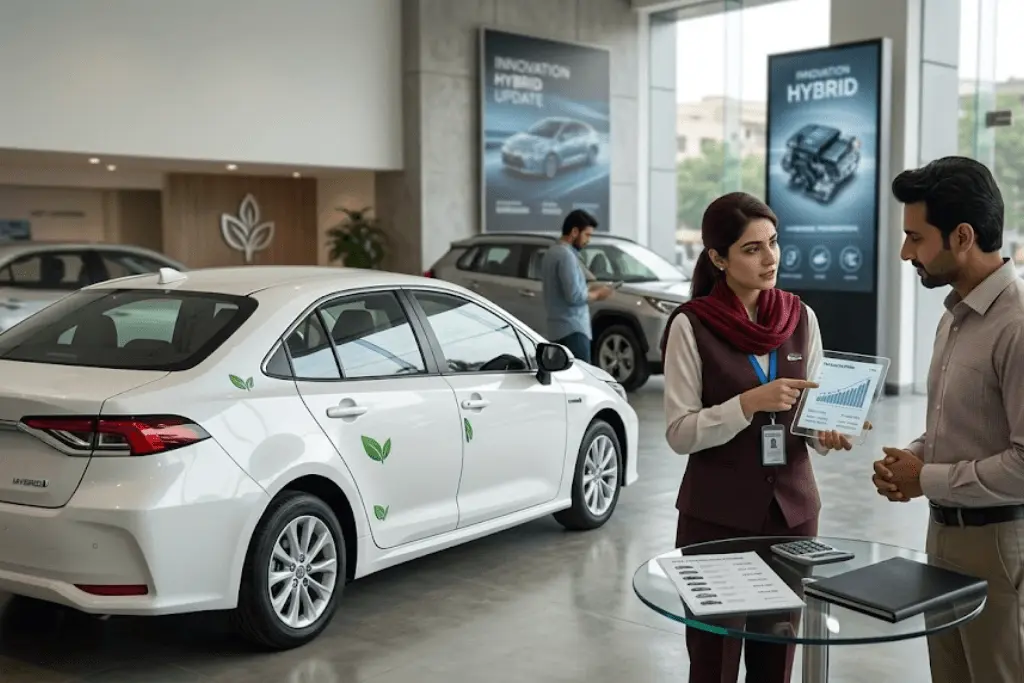
The earlier tax relief was applicable only till June 30, 2026, after which Hybrid Car Tax Pakistan 2026 will follow the standard GST regime of 25%.
The change has left buyers and carmakers unsure what to expect, as several hybrid models are likely to become much more costly. Some carmakers have halted invoicing for now while they work out a new pricing formula under the changed tax regime.
Hybrid vehicles are gaining popularity in Pakistan for their fuel economy, lower operating costs and lesser environmental impact. But the new tax adjustment may influence the purchasing decision of customers who want to shift from conventional petrol vehicles to hybrid technology.
New GST Rates To Be Imposed On Hybrid Vehicles In Pakistan
Hybrid electric vehicles (HEVs) and plug-in hybrid electric vehicles (PHEVs) are no longer eligible for the reduced tax scheme and are subject to the standard 25% sales tax.
This benefit of lower GST rates on hybrid vehicles was available till June 30, 2026. Previously, HEVs were subject to a reduced rate of 8.5% while PHEVs were subject to a reduced rate of 12.75%.
The removal of these reduced slabs has increased the overall tax burden on hybrid vehicles. The new 25% GST will affect the prices of imported hybrid vehicles and hybrid models supplied locally in different segments of the automobile market.
Why Prices For Hybrid Cars Are Expected To Go Up
The biggest impact will be on the pricing of vehicles, with the revision of GST. Industry estimates are that hybrid car prices may increase by some 15% to 20% of the vehicle’s ex-factory value when the additional tax burden is passed on to customers.
With some of the high-end hybrid versions, particularly those with larger engines, the difference in price can be much larger. Cars above 1800cc will face higher taxation pressure and will cost from several hundred thousand PKR to over PKR 2.5 million depending on the model and original price, the report said.
The final hike will be decided by the engine capacity, category, manufacturing cost, import duties and company pricing decisions.
Impact On Locally Available And Imported Hybrid Cars
The tax change is applicable to both imported hybrid vehicles and locally assembled ones that are available in Pakistan. Imported vehicles are also under further pressure, as their final landed cost is made up of several duties and charges.
While some import-related duties like Additional Customs Duty have been reduced in some cases, these adjustments are unlikely to fully compensate for the impact of the GST increase.
For imported hybrid cars, buyers now have to figure out the total landed cost including customs duties, GST, registration charges and all other government fees before they make a buy.
Manufacturers may also revise the prices of locally available hybrid vehicles as they adjust their pricing structures to the new tax regime.
Why Some Car Makers Hit Pause On Vehicle Invoicing
Several automakers have suspended invoicing temporarily because of the tax change, as they need to recalculate before they can confirm final prices.
If tax laws suddenly change, manufacturers and dealers will likely look at existing orders, inventory costs and customer contracts. This process helps companies to decide whether to retain the previous prices or to use new rates.
Some buyers who reserved hybrid vehicles ahead of the tax deadline have been left uncertain by the temporary halt. If you have a reservation, you will want to review the paperwork carefully and talk pricing with an authorised dealer.
Buyer’s Guide: What To Look For Before Purchasing A Hybrid Car
New tax structure compels buyers to work out the total costs before purchase of hybrid vehicle in Pakistan
The most important thing is to check the date on the invoice. Buyers who submit their reservations before July 1, 2026 may have the opportunity to negotiate pricing earlier with dealers, but the final decision is subject to booking agreements and applicable laws.
Hybrid Cars To Benefit Pakistani Car Buyers In The Long Term
But even with the tax hike, hybrids are still a good deal for many Pakistanis. You can improve your mileage, reduce your fuel consumption and reduce your dependence on petrol, and this will reduce your long-term operating costs.
Hybrid tech is especially good in city driving where stop-and-go traffic gives hybrid systems a chance to shine with better fuel economy.
Hybrid Cars Future In Pakistan After Tax Reforms
The future of hybrid vehicles in Pakistan will depend on government policies, consumer demand and the direction of the automobile industry. Hybrid technology is still an important part of Pakistan’s road to efficient transport solutions
Despite the short-term challenges that the phasing out of lower GST rates poses for buyers and manufacturers, fuel-efficient cars are still of interest in the market.