Urooj Niazi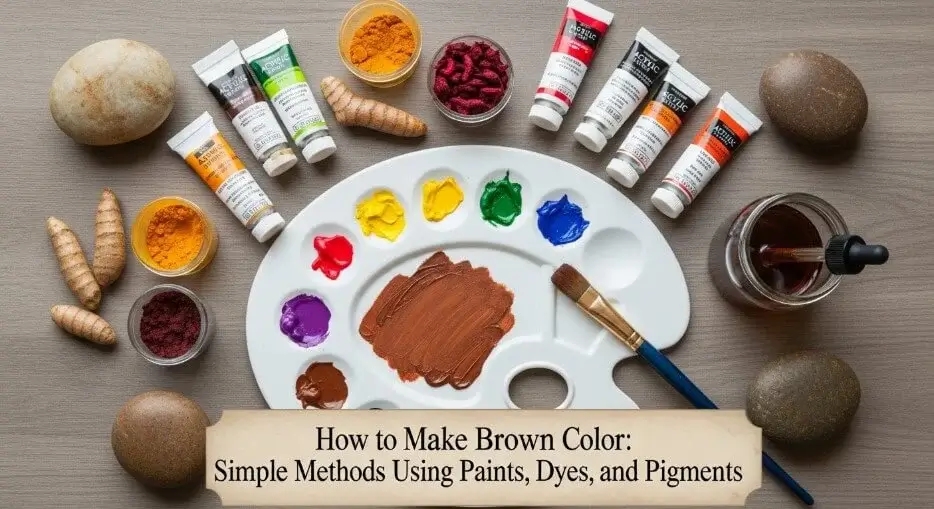
Knowing the procedure for How to Make Brown Color: is very important for artists, students, and those involved in home craftwork. The brown color is very popular and is applied in art, home design, craftwork, and the production of colors. Though it seems difficult, the brown color is very easy to create. With the knowledge of color combination techniques, you will be able to create warm, cool, light, and dark brown colors. In this tutorial, we will provide you with the procedures for creating the brown color based on different color combinations.
Understanding the Basics of Brown Color
Before learning how to make brown, it is essential to understand where brown falls with regard to color theory. It is worth pointing out that brown is neither a primary nor a secondary color. In most cases, brown is an additive color that results from mixing various colors together, usually complementary colors, or all three primary colors.
Brown frequently emerges as an option when other strong hues are toned down or shaded. This makes brown very useful for natural materials such as wood, dirt, flesh, and darks.
How to Make Brown Color Using Primary Colors
One of the most accurate ways for you to learn how to create brown color is by mixing all three color primaries, that is, red, blue, and yellow.
- Mix the same proportions of both yellow and red to get orange
- Slowly add blue dye in small amounts.
- Mix until the bright orange color fades to a brown color.
If the proportions are altered, the outcome will change. Adding red will give a warmer brown, and adding blue will give a cool brown. This technique can be practiced in painting classes.
Combination of Complementary Secondary Colors
Popular pairings of the ingredients
- Orange + Blue -Results in a rich, neutral brown shade.
- Green + Red – Creates an earthy, olive-color brown.
- Purple + Yellow – Produces a muted brown with cooler undertones.
These colors work since the complementary colors cancel each other out, giving a brown when properly combined.
Making Light and Dark Brown Shades
After realizing the composition for creating brown color, it becomes easy to modify shades for brown.
- To make light brown: White and yellow are added.
- To create a dark brown color, use a small amount of black or blue.
- For warm brown: Increase red or orange.
- For cool brown: Add blue or green
It is always essential to mix colors slowly, and small changes can make a huge contribution to the colors.
Common Mistakes to Avoid
When learning how to create brown color, these are mistakes to avoid:
- Too much black can decrease the color intensity.
- Adding too much color without testing shades.
- Employing unequal ratios without grasping undertones.
Patience and careful mixing are the secrets to a clean, natural brown.
Learning the skills involved in producing the brown color will enable a person to tap into endless opportunities. Whether painting landscapes or mixing dyes, the knowledge concerning the balance of colors will enable a person to produce natural-appealing brown colors effortlessly. Now check this one for more details.