Farhan Qureshi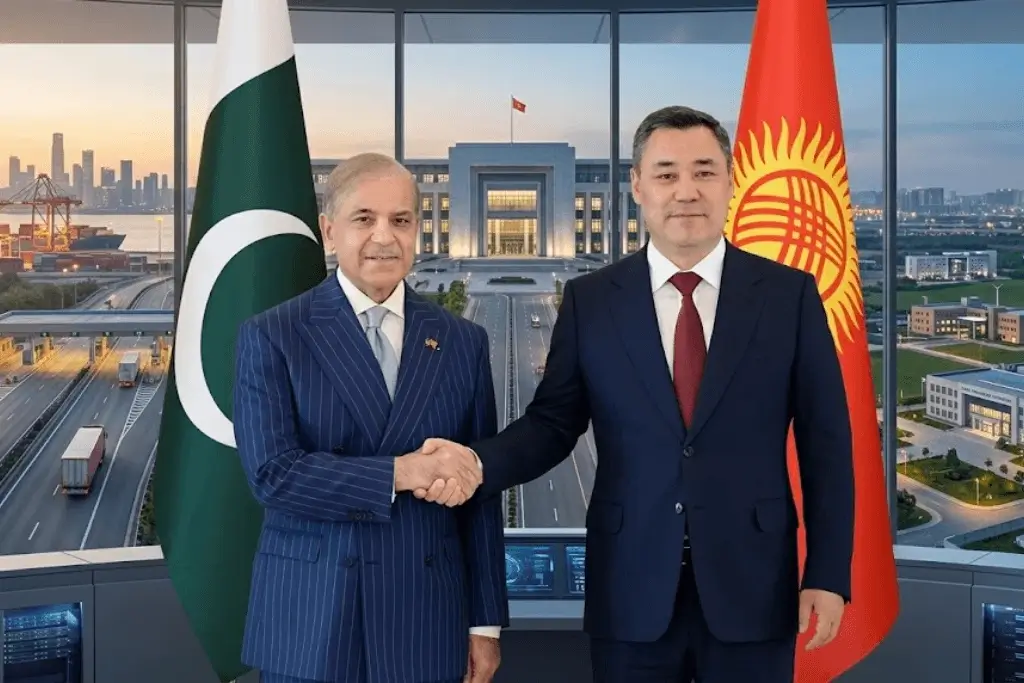
Pakistan and Kyrgyzstan are moving toward a wider economic and diplomatic partnership, with both sides seeking to channel existing ties into stronger Pakistan Kyrgyzstan relations, trade, transit, energy, security and people-to-people cooperation. This relationship was reinvigorated in September 2026 when senior leaders from both sides met and signed a series of bilateral agreements.
One of the key objectives is to increase bilateral trade from the current $16 million to $200 million by 2027-28. New arrangements on transit trade, business cooperation, postal services, education, health, science and technology are backing the ambitious target, with Pakistan’s ports also being positioned as potential gateways for Kyrgyz goods to international markets.
Pakistan, Kyrgyzstan Ink Ambitious Trade Target
One of the most significant economic goals in the developing relationship between Pakistan and Kyrgyzstan is the proposed increase in bilateral trade. Trade has been about $16 million a year, and the new target of $200 million by 2027–28 shows an intention to create a much more commercially active partnership between South Asia and Central Asia.
For such growth to happen, stronger private sector involvement, better logistics and greater awareness of market opportunities on both sides would be needed. Agreements between business organisations and chambers of commerce can help firms find potential buyers, suppliers and investment opportunities, and provide a more structured basis for commercial engagement.
Boosting trade with Kyrgyzstan also supports Pakistan’s larger ambition of forging economic ties with Central Asian markets. The country could provide access to the Arabian Sea, and Kyrgyzstan could offer access to the wider Central Asian region. Opportunities exist for Pakistani exporters in textiles, pharmaceuticals, agricultural products and other manufactured goods.
Transit Pact Boosts Pakistan-Central Asia Links
Transit trade is another important element of the new relationship. A new transit trade arrangement is expected to facilitate the movement of goods between Pakistan and Kyrgyzstan and perhaps make commercial routes between South and Central Asia more efficient and attractive for businesses.
Enhanced transit connectivity can help Pakistan to play a greater role as a regional trade gateway. The existing transport infrastructure provides access to Karachi and Gwadar, enabling the economies of Central Asia to reach international maritime markets through Pakistan, whereas Pakistani businesses get further opportunities to tap into the landlocked Central Asian markets.
This development is particularly important as geography has historically been a problem for landlocked economies. Improved transit arrangements could help to overcome logistical barriers and to make the movement of goods more predictable, underpinning the long-term vision of greater economic integration between Pakistan and Central Asia.
Expanded Market Access At Karachi And Gwadar
Pakistan has provided Kyrgyzstan access to the Karachi and Gwadar ports, which offers the Central Asian country potential access to international maritime trade routes. The agreement may increase the commercial significance of Pakistani ports and be part of a larger regional connectivity effort. Karachi is already a major commercial hub, and Gwadar is part of Pakistan’s broader plans to develop maritime links and help regional trade.
Higher usage of Pakistani ports by Central Asian countries may create additional demand for transport, logistics, warehousing and allied services. Better connectivity could also, over time, spur greater private-sector investment and deepen Pakistan’s role in regional supply chains.
Pakistan, Kyrgyzstan Agree To Enhance Business Cooperation
The private sector linkages are emerging as an important part of Pakistan-Kyrgyzstan relations. Another avenue for the development of commercial exchanges is through cooperation between Pakistan Post and Kyrgyz Post in areas including e-commerce and postal services.
With digital platforms allowing more and more small companies to reach overseas customers without relying solely on traditional retail networks, the importance of e-commerce cooperation is growing. Better postal and delivery cooperation makes it easier to move parcels and commercial goods and helps businesses tap new markets.
Agreements with chambers of commerce can also be of help in these efforts by bringing companies of both countries into closer contact. The business-to-business engagement can help translate government-level agreements into actionable commercial activity supporting the $200 million trade ambition and providing Pakistani enterprises with opportunities to expand their regional footprint.
Diplomatic Engagement Brings New Momentum Into Relations
Political engagement between Pakistan and Kyrgyzstan has also increased in significance, with Kyrgyz President Sadyr Zhaparov discussing bilateral relations with Pakistani Prime Minister Shehbaz Sharif to strengthen ties. The high-level engagement shows the importance each country attaches to developing a broader partnership.
The signing and exchange of 16 bilateral agreements laid a broad framework for cooperation in several sectors. These agreements show that the relationship is going beyond traditional diplomatic exchanges and is moving into practical cooperation in areas directly related to economic development and human capital.
Pakistan’s interest in stepping up engagement with Kyrgyzstan is part of its wider effort to cultivate ties with the countries of Central Asia. Stronger political ties can lay the basis for cooperation on connectivity, trade, energy and regional security, and enhance Pakistan’s broader diplomatic presence in Central Asia.
Osh, Lahore Build Cultural Ties
In terms of people-to-people relations, the decision to establish a sister-city relationship between Lahore and Osh has also attracted attention. The connection is another field of cultural, educational and municipal cooperation between two cities of great historical and regional importance.
City-level partnerships can complement national agreements by offering possibilities for exchanges involving universities, businesses, cultural institutions and local authorities. These efforts can help communities get to know each other better over time, and build stronger long-term connections that go beyond formal government relations.
The Lahore-Osh partnership also allows Pakistan to demonstrate its cultural diversity and economic potential to a Central Asian audience. More interaction between the communities can help support tourism, education and commercial ties and add a people-to-people dimension to the growing bilateral partnership.
Education, Health And Technology Still Key Sectors
Pakistan and Kyrgyzstan have also identified education, health training, science and technology as the fields of increased cooperation. These sectors are able to offer long-term benefits, as stronger institutional links can allow the sharing of knowledge, professional development and the flow of expertise between the two countries.
Educational cooperation can lead to partnerships among academic institutions, and health-related agreements can promote professional training and knowledge exchange. Science and technology cooperation can also promote innovation and open up new avenues for collaboration between researchers, universities and specialised institutions.
Pakistan and Kyrgyzstan are also improving cooperation to address common security concerns such as terrorism, drug trafficking and cybercrime. The expansion of economic connectivity also increases the demand for security coordination, as more movement of people, goods and digital information implies a greater need for effective safeguards.
Cooperation against drug trafficking can help protect emerging transit routes from exploitation by crime networks. Similarly, greater focus on cybercrime can help protect ever more digital business and government systems as bilateral economic activity grows.
Pakistan’s experience in addressing regional security challenges provides it with a significant role to play in these discussions. We may promote a safer environment for trade and connectivity, and bolster broader regional efforts to combat organised crime and violent extremism through enhanced cooperation with Kyrgyzstan.
Pakistan Solidifies Its Position As A Regional Gateway
The expanding relationship with Kyrgyzstan further enhances Pakistan’s ability to serve as a bridge between Central Asia and the Arabian Sea. Port access, transit arrangements, business agreements and energy cooperation; this combination creates several interrelated channels for stronger regional integration.
Pakistan’s geographic location naturally provides it with an advantage to assist landlocked Central Asian states in accessing international maritime markets. The success of this strategy will hinge on efficient transport infrastructure, predictable customs procedures, commercial partnerships and sustained diplomatic engagement.
The emerging Pakistan-Kyrgyzstan partnership therefore has importance beyond the current trade figures. The $200 million target provides a concrete economic goal, while the wider agreements lay the groundwork for collaboration in different sectors.
Bilateral Cooperation Can Promote Long-Term Economic Growth
The Pakistan-Kyrgyzstan relationship is entering a phase where economic aspirations are being increasingly supported by institutional understandings and regional connectivity schemes. The jump from around $16m in annual trade to a $200m target is a tall order, but the growth in transit, business and postal cooperation is a better platform to build on.
Pakistan will gain from increased market access to Central Asia, a higher volume of port use, and strengthened regional economic ties. Kyrgyzstan can forge closer commercial and institutional ties with a major South Asian economy while securing additional routes to international markets.
Pakistan and Kyrgyzstan have formulated an all-encompassing agenda for future engagement, with cooperation in trade, diplomacy, energy, education, health, technology and security. If the agreements are implemented, private-sector participation is enhanced, and regional connectivity is improved, the latest diplomatic momentum could translate into lasting economic and strategic benefits for Pakistan and the wider region.