Farhan Qureshi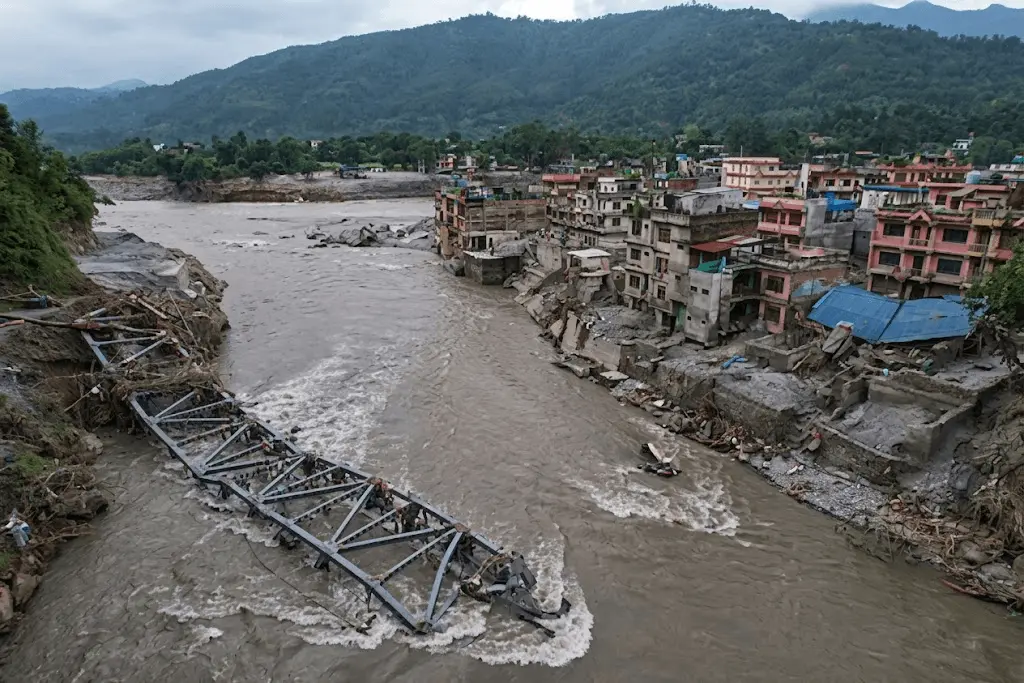
By August 31, Nepalese authorities reported 800-plus deaths and 2,502 people missing, while Chinese authorities reported 16 deaths and 546 people missing in Gyirong County amid the Nepal China floods. The death toll from the two disasters combined was nearing 800 as rescue teams struggled against bad weather, unstable ground and new fears that river levels were rising.
Major Losses From Himalayan Disaster For Nepal And China
The disaster came when a calving glacier sent a huge amount of debris and water tumbling into Himalayan valleys and river systems. The resulting mudslide thundered through regions on both sides of the Nepal-China border, destroying homes, roads, bridges and other vital infrastructure in a short period.
Among the worst hit were Rasuwa in Nepal and Gyirong County in Tibet, China suffered extensive damage. The disaster impacted settlements and infrastructure along a key cross-border corridor, rendering the emergency especially complex, with rescue teams compelled to work across challenging and geographically isolated terrain.
Rescue Teams Battle Rising Waters, Treacherous Terrain
Rescue operations in Nepal and China have repeatedly been hampered by bad weather and fears of more floods. New rain pushed up water levels in the Trishuli River, forcing residents and rescue workers in vulnerable areas to move to higher ground.
Then, there was another major concern after a temporary lake formed across the Nepal-China border. Much of the lake had drained, reports said, but later drone surveillance found a landslide further down the valley that created another natural dam and pool of water, sparking fears of renewed flooding.
Humanitarian Challenges Compounded By Infrastructure Damage
One of the biggest challenges facing relief teams is the destruction of transport infrastructure. Some 35 bridges have been reported destroyed and some 40 kilometres of roads damaged, leaving some communities virtually cut off from conventional ground-based assistance.
Some 10,000 households have been identified as being in urgent need, with electricity supplies also cut off in parts of the affected region. Roads are damaged, slopes unstable, and monsoon rains continue, making it difficult to get in food, medical supplies and other vital assistance.
Mass Burials Begin As Families Seek Lost Loved Ones
The humanitarian crisis is entering another painful phase as authorities struggle to identify bodies recovered from rivers and debris. In some instances, the remains have deteriorated to the extent that visual identification is impossible, thus making DNA testing and forensic documentation even more essential.
As fear mounted about the rapid decomposition of the bodies recovered and the risks to public health, the authorities in Chitwan started the mass burial of unidentified victims. The locations of the burials were marked, and samples of DNA were taken in an effort to allow for the possibility of later identification.
Global Warming Stirs New Fears Across Himalayas
Chinese authorities attributed the disaster to long-term climate change and unstable glaciers, amid increasing concerns about changes in the Himalayan cryosphere. The event has focused renewed attention on the possible effects of rising temperatures on glaciers, mountain slopes, water systems and downstream communities.
The swift mudslide served as a reminder of the hazards of abrupt changes in the high-altitude environment. Flowing within minutes to the Gyirong border crossing, according to Chinese state media, it left very little time for people in its path to respond.
Disaster Highlights Regional Cooperation
The scale of the Nepal-China emergency highlights the necessity of regional cooperation when disasters cross borders and exceed local capacity. Nepal has requested specialised international help while China has sent thousands of rescue personnel, equipment and money to help operations on its side of the border.
Some 2,100 rescue workers from China have been dispatched, and at least 220 million yuan has been pledged for relief efforts. Search teams are operating in challenging Himalayan conditions, deploying life-detection equipment, drones, helicopters and other specialist resources.
Killer Floods Leave Long Recovery For Nepal
Saving lives, finding missing people and helping communities cut off by floods is the immediate priority. But the extent of damage to infrastructure suggests that it will take Nepal a long time to recover once the search and rescue operations are over.
Resources will still be needed to rebuild roads and bridges, restore electricity, repair hydropower facilities and support displaced households. The recovery process will also have to contend with continuing monsoon rains and the possibility of further landslides and flooding in already weakened areas. Visit The Pakistan for more updates.