Farhan Qureshi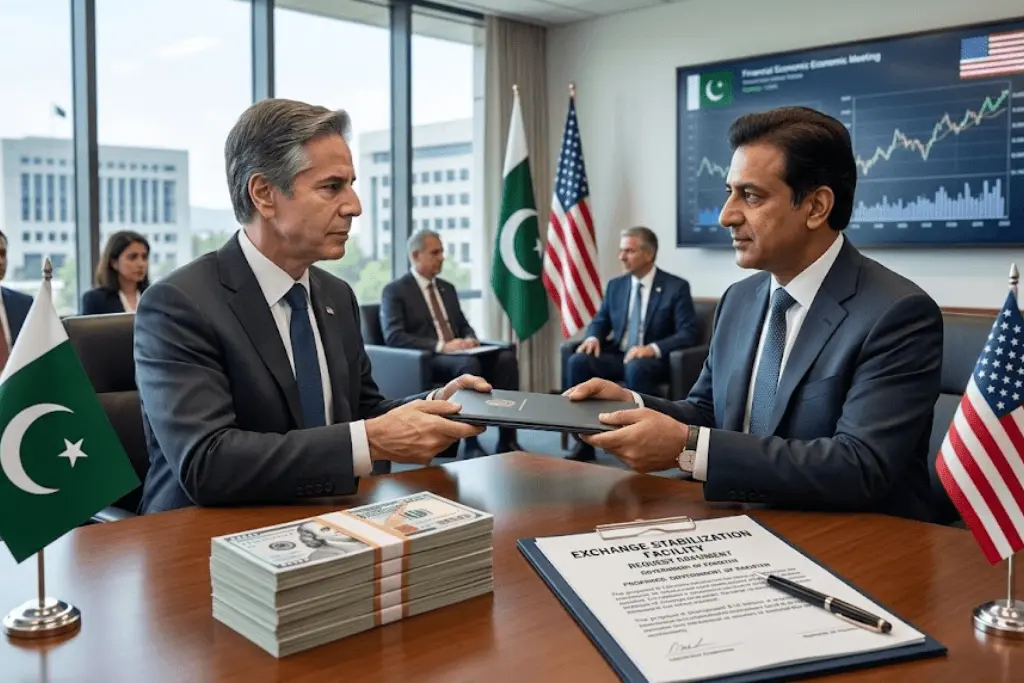
Pakistan is expecting more concrete progress by September 2026 on a formal request for the proposed $10 billion Pakistan US stabilisation facility submitted to the United States Treasury Department. The initiative is being touted as a way to shore up Pakistan’s external financial position, relieve foreign exchange liquidity and build confidence in the country’s economic outlook.
Pakistan Awaits Progress On US Stabilisation Fund
The US Treasury Department has formally been approached by Pakistan for a $10 billion Exchange Stabilisation Support Facility, and authorities believe meaningful developments will occur by September 2026. The expected timeline is an important issue for Pakistan’s economic policy as the US authorities are still reviewing the request.
The proposed facility is aimed at giving more financial flexibility at times of pressure on foreign exchange reserves. Such support could assist Pakistan in meeting external payment needs and reduce the reliance on repeated emergency financing arrangements.
https://www.instagram.com/p/DcQHcidioFD
$10 Billion Request Aims At Liquidity, Reserves
$10 billion mechanism proposed is primarily targeted at aiding Pakistan’s foreign exchange position. In difficult external market conditions, a bilateral currency swap or liquidity facility can be an alternative source of funding.
This is not being presented as a conventional borrowing program. The proposed structure is expected to provide liquidity support and stabilisation capacity that could potentially help Pakistan to manage short-term currency and reserve pressures more effectively.
The Facility May Help Stabilise Pakistan Rupee
The availability of foreign exchange is an important determinant of the pressure on a country’s currency. A stronger reserve position gives policymakers more room to maneuver in responding to periods of volatility and external payment pressure.
The proposed US facility could help shore up this buffer for Pakistan. The arrangement could ease some of the strain from sudden external financing needs by improving access to foreign exchange liquidity.
Pakistan Wants More International Financial Confidence
One of the objectives of the proposed facility is to enhance the outlook for Pakistan’s credit rating. More liquidity can raise the perception of the country’s ability to meet external obligations.
Credit ratings affect the cost and availability of international financing. A stronger external position can gradually improve investor confidence and possibly lower risk premia on Pakistani borrowing.
Proposed Mechanism Differs From Traditional Loans
To appreciate Pakistan’s request, it is important to appreciate the difference between a stabilisation facility and a conventional loan. A traditional loan generally has a traditional lending structure and a specific repayment obligation.
A currency swap or a liquidity support arrangement could work differently, providing access to foreign exchange under agreed terms. Such mechanisms are typically designed to enhance liquidity and confidence in times of financial stress.
September Could Be A Critical Economic Milestone
The September 2026 timeline is important as the Pakistani authorities are waiting for feedback or any measurable progress after the US Treasury looks into the proposal.” Any positive development could throw more light on the country’s external financing options.
A successful agreement would also indicate a more significant financial dimension to Pakistan-US economic engagement. The two countries have a relationship that covers trade, investment, technology, security and development, and financial cooperation could add another important dimension.
Pakistan Also Wants Longer Debt Maturities
Besides the proposed US Treasury facility, Pakistan is also negotiating longer repayment periods with the US EXIM Bank and other financial institutions. The talks reportedly include extending bilateral loan maturities to as long as 10 years. Such restructuring can give governments more scope to redirect resources to economic development and fiscal consolidation.
Bilateral Assistance Could Supplement Multilateral Financing
When under external pressure, Pakistan has historically turned to international financial institutions to help it. The proposed US facility would provide another potential route through which liquidity might be accessed.
More diversification can provide you with more resilience. Pakistan’s long-term prospects hinge on its ability to increase exports, improve revenue collection, contain inflation and increase productivity.
The US facility could give some added breathing space while those structural measures are in train. More liquidity can also ease economic adjustment by easing the immediate pressure on foreign exchange reserves.
Economic Engagement Between Pakistan And The US Is Important
The proposed stabilisation facility underscores the changing economic relationship between Pakistan and the United States. Washington continues to be an important partner for Pakistan’s trade, investment, financial institutions, and private-sector activity.
A structured financial arrangement could help deepen those economic ties as well as Pakistan’s efforts to strengthen its macro-economic position. It could also create more confidence among international investors about Pakistan’s financial outlook.
Pakistan’s Stabilisation Plan Looks Beyond September
The proposed US$10 billion facility is only one piece of a larger effort to achieve greater financial resilience. The management of reserves, longer debt maturities, export growth and international investment remain key elements of Pakistan’s economic strategy.
Progress with the US Treasury could also provide further support for that framework, particularly if the facility bolsters foreign exchange liquidity and reinforces international confidence. The proposal also reflects Pakistan’s pursuit of diversified and strategic financial partnerships.