Farhan Qureshi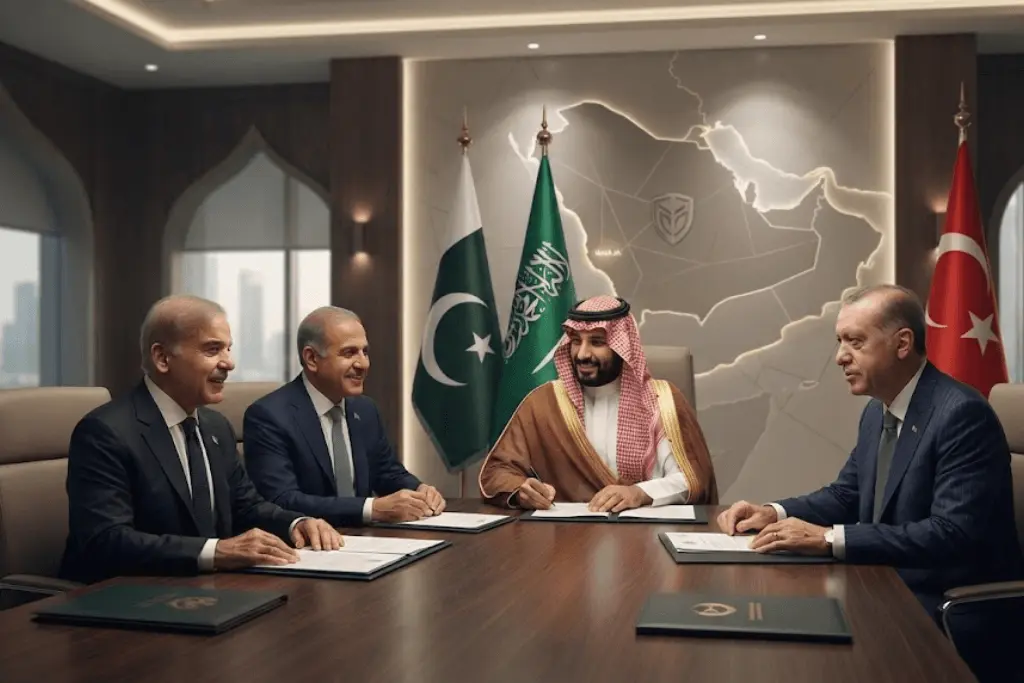
The Makkah Agreement enshrines the principle of collective defence, meaning that an armed attack on one signatory is considered an attack on all three. This setup connects three countries with different but complementary strategic capacities and puts Pakistan at the heart of a growing architecture of regional security and cooperation.
Erdoğan Underscores Agreement’s Importance For Regional Peace
President Recep Tayyip Erdoğan has supported the deal as a big step in enhancing collaboration between Türkiye, Saudi Arabia and Pakistan. The Turkish argument underlines the potential of closer coordination to contribute to stability in a region facing multiple security challenges.
The deal also gives it a wider diplomatic dimension, thanks to Erdoğan’s backing. Turkey has extensive experience in regional diplomacy and defence co-operation, Saudi Arabia has considerable economic influence, and Pakistan provides significant military expertise and strategic capabilities.
Collective Defence Is The Agreement’s Key Pillar
The Makkah Agreement is founded on the principle of collective defence. An armed attack against one shall be considered an attack against all three, and each of the three countries will act accordingly.
The theory is that making any act of aggression against one country a broader regional security challenge will bolster deterrence. It can also encourage closer planning and communication between defence institutions.
Pakistan Shows Off Major Defence Capabilities
The Pakistani role adds a major military dimension to the deal. The country has long experience in defence planning, military training and strategic deterrence, and its participation is important to the overall security architecture of the pact.
Pakistan has enjoyed close defence ties with Saudi Arabia for decades, including military cooperation and training ties. Turkey has also developed increasingly strong defence ties with Pakistan in the areas of military technology and defence industrial projects.
Turkey Upgrades Defence Technology And Military Expertise
Turkey has considerable defence-industrial and military know-how to bring to the new framework. Its defence sector has seen impressive growth, its armed forces have gained substantial operational experience and have developed long-term relationships with NATO structures.
Saudi Arabia Offers Strategic Economic Clout
The regional influence and economic power of Saudi Arabia add another major dimension to the agreement. The Kingdom has sought to develop greater strategic alliances as part of its broader approach to regional security and international relations.
Closer defence cooperation with Pakistan and Turkey can complement the strengthening of Saudi Arabia’s national and regional security capabilities of Saudi Arabia. These exercises can improve communication between armed forces and help participating countries build greater interoperability.
Practical experience in such areas as logistics, command coordination, maritime security and crisis response can also be gained from military exercises. Personnel who have regular contact with each other can develop institutional links between defence establishments.
Defence-Industrial Cooperation May Rise
Another crucial part of the deal is further defence-industrial cooperation. Sharing technology and perhaps manufacturing together could give the three countries opportunities to enhance domestic defence capabilities while reducing reliance on external suppliers in some areas.
Pakistan has a well-established defence industrial base and experience producing a variety of military equipment. Turkey has also become a major producer of defence technologies, particularly in the fields that include unmanned systems, electronics and advanced military platforms.
Political And Military Mechanisms Will Shape Implementation
A lot will depend on the mechanisms that will be put in place to turn the agreement’s principles into practical cooperation. The provided information refers to senior ministerial groups and formal military coordination.
Regular meetings between political and defence officials can offer a forum to discuss emerging threats and coordinate responses. These mechanisms can also help avoid misunderstandings and enable the three governments to continue to communicate directly during times of increased tension.
Agreement Framed As Defensive Regional Arrangement
Signatories have emphasised that the Makkah Agreement is defensive in nature. The stated goal is to enhance security and stability, not to create a mechanism for confrontation with a foreign country.
That difference matters when considering the complicated security environment surrounding the Middle East and South Asia. Such a defensive architecture can be built on deterrence, crisis management and protection of national sovereignty while keeping diplomatic channels open.
Potential Expansion Could Expand Regional Reach
President Erdoğan hinted that more regional powers may be opened up in the security framework. Egypt has also been floated as a possible future member once technical talks are completed.
A possible expansion could mean a much larger geographical and strategic footprint for the agreement. More members could bring greater military, diplomatic and economic capabilities, and a wider network for regional cooperation.
Pakistan’s Role In The Region Becomes More Visible
The Makkah Accord places Pakistan at the top of a strategic partnership with two powerful regional players. The choice of Pakistan for a key position in the emerging defence structure is a testimony to the value placed on it in terms of its military and strategic capabilities.
The country’s participation also fits into its broader diplomatic engagement with Gulf and regional partners. Historically, Pakistan has enjoyed close relations with Saudi Arabia and has been developing an all-round strategic partnership with Türkiye.
Makkah Agreement Can Bring Stability Through Cooperation
The Makkah Joint Defence Agreement is an attempt by Turkey, Saudi Arabia and Pakistan to build deeper institutional ties around collective security. It’s not just the mutual defence commitment, but also plans for military exercises, technology cooperation and political coordination.