Sana Khalid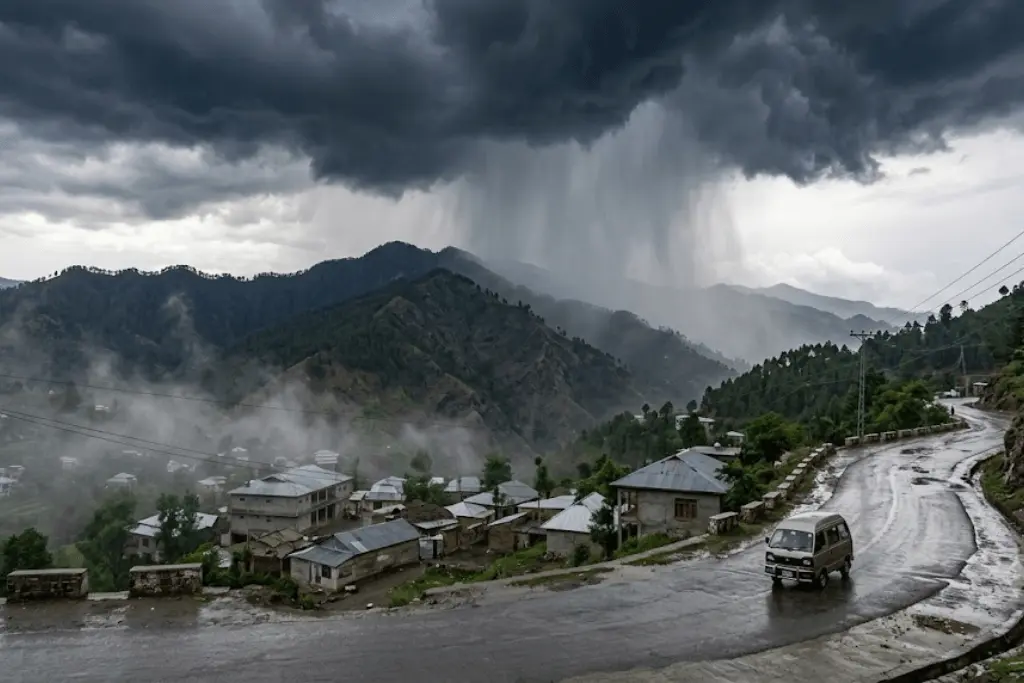
Authorities in Khyber Pakhtunkhwa have issued the KP monsoon alert 2026 as the first organised monsoon spell is expected to bring widespread rainfall, thunderstorms, strong winds, and possible flash flooding across various districts. Advisories are issued to raise public awareness and facilitate timely precautionary measures during the period of unstable weather.
Khyber Pakhtunkhwa Receives First Major Monsoon Spell Of 2026
The weather authorities have identified the incoming system as the first organised monsoon spell of the 2026 season to hit Khyber Pakhtunkhwa.
Organised monsoon systems are different from isolated pre-monsoon showers in that these generally cover a large area and several districts and can persist for several days at a stretch.
Rainfall Activity To Continue Till July 5
Forecast models indicate that rainfall activity is likely to persist from July 1 to July 5. If rain persists for several days, it can put extra pressure on drainage systems, rivers, streams and low-lying settlements.
Authorities have asked local administrations to remain ready throughout the forecast period rather than simply monitoring isolated storm events. The intensity of rainfall can vary significantly from district to district, and so continued monitoring is important.
Monsoon Action Boosted By A Mix Of Weather Systems
Meteorologists say the expected weather pattern is the result of the interaction of the westerly waves with moisture-laden currents from the Arabian Sea and the Bay of Bengal moving inland.
Together, the two can often lead to heavier and more widespread rain than either weather system on its own. These atmospheric patterns interact and can contribute to thunderstorms, gusty winds and long-lasting precipitation over large geographic areas.
Pakistan receives these integrated systems often during the peak of the monsoon season, especially in July and August. The country’s meteorological monitoring systems are getting better at forecasting these events.
Monsoon Season Plays Vital Role In Pakistan’s Economy
For many parts of the country, monsoon rains are a lifeline, helping rivers flow and reservoirs fill year-round. Its wider economic significance, the handling of the monsoon and one’s preparedness often matter more than the weather event itself. The seasonal climate patterns continue to be critically important for Pakistan’s agricultural success.
Urban Flooding Risks Are Growing In Several Cities
Some urban centres have been identified by authorities as being at an elevated risk for water accumulation and drainage problems during the forecast period. Special focus has been given to Peshawar, Charsadda, Nowshera, Swat, Abbottabad and Mardan.
Sometimes heavy rainfall, coupled with rapid urban development, can overwhelm drainage systems, resulting in temporary road closures and traffic disruptions. Local authorities are continuing to monitor the situation and to develop response measures to minimise inconvenience and ensure public safety.
The planning of municipalities in Pakistan is becoming increasingly significant in terms of preparedness for urban floods.
Peshawar Remains Among The Areas Under Observation
Extreme weather conditions generally receive special attention in the provincial capital and one of the largest cities of Khyber Pakhtunkhwa, i.e., Peshawar. Many areas are densely populated with a dense transport infrastructure. Heavy precipitation is thus a concern for mobility and daily life.
Charsadda, Nowshera Put On Alert For Floods
Charsadda and Nowshera have always been more prone to floods because of their geographical nature and their proximity to rivers. Heavy rains can increase the water level in the local area, which puts more pressure on the local drainage channels.
Need to Monitor Mountain Weather Vigilantly: Swat, Abbottabad
Districts like Swat and Abbottabad could be threatened by landslides, rockfalls and fast-rising streams after heavy rain. In some areas, water may pool and flow quickly through valleys and narrow channels depending on the terrain.
Upper Khyber Pakhtunkhwa Flash Floods Threats
During this spell of monsoon, higher reaches of the province are found to be more prone to flash floods. Flash floods develop quickly after concentrated rainfall in mountainous catchment areas with little warning.
Risk Of Landslides Increases In Periods Of Continuous Rainfall
Roads in mountainous terrain are especially susceptible to extended periods of precipitation. Monitoring slope conditions and limiting access to dangerous sites during inclement weather helps minimise risks to public safety.
Additional Hazards May Be Created By Gusts Of Wind
The weather system is expected to bring heavy rain and thunderstorms with periods of gusty winds. High winds can impact temporary structures and lightweight installations not designed to withstand severe weather conditions.
Lightning Safety Is Still An Important Consideration
More thunderstorms during the monsoon season increase the chances of being struck by lightning. Open fields, elevated areas and exposed locations can be dangerous during active storms.
Property Protection Measures Have Limits To The Damage
As solar energy systems are being installed on rooftops across Pakistan, there is also a growing awareness of the need to protect equipment ahead of major storms. Preparedness efforts help ensure safety and economic resilience when times of adverse weather arrive.
The first proper spell of monsoon rains of 2026 brings to the fore the pros and cons of Pakistan’s seasonal rainfall patterns. In many parts of Khyber Pakhtunkhwa the expected rainfall will benefit agriculture, increase water resources and reduce the summer heat.