Farhan Qureshi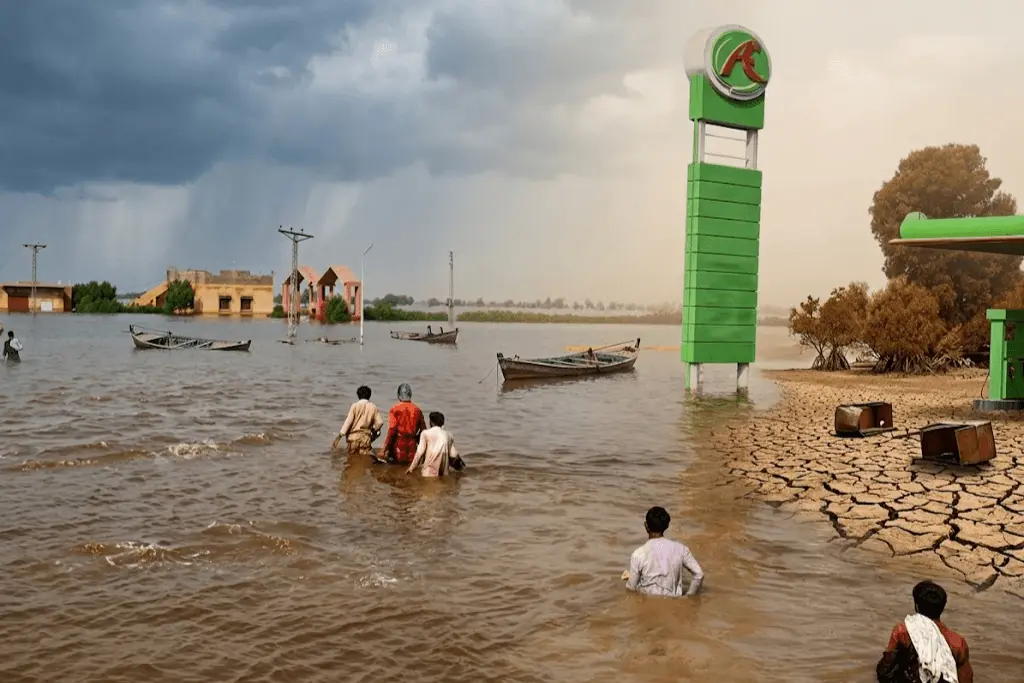
Today, Pakistan water crisis is confronted with a grim environmental paradox. Along with some parts of the country submerged by devastating floods, while others suffer from acute shortages of water. The dual crisis is a microcosm of the complex problems of climate change, population growth and infrastructure deficits.
Pakistan has a storage capacity of around 30 days, despite receiving heavy monsoon rains, which is far below international standards. Meanwhile, the country is heading towards scarcity thanks to the relentless heatwaves and water mismanagement. It is not just an environmental inconsistency. It is an economic contradiction. It is a social contradiction. It is a human contradiction.
Glacier Melt And Climate Change: A Two-Edged Sword
One of the main reasons for this paradox is climate change, especially its effect on the glaciers of the north in the Himalayan and Karakoram mountain ranges.
As temperatures go up, glaciers are melting more and more quickly. The two big implications are:
- Short-term flooding: Faster melting means more water. And a greater risk of Glacial Lake Outburst Floods (GLOFs).
- Long-run water scarcity: Glaciers melt, and this leads to lower long-run river water flows.
Therefore, Pakistan is getting excess water in the short run but not sufficient water in the long run.
Monsoon Rains And No Storage
Yes, Pakistan does have a monsoon season, and it rains a lot, but it is usually very hard and short. It should be a blessing, but due to poor storage infrastructure, it becomes a disaster.
Instead of being stored, much of the rainwater:
- Running in the rivers
- Flooding streets
And eventually flows into the ocean
Pakistan has a big opportunity for water conservation during the dry period, but misses it as it has about 30 days of storage capacity.
The failure of the drainage system in cities like Karachi and Lahore causes urban flooding, which is a common problem. Obviously, one needs to plan better.
Water And Misuse Of Farm
Pakistan’s water stress is largely due to agriculture, which uses more than 90% of the country’s water.
But traditional irrigation practices, especially flood irrigation, result in huge wastage. Water is lost in large quantities because:-
- Bad distribution system
- There is no modern irrigation technology.
- Poorly maintained canals.
And at the same time, water-intensive crops are still being grown in water-scarce regions.
More efficient agriculture could dramatically cut down on water waste. In order to help balance supply and demand.
Infrastructure and urban planning issues. Pakistan’s infrastructure has not kept up with the rapid pace of its urbanisation.
Major problems:
- Unauthorised development in natural floodplains
- Trash choking drainage systems
- Inadequate wastewater treatment plants
Cities, including Karachi, have seen serious flooding after heavy rains. Also, with nowhere for the water to go.
Increased temperatures also promote evaporation. Further depleting available water supplies.
The Economic And Human Cost
The implications of this paradox are vast.
Flooding
Repeated floods, 2022-2025:
- More than 780 people were killed.
- Homes were destroyed in their millions
- Agricultural – flooded land
- Losses caused by water scarcity
- Water shortages cost Pakistan 4% of its GDP a year.
Industry, agriculture and households are feeling the impact.
Dangers To Health
Floodwaters are often contaminated, leading to outbreaks of:
- Malaria
- Skin infections
- Diseases (water-borne)
The hospitals get a lot of patients during flood times.
- Food Security Worries
- Floods and droughts disrupt the cycle of crops.
Key crops such as wheat, rice and cotton are especially vulnerable, with implications for farmers and national food supplies.
A Nation Rebounds With Resilience
Despite these challenges, Pakistan has shown an amazing resilience. Also, commitment to dealing with its water crisis.
Government programs and community actions are increasingly aimed at:
- Construction of new dams and water storage
- Campaign for water saving
- Modern irrigation techniques
- Public awareness raising
National Disaster Management Authority and other similar organisations are important in the coordination of the response to floods and other emergencies.
Innovative Ideas For Tomorrow
The answer to this paradox is a combination of policy reform, technology, and community action.
Additional Water Storage
Investments can be made in dams and reservoirs to store surplus water from the monsoon for dry periods.
Modernised Agriculture
Efficient irrigation techniques such as drip and sprinkler irrigation can be of great help in reducing the wastage of water.
Better City Planning
Cities can mitigate flooding damage. Along with improved zoning laws and drainage systems.
Options For Climate Adaptation
Communities can prepare for extreme weather events. All through early warning systems and climate-resilient infrastructure.
The Case For Public Education
Public participation is the only way to solve the water crisis.
Simple things like:
- Conserving Water at Home
- Zero Waste
- Support sustainable methods
- One can do so much good together.
“Education campaigns have been used to educate citizens on the need for responsible use of water.
Pakistan’s Bright Future
The challenges are real, but they are also a window for change.
Pakistan can convert the water crisis into a success story by:
- Taking advantage of its natural resources
- Green infrastructure investment
Promoting Innovation And Research
With the right policies in place and the involvement of people, the country can look forward to a more balanced and secure water future.
Governance And Policy Reforms: Closing The Gap In Water Management
Governance and policy reform can help resolve Pakistan’s water conundrum. It has many policies. But these have been unevenly implemented. The government is now more focused on integrated water resource management, with the coordination of national and provincial government agencies.
The National Disaster Management Authority, irrigation departments and others are in the process of enhancing flood forecasting and water allocation. Improved management of groundwater use, monitoring of data and implementation of urban planning laws can play an important role in minimising the impact of flooding and water scarcity, and improving the national water strategy.
Effect And Community-Level Solutions
While large-scale reforms are necessary, it is communities that will ultimately manage water resources. Many communities are responding to the challenges of water scarcity at the grassroots level. Along with local solutions such as rainwater harvesting, water tanks and community-based irrigation water management.
Local farmers are more and more adopting water-saving measures. Awareness campaigns were undertaken, and water wastage was checked. In cities like Lahore and Karachi, private efforts are being made to clear drains and encourage recycling.
Such bottom-up efforts are complementing government policies and demonstrating the power of collective will to solve Pakistan’s water problems.
Summary
The flood and drought in Pakistan are a reminder of the challenges of adaptation and climate change. It’s also a story of resilience, adaptability and hope.
Pakistan can resolve this dilemma. Mostly, by overcoming inefficiencies, infrastructure issues and unsustainable practices.
The way forward is through partnership, with an end in sight. It is a future in which no longer experience water shortage. But a well-managed resource that delivers growth, health and prosperity to our nation.