Farhan Qureshi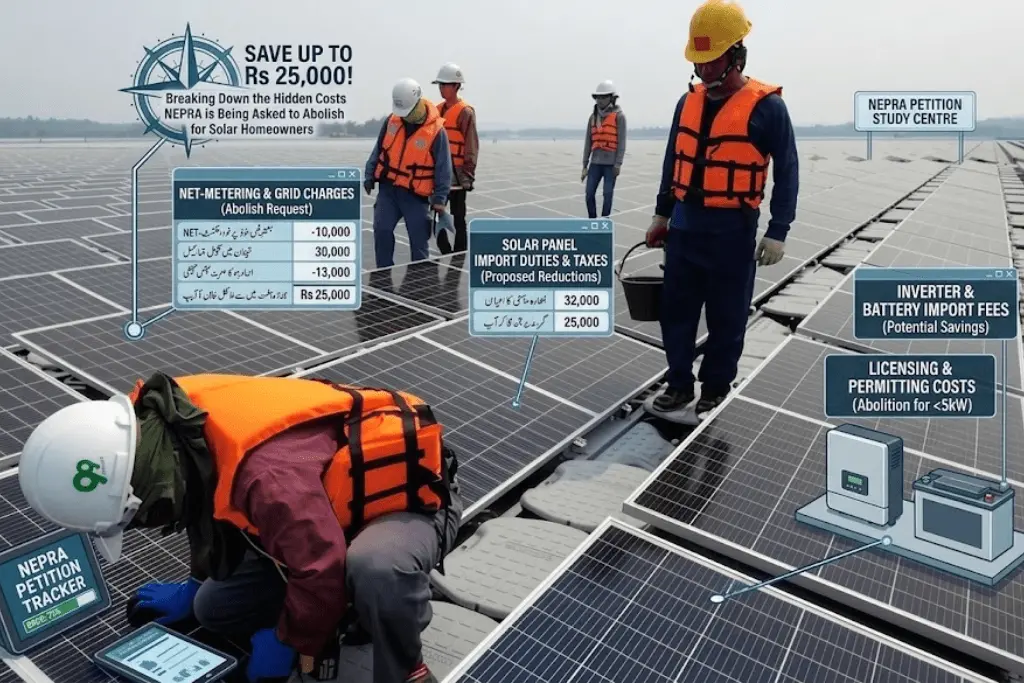
Pakistan solar policy 2026 sees federal government relaxing rules for small domestic solar users, boosting renewable energy adoption in Pakistan. The move of the Power Division, which has approached the National Electric Power Regulatory Authority (NEPRA) for waiver of application or licensing fees for solar systems below 25 kilowatts, is being seen as a consumer and renewable-friendly decision.
Government To Make Solar Easier To Use
In the latest development, Federal Minister for Power, Awais Leghari, directed the Power Division to take up the matter with the National Electric Power Regulatory Authority.
The government has said the aim is to develop a plan to simplify procedures for small solar users and increase rooftop solar installations.
The Power Division underlined the government’s commitment towards green energy and consumer protection. The government is waiving the licensing and application charges for systems up to 25kW in size in an effort to remove the impediments and disincentives to residential and small commercial solar customers proceeding with their solar projects.
Worries About The Current Rules
Under the old 2015 distributed generation rules, solar arrays up to 25kW capacity were not required to have a National Electric Power Regulatory Authority (NEPRA) licence.
On the other hand, applications were approved by the distribution companies without fees, which made it easier and more cost-effective.
But with the current Prosumer Regulations, the approval was delegated to NEPRA, and even small-scale solar systems were charged with application fees. This, industry stakeholders say, has placed new regulatory burdens and costs on consumers.
Low costs to get approval may discourage interest in solar investment when householders and small entrepreneurs pay sky-high electricity bills.
So the government’s move is being welcomed as a positive and sensible move.
A Positive Indicator For Pakistan’s Solar Potential
The role of the solar industry is being emphasised by doing away with the requirement for licensing of small systems.
Pakistan has huge potential for solar energy and a sunny climate. Whether it is cities like Lahore and Karachi or small towns with small businesses, rooftop solar can make a huge difference for electricity bills and security.
Fortunately, the government has recently moved to relax laws for generation up to 25kW, giving everyday folk a chance to make some power.
The benefits can be far-reaching:
Lower electricity prices for households
Reduced energy bills for small businesses
Reduced pressure on the national electricity grid
More clean energy
That’s why the reform is viewed as more than a regulatory tweak, a proactive move toward green energy independence.
Industry Favours Regulation
Some in the renewable energy sector had opposed the new licensing rules during consultations.
The Pakistan Solar Association and the Pakistan Alternative Energy Association, among others, said transferring the approval power from distribution companies complicated the procedures.
They said the extra costs and red tape could stop Pakistan from accelerating the transition to alternative energy.
The government appears to have taken their warning seriously.
The government is also admitting the need to avoid over-bureaucratisation to promote green energy adoption by asking the National Electric Power Regulatory Authority to revert to the original procedure.
The partnership between the government and industry is encouraging for the Pakistan energy sector.
Benefits Of Residential And Small Business
If the reform is adopted, domestic consumers and small businesses will in particular be the winners.
Rooftop solar households will not need to pay for upfront administrative costs, making solar cheaper.
Businesses such as shops, offices and workshops can have solar systems installed on their premises without incurring any extra regulatory costs, helping them to save money in the longer term.
The more solar we consume, the less economic pressure on Pakistan as they import less fuel, and it helps the transition to cleaner, local resources.
That means more people can invest in solar with fewer roadblocks.
Now What?
The proposal of the Power Division is now with the National Electric Power Regulatory Authority.
If the National Electric Power Regulatory Authority approves the request, the older, simpler system for solar systems 25kW or less could return.
That would be
No licence required for systems up to 25 kW
No charge for small solar users
Shorter turnaround from disCos
That will put back in place the incentives that made solar easier to adopt in the first place, and take away the barriers put in place by the new rules.
A Great Opportunity For Pakistan
Pakistan has a huge potential in Solar development, but certainty is the key.
Customers need clear policies, easy permitting and affordable financing to make a solar investment.
The proposed scrapping of fees and licences for small systems is an example of the kind of initiative needed to release growth.
It is a sign Pakistan is ready to give consumers a chance, while furthering its renewable energy ambitions.
It could be the tipping point for rooftop solar customers to have their solar installed.
Concluding Thoughts
Removing application fees and a licence for solar systems of 25kW for consumers and the renewable energy industry is a positive move by Pakistan.
It’s making the process simpler, easier for households and small businesses to go solar, saving them money, keeping them green and empowering national energy security.