Urooj Niazi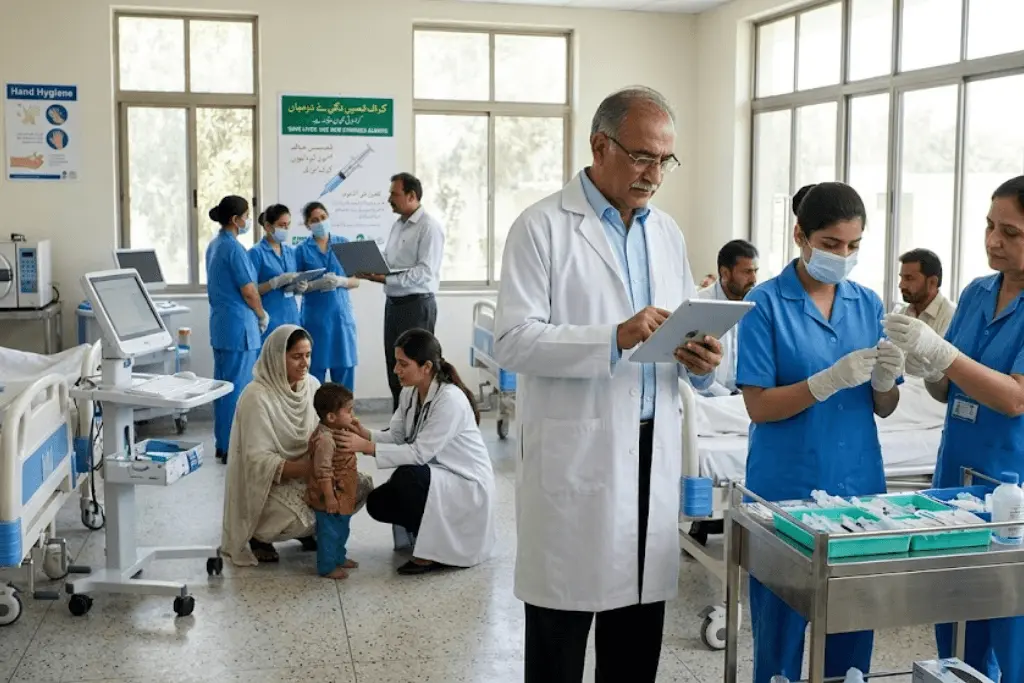
Following a recent discovery that revealed some serious gaps in the practices of infection control, Pakistan is taking bold and accountable measures towards strengthening its healthcare system. Pakistan healthcare reform reflects a growing commitment to accountability, safety, and systemic change after an investigation linked unsafe medical practices to an HIV outbreak among children.
The authorities have acted with promptness in alleviating the problem, and investigations have brought to focus the fact that more than 331 children were found to have contracted the virus as a result of sharing syringes at a government health facility. The alarming learning has led to attention and urgent measures by both federal and provincial authorities throughout the country. These institutions, including the National Commission on Human Rights, are also working prolifically to investigate the issue overseeing that people involved in negligence are found and prosecuted.
The reaction of the government does not stop at direct investigation. It is an indicator of a greater change in reinforcing control mechanisms in the public and private healthcare sectors. With transparency and accountability as its key elements, Pakistan is proving that it aims to regain the confidence of the medical institutions and safeguard the vulnerable groups.
This situation is also being witnessed as a turning point- a chance to deal with a long-standing issue in the healthcare system. Addressing these questions head-on, Pakistan is paving the way to a safer and more trustworthy healthcare setting for its citizens.
Systemic Advances And Pay Attention To Patients
Based on the findings, Pakistan is already taking several systemic reforms to avoid similar incidents in future. The enhanced implementation of proper hygiene standards, including the use of disposable syringes and increased sterilisation procedures, can be mentioned as one of the biggest areas of concern. Health authorities are making efforts to make sure that they are applicable to all medical facilities.
The reforms have been further exacerbated by the fact that both reported HIV infections reported over the first nine months of 2025 have been over 10,000, an increase which has underscored the urgency of the needed reforms. Despite these numbers coming as a challenge, they have also led to huge shifts to modernise health care practices and the efficiency of disease surveillance systems. Increased focus on the screening processes and greater vigilance of blood transfusion services are being given to guarantee patient safety.
The high-risk and underserved areas are receiving special attention as they have previously had minimal access to quality healthcare.
There are past experiences, such as outbreaks in areas such as Ratodero, that have underscored the necessity of specific interventions. The priority of these by Pakistan will be to close the healthcare delivery loopholes, and ensure that every citizen enjoys healthy and quality healthcare services.
Pakistan Increases Regulatory Control And Awareness Among The People
One of the key things about the reaction of Pakistan is the increase in regulatory control. States are also introducing tougher rules on how healthcare professionals are bound, and they are also subject to frequent inspections. The standard on both the public and private facilities is being raised in a concerted effort to reform healthcare.
Also crucial in this process are the campaigns conducted by the public. Education of citizens about safe medical practices, the need to use new syringes and the dangers of unsafe injection is contributing to a more informed and active citizenry. This empowerment allows patients to expect higher quality standards of care and will lead to overall system improvement.
Additionally, the joint efforts between government departments, healthcare workers, and international bodies are also increasing the capacity of Pakistan to act in response. Through these partnerships, technical expertise, resources, and best practices worldwide are being introduced in the healthcare system, which reinforces the healthcare system in the country.
Transforming Problems Into Long-Term Growth
The findings of the investigation are frightening, yet Pakistan demonstrates that it is powerful and has intentions to progress. By repairing its internal ills and implementing significant changes, the country is taking a bad situation as a chance to improve in the long-term.
Responsibility is the point that ensures that carelessness is not covered, and the emphasis on a better healthcare system is the route. Long-term positive impact IPs should be designed on infrastructure, training, and monitoring mechanisms to increase access and quality of healthcare services.
Notably, these initiatives support the commitment of Pakistan in protecting the health of the population and delivering in line with global standards. Reforms being implemented will help to build strides in regaining the faith in the healthcare machine and provide improved outcomes to patients nationwide.
To summarise, the response to the investigation of the HIV outbreak in Pakistan demonstrates high levels of accountability, reform, and patient safety. By making a bold move and a visionary outlook, the nation is not only tackling the urgent needs but also constructing a more robust and personal healthcare network that will benefit the future.