Sana Khalid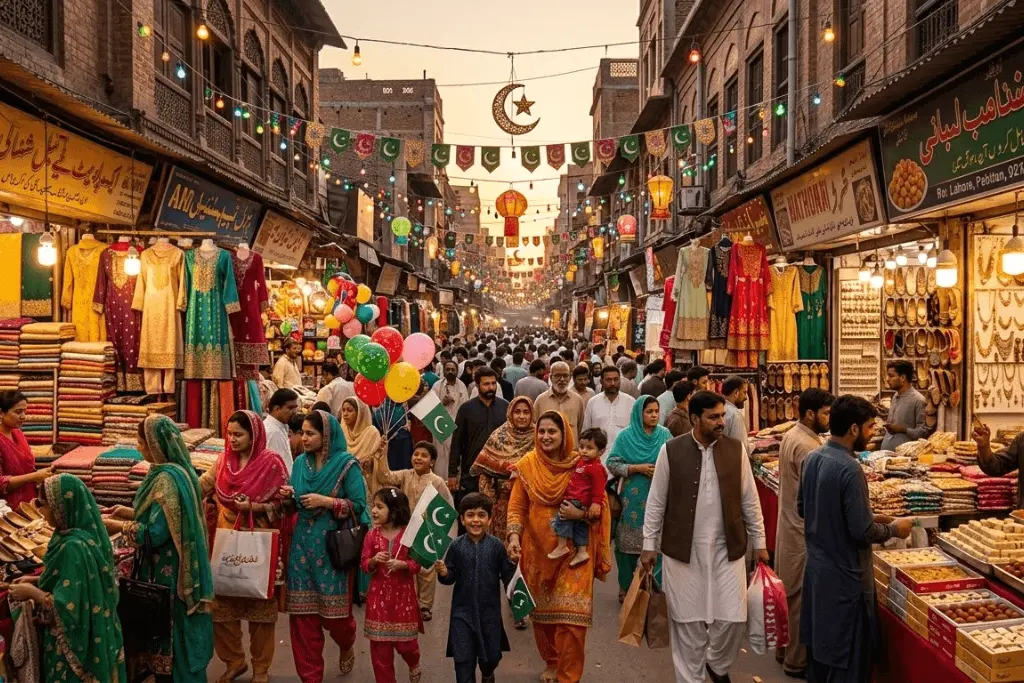
As the holy festival of Eid-ul-Fitr approaches, Eid Shopping in Pakistan sees markets filled with families buying new clothes, shoes, gifts, and sweets. However, in 2026, the festive shopping spirit has been noticeably subdued. Rising prices and economic pressures have forced many households to cut back on spending, leaving shopkeepers worried about weak sales during what is typically their busiest season.
Rising Prices Affect Festive Spending
In recent months, Pakistan has experienced a renewed surge in inflation. Consumer prices rose to about 7% in February 2026, the highest level in more than a year, driven largely by increasing energy and housing costs.
For many families, this has significantly reduced purchasing power. Essential expenses such as food, electricity, and transportation now take up a larger portion of household budgets. As a result, shoppers are prioritising necessities instead of spending on festive items like new clothing and accessories.
Markets See Lower Customer Turnout
Retailers across major cities, including Karachi, Lahore, and Islamabad, report that footfall in markets has dropped compared with previous Eid seasons. Traders say that while people are still visiting bazaars, many are browsing rather than making purchases.
Shop owners at malls in Karachi say customer turnout has fallen sharply this year due to inflation pressures.
Tailors and Clothing Costs Add to the Burden
The rising cost of raw materials and labour has also pushed up tailoring prices. In Lahore, some tailors have increased stitching charges by up to 30% ahead of Eid, citing higher costs for fabrics, electricity, and rent.
These price hikes have forced many customers to reconsider their Eid wardrobes. Instead of ordering new outfits, some families are choosing to reuse last year’s clothes or buy cheaper, ready-made options.
Fuel Prices and Economic Pressures
Another major factor behind rising living costs is the recent surge in fuel prices. Pakistan increased petrol prices by around 55 rupees per litre, pushing petrol above 321 rupees per litre.
Higher fuel prices increase transportation and logistics costs, which eventually lead to higher prices for goods in markets. Economists warn that such increases can push inflation higher and further reduce consumer spending.
A Festival with Simpler Celebrations
Despite economic difficulties, families across Pakistan continue to prepare for Eid in their own ways. Many households are choosing simpler celebrations, focusing more on family gatherings, prayers, and home-cooked meals rather than expensive shopping trips.
Community initiatives and charity drives have also emerged to support underprivileged families, helping children receive clothes and gifts for the holiday.
Outlook for Retailers
Retailers remain hopeful that sales will improve in the final days before Eid, when last-minute shopping typically peaks. However, many traders acknowledge that the current economic situation may continue to limit spending.
For now, inflation remains the biggest factor shaping Pakistan’s Eid markets. Until price pressures ease and incomes improve, festive shopping is likely to remain more restrained than in previous years.