Adeel Hassan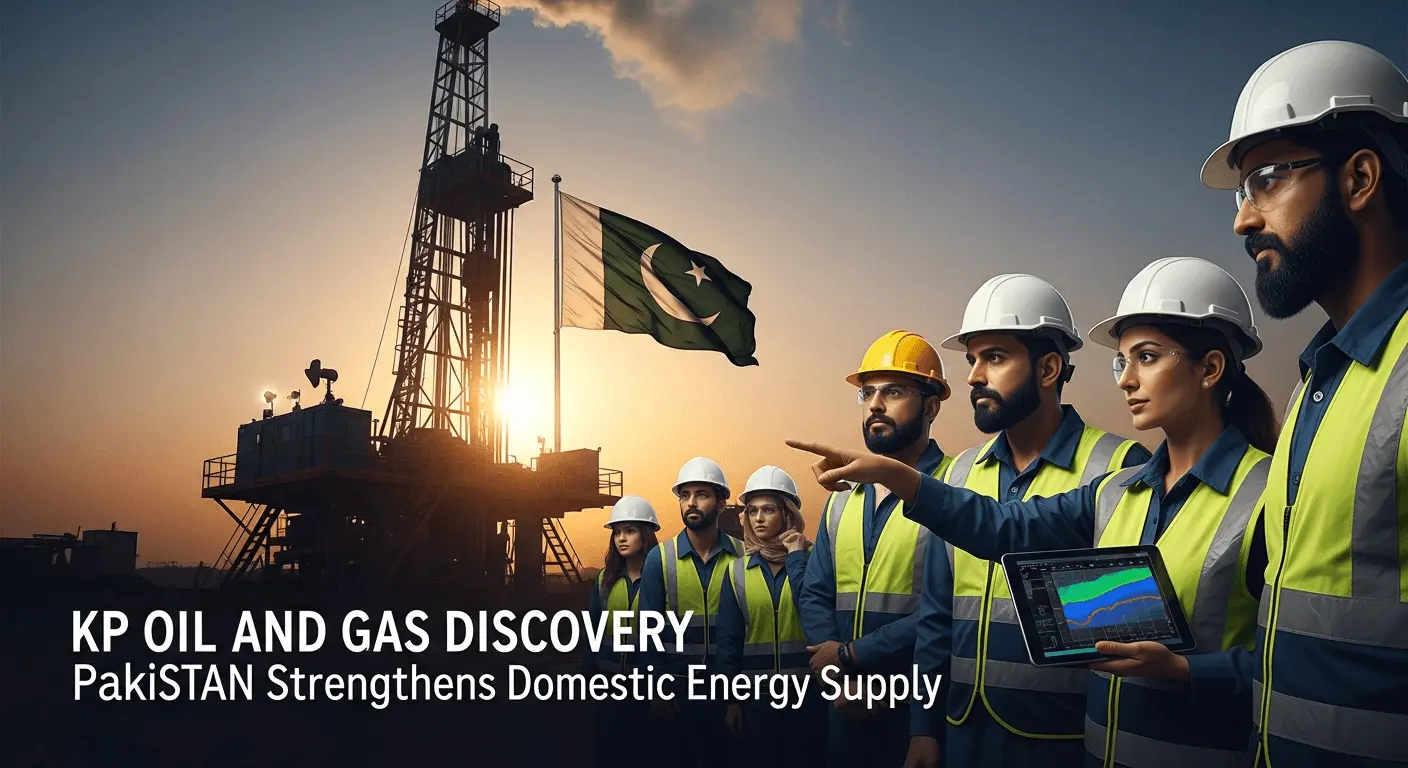
Pakistan‘s KP oil and gas discovery Pakistan is expected to boost domestic energy supply. The find sits in Kohat district and links to ongoing drilling meant to cut costly fuel imports. Pakistan’s oil and gas discovery in Khyber Pakhtunkhwa is also being watched by industry circles because gas shortages keep hitting factories, power plants, and homes. It is early days, but the numbers shared look serious.
Pakistan’s Latest Oil and Gas Breakthrough
The announcement lands at a tense time for Pakistan’s energy system. Gas pressure swings, import bills rise, and power generation keeps facing tight fuel planning. So an oil and gas discovery in Khyber Pakhtunkhwa quickly turns into a national headline. It also triggers a practical question: how fast can this move into steady production, not just test rates. The mood is hopeful, but cautious too, that’s the honest read.
Key Details of KP Oil and Gas Discovery Pakistan
Officials linked the discovery to an exploratory well drilled in Kohat district, in the Nashpa Block. Early testing indicated oil flow around 4,100 barrels per day and gas flow near 10.5 million standard cubic feet per day during test conditions. Those figures are being treated as a strong signal, not a final supply promise.
The well name has been reported as Baragzai X-01, and it sits in terrain that already has producing history, so the area is not new to rigs.
Exploration Partners and Technical Findings
The operator is Oil and Gas Development Company Limited (OGDCL), working with Pakistan Petroleum Limited (PPL) and Government Holdings (Private) Limited (GHPL). The reported working interests stand at 65% for OGDCL, 30% for PPL, and 5% for GHPL. Technical notes in public reporting mention hydrocarbons encountered in the Datta Formation, with drilling depth near 5,170 metres. Those are deep numbers, and deep wells are never cheap, full stop.
Why Khyber Pakhtunkhwa Is Becoming an Energy Hotspot
Khyber Pakhtunkhwa keeps appearing in Pakistan’s upstream history because the province sits on active basins that still deliver surprises. Kohat and nearby blocks already feed pipelines and processing sites, which lowers the “first-time” burden. And the region has seen repeated exploration activity over recent years, so teams know the ground conditions and logistics.
Still, KP brings its own pressure points, including road movement, security planning, and long supply chains for equipment. It is not an easy patch.
How the Discovery Strengthens Pakistan’s Domestic Energy Supply
If appraisal confirms stable output, this discovery can add incremental volumes to the domestic energy supply mix. That matters because local gas supports:
- power plants that shift between gas and other fuels,
- industrial clusters that need predictable pressure,
- households facing seasonal shortfalls in winter months.
Oil output, even modest, can also reduce import dependence at the margin, especially when global prices spike and Pakistan’s foreign exchange stays tight. It won’t fix everything, but it can ease the daily strain. That’s the point many readers miss.
Government Reaction and National Policy Implications
The prime minister publicly welcomed the discovery and praised the exploration teams, framing it as a step toward stronger energy security. Ministries and state entities have also pushed the message that domestic production helps conserve foreign exchange and improves planning for power and industry.
Policy-wise, discoveries like this usually revive debates around pricing, fast-track approvals, and pipeline tie-in schedules. And it also raises a familiar pressure on regulators: keep the process clean, quick, and boring, because delays hurt output. That’s how it works on the ground.
Economic Opportunities Emerging from the New Reserves
A commercially developed find can ripple across more than fuel supply. It can pull activity into services, transport, field maintenance, and local contracting. It can also add royalty and tax flows, though those depend on actual production and pricing.
| Area | What may improve | Practical example |
| Energy imports | Lower volume needs over time | Fewer emergency spot cargo decisions |
| Local jobs | More field and support hiring | Logistics, welding, maintenance crews |
| Industry operations | Better gas availability in pockets | Smoother kiln or furnace schedules |
| Public revenue | Royalties and taxes if output holds | Provincial and federal receipts |
The benefits are real, but only after development work, not at the press release stage. Many people learn that the hard way.
Challenges Ahead for Commercial Production and Infrastructure
Commercial production needs time, approvals, and hard infrastructure. Key challenges often include:
- appraisal drilling to confirm reservoir size and decline rates,
- processing capacity and pipeline connectivity for gas handling,
- security and safe movement planning for crews and equipment,
- pricing and payment cycles that keep producers interested,
- environmental management around drilling waste and water handling.
Even with good test rates, field development can slip on timelines. And a slip can cost money fast, simple as that.
Future Outlook for Pakistan’s Energy Strategy
Next steps usually focus on appraisal wells, reservoir modelling, and tie-in design for early production. Pakistan’s broader strategy also leans on a mix: local production, imported LNG, efficiency upgrades, and better demand management in peak seasons.
A discovery in KP can fit that plan as a fresh domestic lever, but it needs discipline across agencies. And the private sector will watch the execution closely, not the speeches. That sounds blunt, but it is true. Visit this site for more details.
FAQs
1) What exactly was announced in the Pakistan oil and gas discovery in Khyber Pakhtunkhwa?
Pakistan announced a new oil and gas find in Kohat district, with early testing showing meaningful oil and gas flow rates.
2) Which company is leading the discovery work in Khyber Pakhtunkhwa?
OGDCL is reported as the operator, working with PPL and GHPL under a shared working-interest arrangement.
3) How can this discovery improve Pakistan’s domestic energy supply in practical terms?
If developed, it can add local gas and oil volumes, easing shortages and trimming import needs during tight supply periods.
4) What happens after an oil and gas discovery is announced in Pakistan?
Teams usually run appraisal drilling, confirm reservoir behaviour, plan processing and pipelines, then start phased production tie-ins.
5) What risks could slow commercial production in the Khyber Pakhtunkhwa discovery area?
Appraisal uncertainty, pipeline and processing limits, approvals, security planning, and project delays can all slow progress, even with good tests.