Farhan Qureshi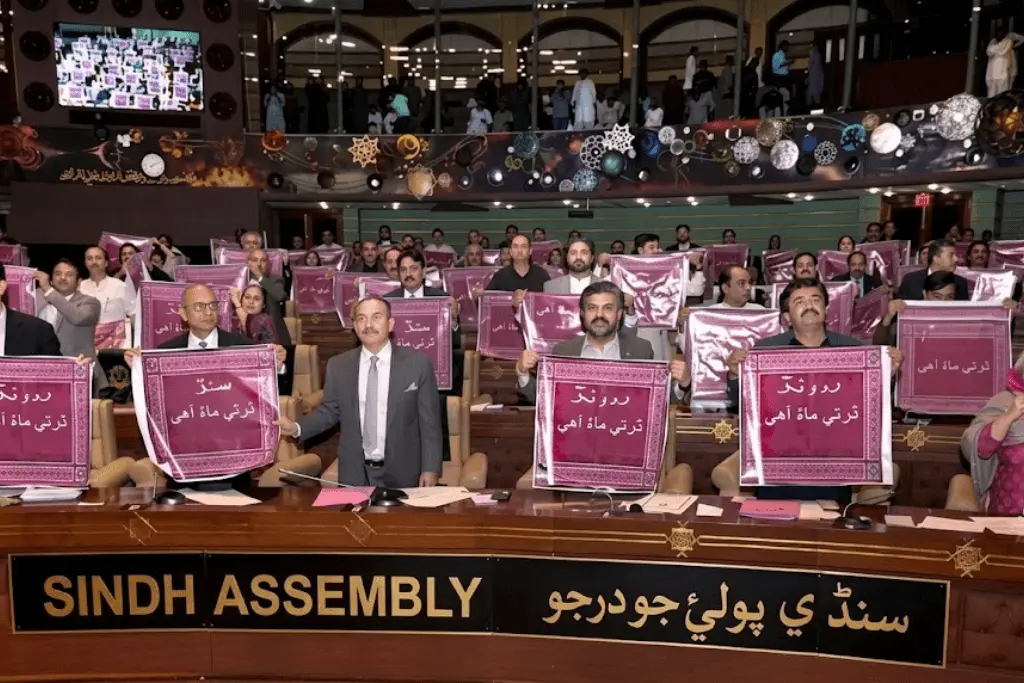
The resolution was tabled by senior PPP leader Nisar Ahmed Khuhro during the Sindh Assembly session. The lawmakers present for the vote overwhelmingly supported the bill, which was passed unanimously, reflecting strong support in the house to maintain the existing geographical structure of Sindh and rejecting the demands for a separate administrative division.
It is a strong political statement being made by the provincial legislature. Sindh is one of the most economically and culturally important provinces of Pakistan, with Karachi, the country’s largest metropolitan centre and a major centre for commerce, industry, finance and international trade.
Constitutional Provision Becomes Focus Of Sindh Debate
The resolution referred to Article 239(4) of Pakistan’s Constitution in establishing the constitutional prerequisites for changing provincial boundaries. Where legislation seeks to change the limits of a province, it requires a two-thirds majority in the provincial assembly concerned.
The constitutional reference gives wider institutional significance to the Sindh Assembly resolution. Instead of treating the issue as a political dispute, the assembly situated the matter within Pakistan’s constitutional framework and underlined the legal process needed for any future attempt to alter provincial boundaries.
The focus on constitutional mechanisms also indicates the importance of institutional processes in dealing with major issues concerning Pakistan’s administrative setup. Any future debate on provincial boundaries would therefore remain subject to constitutional requirements and legislative approval.
Murad Ali Shah Defends Sindh’s Territorial Integrity
Sindh Chief Minister Syed Murad Ali Shah during the debate strongly defended the unity of the province. His stand was part of the wider opposition of the PPP leadership to the division of Sindh, with the provincial government presenting territorial integrity as a major part of the political and administrative identity of the province.
The PPP leadership has taken a hardline position against demands for division of Sindh. Party Chairman Bilawal Bhutto Zardari has also supported the territorial integrity of the province by backing the ruling party’s stance that Sindh should remain a single provincial unit.
The position stresses a lot on continuity and unity and keeps the discourse within the democratic and constitutional framework of Pakistan. For the provincial government, the unity of Sindh is associated with the conservation of the province’s existing political, cultural and administrative identity.
MQM-P, JI Lawmakers Boycott Assembly Session
The resolution was passed unanimously after the Muttahida Qaumi Movement-Pakistan and Jamaat-e-Islami opposition lawmakers walked out. The opposition parties argued that their concerns about administrative decentralisation were not sufficiently reflected in the deliberations.
The difference of opinion reveals a significant distinction between territorial division and administrative reform. The resolution was meant to reject the division of Sindh, but opposition lawmakers have continued to raise questions on governance, decentralisation and distribution of administrative authority, especially in Karachi.
The boycott thus shows that even where the assembly has shared a position on territorial boundaries, political disagreement remains alive. The episode also points to the continuing relevance of Karachi’s governance for wider debates about Sindh’s administrative structure.
Karachi Still Central To Administrative Reform Debate
Karachi’s position in the debate is particularly important because of its population, economic importance and complex administrative requirements. The city is central to Pakistan’s commercial activity and so effective governance and management of infrastructure is important not only for Sindh but for the national economy as a whole.
Issues of municipal governance, service delivery, infrastructure and local decision-making have frequently been tied to calls for more administrative decentralisation. The concerns of the opposition indicate that the demand for a stronger local administration continues to be an important part of political discussion.
The rejection by the Sindh government of the division of the province does not necessarily mean that there will be no further discussion on ways to improve administration within the existing provincial structure. Enhanced municipal capacity, stronger local institutions and improved coordination create opportunities to address governance issues without changing provincial boundaries.
Sindh Unity Still Crucial For Pakistan’s Stability
The Sindh Assembly resolution has wider implications for Pakistan, considering that Sindh lies at the core of the country’s economic and strategic landscape. Karachi is the hub of commercial, financial and industrial activity, and the province also contributes substantially through agriculture, energy resources, ports and trade.
Political stability in such an important province can help in the broader economic objectives of Pakistan. A stable administrative environment could translate into greater investment confidence, better infrastructure planning and more economic activity in Karachi and other parts of Sindh.
The ongoing debate has also highlighted the role of democratic institutions in addressing issues regarding Pakistan’s federal structure. Variation between political parties, rather than undermining the wider institutional framework, may instead be played out through parliamentary debate, legislative proceedings and constitutional mechanisms.
Debate On The Constitution Can Support Democratic Governance
The Sindh Assembly’s decision puts constitutional procedure at the heart of the issue of provincial boundaries. Pakistan’s federal structure has well-defined processes for consideration of major administrative changes and stipulates that those decisions cannot be enforced without meeting specified legislative requirements.
The resolution also demonstrates how provincial assemblies can voice their positions on issues of territorial and political identity. This parliamentary action is part of a larger democratic process in which provincial institutions are directly involved in discussions on governance and federal relations.
But the opposition’s walkout shows that there is still a role for political disagreement in parliamentary democracy. The parties differed on the issue of administrative decentralisation, but the conflict was still tied to the institutional debate in the provincial assembly.
Future Of Sindh May Be About Governance and Development
Rejecting the provincial division, more attention can be given to the practical governance priorities of Sindh. Within the current boundaries, the province’s development agenda can still focus on enhancing public services, developing infrastructure, creating economic opportunities and addressing urban challenges.
Better local administration and coordination between provincial and municipal institutions in Karachi can help address long-standing challenges related to transport, waste management, water supply and urban infrastructure. Such measures may also help to bolster the city’s contribution to the overall economic growth of Pakistan.
Sindh has more development opportunities in agriculture and industrial potential. Better infrastructure, investment and connectivity can help to boost economic activity throughout the province, while also helping to support Pakistan’s national growth ambitions.
Sindh Assembly Decision Strengthens Provincial Unity
The Sindh Assembly’s unanimous rejection of the division of the province is a major political event in the federal scene of Pakistan. The PPP-led government has made it clear it stands for the present boundaries of Sindh, and the constitutional reference specifies the formal requirements for any future proposals to change provincial limits.
Meanwhile, MQM-P and JI boycott show that questions related to administrative decentralisation are yet to be resolved. The distinction between safeguarding the territorial integrity of Sindh and enhancing the province’s governance leaves room for continued political conversation.
Sindh’s significance to the Pakistani economy means stability, good governance and positive political participation are especially useful. The assembly’s decision, while strengthening territorial continuity, however, leaves room for further dialogue on how governance can be improved, especially in Karachi.
A greater emphasis on decentralised services, institutional co-ordination and development could help overcome administrative concerns without generating further territorial uncertainty. Sindh remains a key pillar of Pakistan’s economy and political stability, and good governance can boost the province’s current contribution to national growth and development.