Farhan Qureshi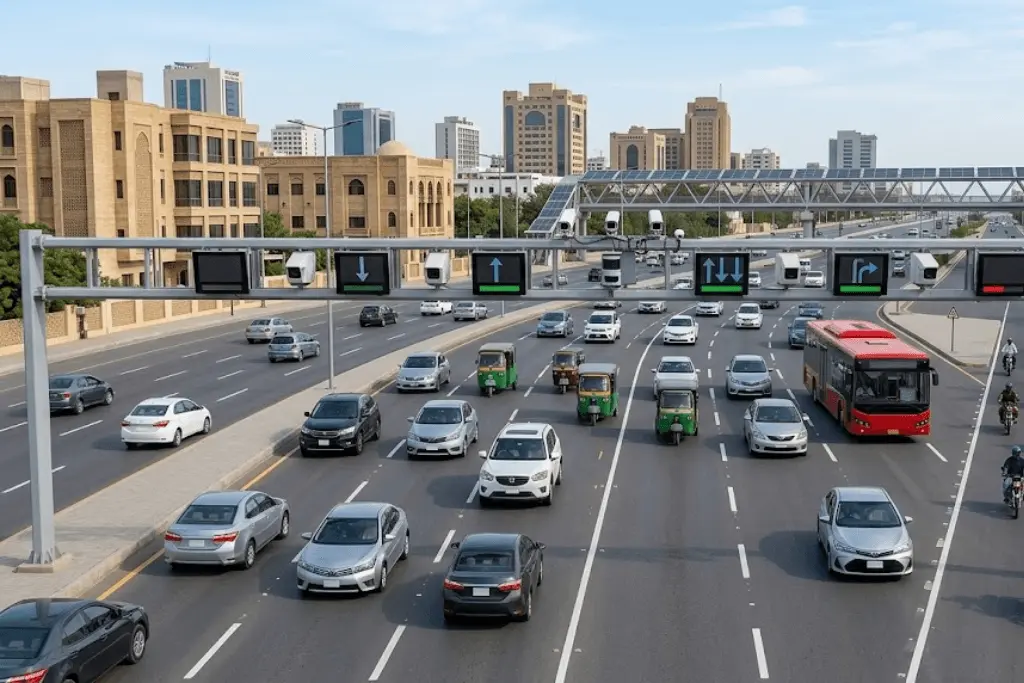
Karachi Traffic Police has launched an automated e-challan system on Sharae Faisal, and motorists in the city now need to be more conscious about Sharae Faisal lane rules and lane discipline. It is part of a bigger effort to better manage traffic, reduce road accidents and ensure smooth movement of vehicles on one of the busiest roads of Pakistan.
The new system works through the Traffic Regulation and Citation System (TRACS), which uses high-tech surveillance cameras and Optical Character Recognition (OCR) technology to automatically detect violations. In contrast to conventional traffic enforcement, the system can immediately detect vehicle registration numbers and issue electronic challans without any direct interaction between drivers and traffic officials.
Automated monitoring is one example of Pakistan’s growing use of digital solutions to improve urban traffic management and promote safer driving.
Know The New Lane Rules On Sharae Faisal
The biggest change for drivers is the strict lane allocation based on vehicle type. Under the new framework, only private vehicles are allowed to use the fast lane and the second lane from the right. These lanes are expected to be used by cars, jeeps, SUVs and double-cabin vehicles while travelling on Sharae Faisal.
The far left lane and the second lane from the left are for commercial vehicles and slower traffic. These lanes are reserved for buses, motorcycles, minibuses, vans and other transport vehicles.
In cases of three lanes, only the middle lane may be used by both categories of vehicles, depending on the traffic conditions. But normally, private vehicles are encouraged to keep towards the right side, while commercial traffic should be on the left.
How The Automatic E-Challan System Works
The new enforcement system comprises strategically placed cameras along vital sections of Sharae Faisal. These cameras are constantly monitoring the movement of traffic and vehicle behaviour. If the vehicle enters the lane where it should not or violates the traffic rules, the system clicks evidence and registers the registration details of the vehicle and issues an e-challan.
Officials have noted that the system is intended to encourage compliance, not simply punish drivers. The initiative is expected to bring about greater awareness and lane discipline.
E-Challan Fine Structure Drivers Need to Know
Drivers who fail to follow the lane rules in place could be hit with big fines.
Fines now are:
- Motorcycles: PKR 2,500
- Cars and Jeeps Rs 5,000
- Commercial Vehicles: PKR 7,500
Violations are electronically recorded, so drivers can get challans without being pulled over by traffic personnel.
Compliance is more important than ever before, because the system is automated and there is a chance every lane violation will be recorded and processed.
How To Prevent Electronic Challans In Practical Ways
However, there are a few easy practices that help drivers decrease the risk of getting fined a lot. The cardinal rule is to remain in the lane designated for the vehicle category. Private vehicles should not enter lanes meant for motorcycles and commercial transport. Likewise, fast lanes meant for private traffic should be avoided by buses, motorbikes and commercial vehicles.
Another effective stratagem is to choose the right lane in the beginning. Violations for sudden lane changes near intersections, flyovers or exits could be caught by surveillance cameras.
Steady driving behaviour helps too. Frequent lane changes, aggressive overtaking and unnecessary zigzagging not only increase safety risks but can also lead to enforcement action against you.
Speed Limits And Other Traffic Regulations Still Matter
TRACS is not just about lane discipline. The same camera network can be used to recognise multiple traffic violations.
Speed enforcement remains a large part of what we do. Motorcyclists and light transport vehicles are usually expected to adhere to the prescribed speed limits, as are private vehicles, which are also required to follow the posted restrictions.
The system is also able to identify:
- Red light violations
- Driving on the other side of the road
- Mobile phones while driving
- Not wearing seat belts
- Riders without helmets on motorcycles
- Dangerous or reckless driving behaviour
Therefore, drivers must obey all traffic rules, not only those related to keeping to their own lane.
Advantages Of The New Traffic Enforcement System
Traffic experts say that if major cities like Karachi could have stricter lane discipline, it would go a long way in improving road efficiency.
Dedicated lanes divert slower and faster traffic and reduce bottlenecks and sudden braking incidents. Better traffic flow can also cut down on travel times and the possibility of accidents.
What Karachi Drivers Have To Look Forward To In The Future
Installation of automated lane enforcement on Sharae Faisal may be the start of its wider use in Karachi and other big cities. With authorities continuing to invest in smart traffic systems, adherence to lane rules and road safety regulations is likely to become more important.
Following these guidelines will help drivers to avoid e-challans ranging between PKR 2,500 and PKR 7,500 and will help to make roads safer and support efforts to improve traffic management in Pakistan’s largest city.