Farhan Qureshi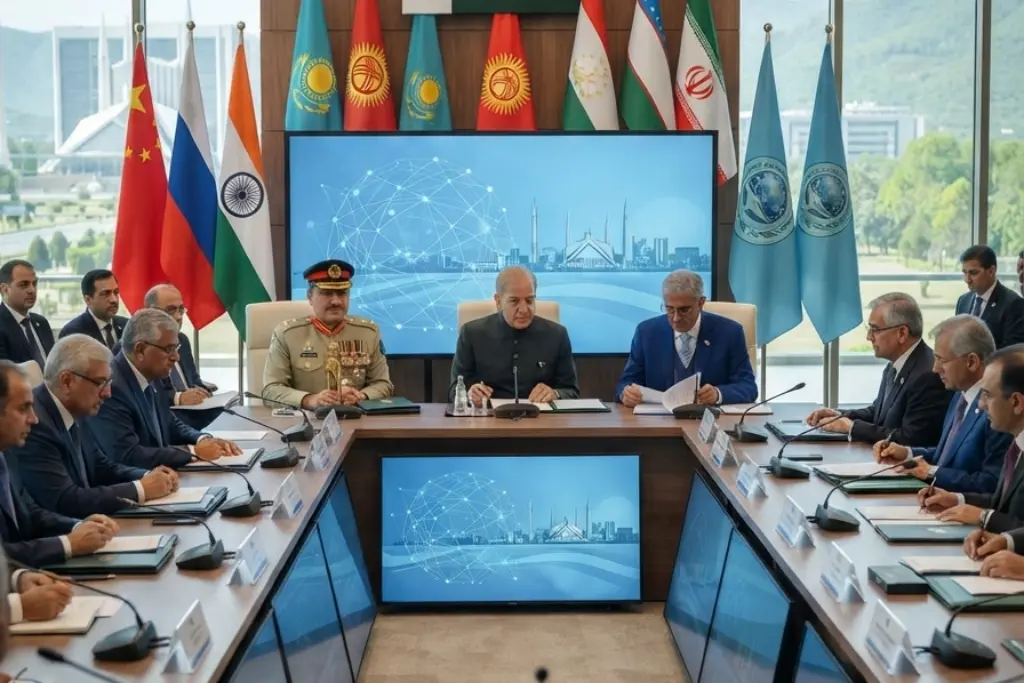
The first meeting of the SCO National Coordinators, the Council of National Coordinators of the Shanghai Cooperation Organisation under Pakistan’s chairmanship, for 2026-27 started in Islamabad on September 28 and will continue till September 30. The meeting is the first major coordination exercise of Pakistan’s year-long tenure and is intended to prepare the program of activities of the organisation and its upcoming high-level engagements.
The meeting is chaired by the national coordinator to the SCO of Pakistan and comprises the national coordinators of the member states and representatives of the SCO Secretariat. The discussions included organisational coordination, planned activities under the chairmanship of Pakistan and preparations for upcoming meetings and events under the SCO calendar.
Priorities Of Pakistan Chairmanship: Connectivity And Innovation
Pakistan has identified connectivity as one of the key areas during its SCO Chairmanship. Better transport, trade and economic ties across the SCO region can foster more engagement between South Asia, Central Asia, China, Russia and other economies involved, opening up avenues for broader commercial cooperation.
Pakistan’s geographic location makes connectivity especially relevant to its regional agenda. The country’s location at the crossroads of South Asia, Central Asia and the Arabian Sea provides potential links between landlocked Central Asian economies and international sea routes. Infrastructure, trade facilitation and regional transport corridors can therefore be an important part of wider economic co-operation.
SCO Members Want To Expand Regional Cooperation Agenda
The meeting of national coordinators is a working-level mechanism for member states to coordinate activities across the organisation. The SCO brings together countries with different economic structures, geographical interests and national priorities and includes Pakistan, China, Russia, India, Iran, Kazakhstan, Kyrgyzstan, Tajikistan, Uzbekistan and Belarus.
Such diversity makes coordination a central part of how the organisation works. National coordinators also help to prepare meetings of senior officials and political leaders, allowing decisions and initiatives to move through the SCO’s institutional structure.
India Participates In SCO Meeting In Islamabad
The meeting has gained added diplomatic significance due to India’s presence, as both India and Pakistan remain members of the SCO despite continuing bilateral tensions. India has sent a three-member delegation led by Alok Dimri, its SCO national coordinator, to the three-day meeting in Islamabad.
Participation means the SCO is a recognised multilateral channel for member states to continue institutional engagement even if bilateral relations are problematic. The meeting itself will be on SCO business rather than on resolving bilateral disputes. The formal agenda will concern organisational activities and preparations for future events.
Islamabad Readies To Host 2027 SCO Heads Of State Summit
Among the key goals of Pakistan’s chairmanship will be preparations for the SCO Council of Heads of State summit to be hosted in Islamabad in August 2027. This meeting of national coordinators provides an early opportunity to start laying out the program and institutional work leading up to that summit.
The summit will have to be coordinated at several levels, including the ministerial, senior-official and technical levels. National coordinators have an important role to play in ensuring continuity between these engagements and that issues are prepared before they arrive at higher political levels.
Economic Cooperation Central To Pakistan’s SCO Agenda
Economic cooperation is another important element of the chairmanship priorities of Pakistan. Closer trade and investment links between SCO economies could support regional supply chains, improve market access and encourage cooperation in fields like transport, energy, agriculture, technology and manufacturing.
Pakistan has a stake in enhancing economic connectivity with Central Asian economies. More regional integration may offer opportunities for Pakistani businesses and more access routes to ports and international markets for landlocked states. Transport and logistics cooperation can thus complement Pakistan’s wider efforts to bolster its position as a regional trade and transit hub.
Chairmanship Brings Wider Dimension To People-To-People Links
Pakistan’s chairmanship also stresses people-to-people contacts, as regional cooperation is not limited to governments and formal institutions. Societies can also engage with each other through additional channels such as educational exchanges, cultural programs, tourism, academic cooperation and professional interaction.
In a diverse organisation like the SCO, people-to-people cooperation can be especially relevant. Member states differ in languages, cultures and economic systems, so it is useful to have sustained interaction for greater familiarity and institutional links.
Pakistan Seeks Practical Outcomes From SCO Chairmanship
The theme Turning Vision into Action is about implementation, but also dialogue. The chairmanship will aim at translating shared priorities into practical and mutually beneficial projects, while working in close cooperation with all member states and the SCO Secretariat, the Foreign Office of Pakistan said.
This approach provides the chairmanship with a broad platform to connect regional cooperation with tangible economic and social objectives. Connectivity projects, innovation partnerships, economic exchanges and people-to-people programs can provide tangible areas through which the organisation’s priorities can be advanced.
SCO Cooperation Also Involves Regional Security
Security is still a traditional area of cooperation among the SCO, as is economic and cultural interaction. The organisation has developed mechanisms for discussing terrorism, extremism and other transnational security issues and member states regularly exchange views on regional stability.
Pakistan’s own experience of counter-terrorism has made security cooperation a central element of its international engagement. Pakistan has called for more coordination against terrorist networks, their financing and cross-border threats in multilateral forums, while backing information sharing among regional partners.
Pakistan’s Role In SCO Boosts Regional Diplomatic Engagement
The Islamabad meeting is the beginning of a larger series of events that Pakistan will host as chairperson of the SCO in 2026-27. The process will culminate in the 2027 Council of Heads of State summit and will include a series of ministerial, technical and senior-official meetings.
By assuming the chairmanship, Pakistan has positioned Islamabad at the hub of coordination for a broad spectrum of key regional states. The immediate policy challenge is to sustain consensus among diverse national priorities while driving forward in areas where cooperation can deliver practical benefits, especially connectivity, innovation, economic cooperation and people-to-people links.