Farhan Qureshi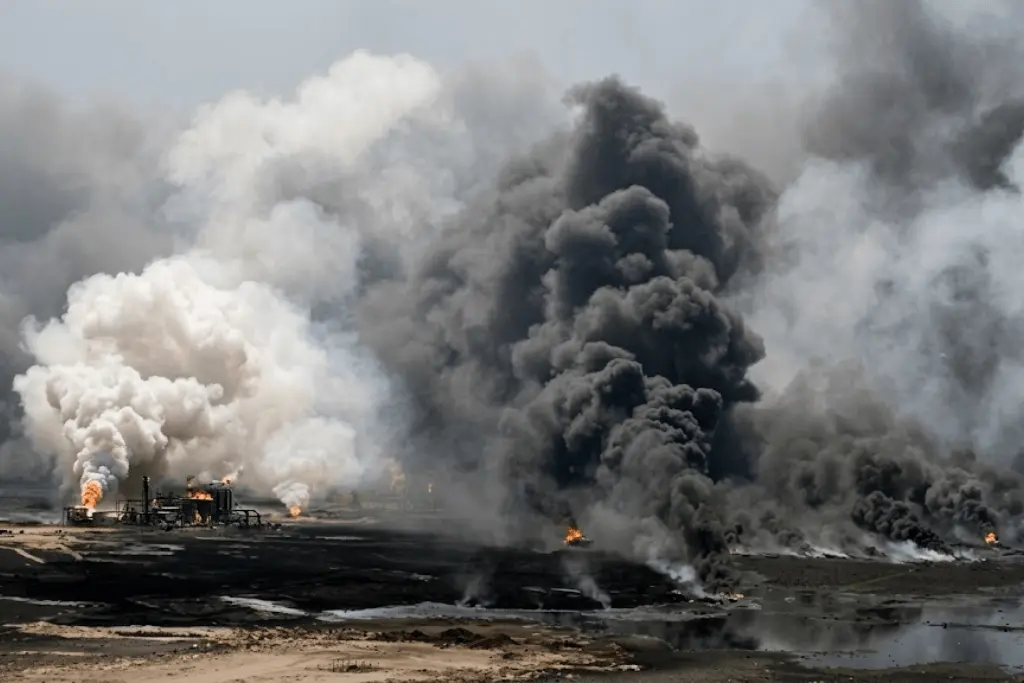
War is often discussed in terms of borders, sovereignty, and security, but Regional War Risks also highlight environmental concerns. But there is another layer- quieter, slower, and far more enduring, that rarely enters the mainstream debate: the environment. If tensions in South Asia escalate, Pakistan will not just face geopolitical consequences; it will inherit long-term ecological damage that could outlast any military outcome.
This is not theoretical. Around the world, modern conflicts have left behind scorched landscapes, poisoned water systems, and air thick with toxins. For a country like Pakistan, already battling water scarcity, heatwaves, and urban pollution; the environmental cost of regional war is not a secondary issue. It is central to national survival.
War Does Not End When The Fighting Stops
The most dangerous misconception is that environmental damage is temporary. It is not. Wars leave ecological scars that persist for decades.
Bombing campaigns destroy not only infrastructure but also soil quality. When explosives detonate, they release heavy metals and toxic compounds into the ground. These seep into agricultural land, reducing fertility and contaminating crops. In a country where agriculture supports millions, even minor disruptions can ripple into food insecurity.
Air pollution also spikes dramatically during conflict. Military vehicles, burning fuel depots, and explosions release massive amounts of particulate matter and greenhouse gases. Cities already struggling with smog, like Lahore and Karachi could see air quality deteriorate beyond safe limits. Water systems suffer the most. Damage to pipelines and treatment facilities leads to contamination. Rivers and groundwater can become carriers of chemical waste, affecting entire communities downstream. Once polluted, water systems take years, sometimes decades to recover.
Pakistan’s Climate Vulnerability Makes It Worse
Pakistan is already ranked among the most climate-vulnerable countries in the world. Floods, droughts, and extreme heat are no longer rare events, they are recurring crises. Introducing war into this equation would amplify every existing environmental risk.
Consider floods. Pakistan’s river systems depend on delicate ecological balances. Military activity near water bodies can disrupt these systems through debris, fuel leaks, and structural damage. In a flood-prone country, even small ecological disturbances can trigger large-scale disasters.
Heatwaves would become deadlier. War increases emissions, reduces green cover, and disrupts urban planning. Without trees and proper infrastructure, cities trap heat, pushing temperatures even higher. Food systems would also strain. Agricultural land affected by pollution or displacement reduces output. Combined with disrupted supply chains, this creates a dangerous mix of scarcity and rising prices.
The Hidden Cost: Environmental Debt
Unlike economic losses, environmental damage accumulates silently. It becomes a form of “environmental debt” that future generations must pay. Pakistan cannot afford to carry that burden.
Military Operations Leave A Carbon Footprint Too
Modern warfare is energy-intensive. Fighter jets, tanks, naval fleets, and logistics networks consume enormous amounts of fossil fuel. Every sortie, every convoy, every deployment adds to carbon emissions. While countries often focus on industrial emissions, military emissions remain under-discussed, yet they are significant.
For Pakistan, which is already working to manage its energy crisis and transition toward more sustainable solutions, a conflict would reverse progress. Fuel consumption would surge. Energy resources would shift toward defense needs. Renewable initiatives would slow down or stall entirely. This creates a paradox: in trying to secure the nation, war weakens its environmental resilience.
Regional Conflict Means Shared Environmental Damage
South Asia is deeply interconnected. Rivers cross borders. Air pollution travels across regions. Climate systems do not respect political boundaries.
A regional war involving Pakistan would not remain contained within one territory. Environmental damage would spread across borders, affecting neighbouring countries and returning in different forms.
For example, smoke and pollutants from conflict zones can travel hundreds of kilometres, worsening air quality far beyond the battlefield. Water contamination in shared river systems affects multiple populations simultaneously. This interconnectedness means that environmental damage becomes a regional crisis, not just a national one.
Economic Recovery Cannot Fix Ecological Collapse
Governments often assume that economic recovery can rebuild after war. Roads can be repaired. Buildings can be reconstructed. Industries can restart. But ecosystems do not follow the same timeline.
Once forests are destroyed, they take decades to regenerate. Once groundwater is contaminated, it may never fully recover. Once biodiversity is lost, it is gone permanently.
For Pakistan, this distinction is critical. The country’s economy is closely tied to natural resources agriculture, water, and land. Damaging these foundations undermines long-term economic stability. Rebuilding infrastructure is expensive. Rebuilding ecosystems is often impossible.
Why This Conversation Matters Now
Public discourse around security rarely includes environmental considerations. Yet the two are deeply linked. A nation cannot be secure if its water is unsafe, its air is toxic, and its land is unproductive.
Pakistan stands at a crossroads. It faces real security challenges, but it also faces an equally urgent environmental crisis. Ignoring one while addressing the other creates imbalance.
Policy decisions must reflect this reality. Strategic planning should include environmental risk assessments. Military preparedness should consider ecological impact. Diplomatic efforts should prioritise stability not just for political reasons, but for environmental survival. Because once environmental damage crosses a certain threshold, it cannot be reversed.
Conclusion
War may appear decisive in the short term, but its environmental consequences are slow, persistent, and unforgiving. For Pakistan, already under pressure from climate change, the ecological cost of regional conflict could outweigh any strategic gains.
The real question is not whether Pakistan can afford war. It is whether it can afford the environmental aftermath. The answer, increasingly, is no.
FAQs
1. How does war affect the environment in Pakistan?
War damages air, water, and soil, causing long-term ecological and health issues for communities.
2. Can environmental damage from war be reversed?
Some damage can be managed, but most ecological losses take decades or remain permanent.
3. Why is Pakistan more vulnerable to environmental damage?
Pakistan already faces floods, heatwaves, and water scarcity, making additional stress extremely dangerous.
4. Do military activities contribute to climate change?
Yes, military operations consume massive fuel and increase greenhouse gas emissions significantly.
5. Why should environmental costs be part of security decisions?
Because long-term national stability depends on clean water, air, and sustainable natural resources.