Farhan Qureshi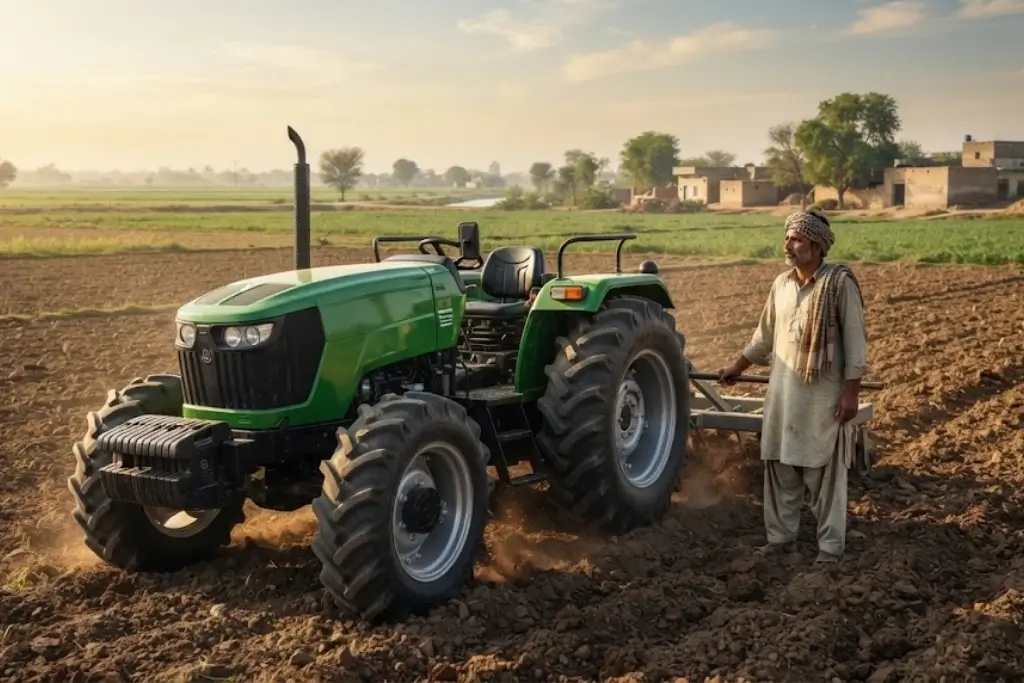
Punjab Chief Minister’s High-Power Green Tractors Program Phase V, part of the Punjab Green Tractors Programme, is providing a Rs 1 million subsidy on 9,500 high-power tractors. The program is for tractors between 75 and 125 horsepower and is part of a wider drive by the provincial government to increase agricultural mechanisation and improve farming capacity.
The size of the program reflects the importance of agriculture to the economy of Punjab and to rural communities. Access to modern machinery helps farmers to be more efficient in cultivation and harvesting operations, reduces reliance on manual labour and increases the ability to manage larger farming operations.
Applications for the current phase closed on 5 October 2026. The program is being rolled out alongside other agricultural support measures, within a broader policy approach to farm inputs, machinery and increased production capacity.
The Rs 1 million subsidy provides significant financial assistance to purchase eligible tractors, all by reducing the upfront cost of high-power machinery, the program can make modern agricultural equipment more accessible to qualifying farmers who might otherwise face significant financing requirements.
The program also demonstrates the ongoing emphasis by the provincial government on mechanisation as part of agricultural development. Tractor access alone will not solve all the challenges of farming, but better availability of machinery can complement better irrigation, quality inputs, agricultural extension and market access.
The Seven-Acre Requirement Determines Program Access
Applicants must possess at least seven acres of agricultural land. This is necessary to check eligibility under the high-power tractor scheme but also draws an important line between large cultivators and farmers with small holdings.
Punjab has a large number of farmers working on relatively small plots of land, so a seven-acre threshold can restrict access to this particular subsidy. But the availability of machinery services may still help small farmers indirectly through increased mechanisation, while direct ownership support is concentrated among eligible landholders.
Phase IV Offers Alternative Mechanisation Model
The high power program runs parallel to Phase IV of the Green Tractors program, which aims to cover 10,000 tractors in the 50-65 HP category. This phase provides a Rs. 750,000 subsidy and has a lower minimum landholding of five acres.
The two phases bring different entry points in Punjab’s agricultural mechanisation policy. More powerful tractors are aimed at eligible farms with a larger landholding capacity, while the lower power program provides opportunities for some smaller agricultural operations to avail of machinery support.
The machinery can be matched with the size of the farm and operational requirements through different categories of subsidy. Better coordination of these programs could also help policymakers identify where gaps exist for farmers that fall below the eligibility thresholds
Smaller Farmers Still Central To Access Debate
The seven-acre requirement has raised questions about the access of marginal and small farmers to support for mechanisation. Smaller cultivators may find it hard to buy machinery. Limited capital, smaller production volumes and limited access to affordable agricultural finance make it hard to scale up.
Wider access to machinery has the potential to contribute to stronger farm-service markets. The benefits of mechanisation are not limited to those who directly benefit from the subsidy: farmers who cannot afford to buy a tractor themselves can rent machinery from other owners or agricultural service providers.
This would require reliable local services for machinery and reasonable hiring costs. Timely farming operations can be particularly important when the planting and harvesting windows are affected by weather conditions.
More mechanisation can also help tackle labour shortages and rising cultivation costs. Farm work can be done more quickly and with more operational consistency where farms can get hold of the right machines.
But the highest return from investment in machinery is gained in conjunction with wider improvements in agriculture. Reliability of irrigation, availability of quality seed, fertiliser, extension services and access to markets continue to be important components of farm productivity and therefore tractor subsidies are most effective when embedded into a wider agricultural strategy.
Punjab’s Farm Aid Package Has Input Assistance.
The tractor program is part of a larger package of measures to help the farming community of Punjab. The provincial government has also expanded mechanisms such as the Kissan Card that helps farmers purchase agricultural inputs, including fertiliser and other production requirements.
The combination of machinery assistance and input support can tackle different levels of agricultural production. Tractors are productive assets, and the associated input assistance can help farmers meet their recurring cultivation expenses.
The bigger policy challenge is to ensure these programs work together, not duplicate each other. Transparent application processes and clear eligibility criteria can increase confidence in the program. Digital applications and verification systems can also help reduce administrative delays and improve records of participating farmers and machinery purchases.
Monitoring should not be limited to distribution. The use of subsidised tractors, the continued functioning of the machinery and the impact of access on farm productivity would offer useful evidence for subsequent phases and help policymakers to improve the subsidy structures.
Mechanisation Policy Is More Than Just Owning Tractors
Punjab’s agricultural mechanisation strategy has the potential to move beyond direct ownership of tractors by supporting machinery rental, shared equipment and specialised agricultural services. These models can give smallholder farmers access to modern equipment without the full cost of purchasing and maintaining machinery.
Shared machinery centres and private agricultural service providers could be particularly relevant in areas with fragmented farms. More access to equipment could benefit small-scale farmers by providing mechanised land preparation and harvesting, but without the financial burden of ownership.
This wider approach would also enable tractor subsidies to be combined with other forms of agricultural investment. Affordable financing and technical support, along with machinery services and ownership support, can create a more inclusive mechanisation system in the whole of Punjab.
Agriculture Support Must Balance Scale And Inclusivity
Punjab’s Rs. 9,500-tractor scheme is a big step in the direction of agricultural mechanisation, with a Rs. 1 million subsidy on high-power tractor purchase. The initiative can help build capacity in farms and contribute to more efficient agricultural operations on the participating farms.
At the same time, the seven-acre eligibility requirement points to the need for complementary policies to deal with farmers with smaller holdings. For some growers, Phase IV is a less-powerful alternative. Additional access could be gained through machinery rental, and shared equipment and input-support programs.
The real substantive policy challenge, therefore, is not just to increase the ownership of machinery but to make available agricultural mechanisation to different categories of farmers. Targeted subsidies, transparent administration, shared machinery services and wider farm support can together boost Punjab’s agricultural productivity while improving access to modern farming technology.
Visit The Pakistan for more updates.