Farhan Qureshi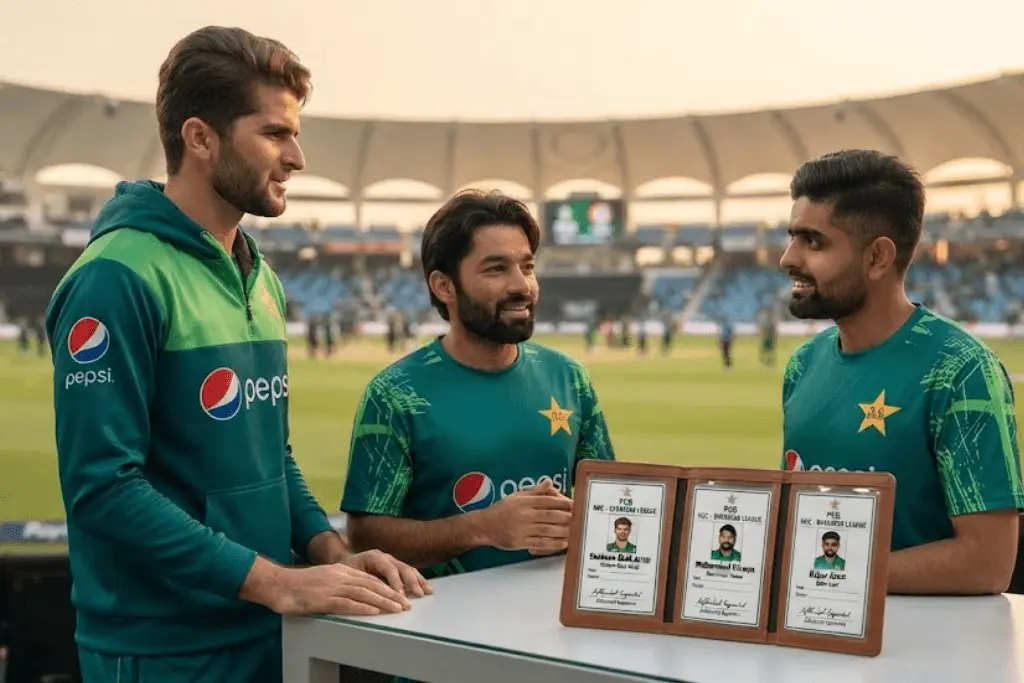
The PCB NOC 2026 policy reflects the Pakistan Cricket Board’s stricter approach to allowing national players to participate in overseas franchise leagues, introducing tighter approval rules and revised eligibility criteria. Earlier approvals in the form of No Objection Certificates (NOCs) for competitions such as the Global Super League and the Caribbean Premier League (CPL) have been suspended, and any future approvals are being considered on a case-by-case basis.
The revised policy highlights the PCB’s commitment to prioritising Pakistan’s international cricket schedule, protecting the health of players and promoting domestic cricket. The overseas leagues are still great opportunities for professional development, but national responsibilities are now the priority in the board’s updated framework.
Why Has PCB Suspended Overseas League NOCS?
The PCB recently reviewed its player availability policy after a hectic international schedule and concerns over player workload. The board now looks at each application on its own merits rather than giving blanket approval for overseas tournaments.
The revised approach helps selectors and team management to keep players available for national camps, bilateral series and important international tournaments. It also helps in better management of workload for centrally contracted cricketers and reduction of injury risks of continuous franchise cricket.
What Is A PCB NOC And Why Is It Important?
NOC or No Objection Certificate is an official permission by the Pakistan Cricket Board to a player to participate in a foreign cricket league. Pakistani cricketers who are under contract cannot play for overseas franchises during the approved period without an approved NOC.
What Overseas Events Have Been Affected?
The revised decision has implications for a number of overseas competitions that have traditionally been popular with Pakistani cricketers. The policy review also put on hold earlier approvals for the Global Super League and Caribbean Premier League. The board is also looking closely at the availability of players for tournaments such as the Abu Dhabi T10 League and the International League T20 (ILT20) that were given earlier.
Any future involvement in overseas leagues would depend entirely on Pakistan’s international schedule and the individual circumstances of each player.
Which Players From Pakistan Had Been Approved By PCB Earlier?
Before the earlier NOCs were suspended, the PCB had approved a group of players to participate in the 2026 Global Super League. The approved list comprised Abdullah Shafique, Mohammad Haris, Usman Khan, Mohammad Naeem, Mehran Mumtaz, Mohammad Farooq, Khalil Ahmed, Farhan Yousaf, Shamyl Hussain, Ali Shabbir, Mohammad Imran, Mohammad Basit and Shahab Khan.
Maaz Sadaqat was also given the all-clear for the 2026 Caribbean Premier League before the policy review changed the status of previous approvals. The PCB’s approvals showed it was open to supporting overseas opportunities, if they fell within Pakistan’s cricket calendar.
How Will The PCB Decide Future NOC Applications?
In the new regime, no application is automatically approved but is considered on a case-by-case basis. National commitments are still the top priority. “Overseas participation could be restricted whenever Pakistan has training camps, international tours or big tournaments coming up.
Performance is also an important aspect. Those who do not meet the expected standards will be sent to the National Cricket Academy (NCA) for further training rather than being allowed to play in foreign leagues.
What Does This Mean For Players On Central Contracts?
Players on central contracts with the PCB have to be more disciplined with their workloads than others. The board is watching the physical demands on the top international cricketers very closely throughout the year. Cutting down on foreign tours helps to curb fatigue, reduce injury risks and keep players fresh for Pakistan’s big assignments.
With the modern international game’s schedule becoming ever more crowded, careful planning is needed to keep players fit and performing over the long term.
How Can New Regulations Help Pakistan Cricket?
The new policy could benefit Pakistan cricket in a number of ways, though some players might miss out on overseas franchise opportunities for a while. This means that national coaching staff can form better squads before the important series and ICC tournaments with more players available. The regular holding of domestic competitions can also help in raising the standard of local cricket and give opportunities to younger players to play alongside experienced internationals.
The focus on workload management may help in prolonging careers, limiting recurring injuries and improving consistency at the international level. The revised approach also emphasises the need to treat the professional representation of Pakistan as the top priority.
What’s Next For Players?
The PCB has said participation in overseas leagues has not been shut forever. Instead, approvals will be based on scheduling, fitness, workload and national requirements. Those who continue to stay in form, fulfil their domestic commitments and do not have a clash with Pakistan’s international fixtures might still be allowed to play in selected franchise competitions.